Portrait of Wang Guangyi

The 27 Most Famous Wang Guangyi Paintings, a Gallery Selection

Updated October 2026 · ranked by our popularity score (searches, visits and orders for each work) · 27 works by Wang Guangyi in our catalogue

In short

Of all the originals Wang Guangyi left, the most famous is Great Criticism-Marlboro, in the collection of the Today Art Museum, Beijing. Close behind it come Great Criticism-Red Parker and Great Criticism Series Nike. Our catalog holds 27 works by Wang Guangyi; the gallery has kept the 27 the world admires most, each shown with its date, its museum and its story.

born 1957, Harbin Contemporary art Most works: Today Art Museum

Wang Guangyi's top 10 paintings: the gallery's choice

1
Great Criticism-Marlboro by Wang Guangyi

Great Criticism-Marlboro

Oil On Canvas · Today Art Museum, Beijing

Wang Guangyi’s monumental work, Great Criticism-Marlboro, immediately confronts the viewer with a dazzling, almost jarring spectacle. It is not merely a painting; it is a vibrant cultural collision rendered in paint. The composition itself draws the eye into a tableau vivant where figures stand poised, their raised arms suggesting either triumphant declaration or defiant salute. At the heart of this piece lies the masterful tension that defines much of Wang…

2
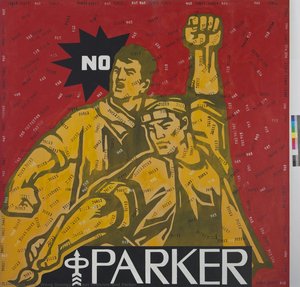
Great Criticism-Red Parker by Wang Guangyi

Great Criticism-Red Parker

Oil On Canvas · Today Art Museum, Beijing

Wang Guangyi’s monumental piece, "Great Criticism-Red Parker," immediately arrests the viewer with its sheer scale and audacious color palette. Standing at an imposing 200 x 200 cm, this work is not merely observed; it confronts you. The composition centers on two figures set against a vibrant, almost aggressive red background. This backdrop itself functions as a character in the painting—a field of pure, unadulterated energy that throws the subjects into…

7
Black Rationality-Pathology Analysis by Wang Guangyi

Black Rationality-Pathology Analysis

Oil On Canvas · Today Art Museum, Beijing

In the evocative masterpiece Black Rationality-Pathology Analysis, the viewer is immediately drawn into a profound psychological landscape. The painting presents two figures seated in chairs, their backs turned toward one another in a silent, heavy dialogue of separation. This composition, rendered with a striking black and white color scheme, strips away the distractions of the natural world to focus entirely on the raw tension between the subjects. The deliberate use…

9
Black Rationality-Pathology Analysis-R by Wang Guangyi

Black Rationality-Pathology Analysis-R

Oil On Canvas · Today Art Museum, Beijing

We are looking at Black Rationality-Pathology Analysis-R, a work by Wang Guangyi. This piece is a significant entry in the artist's ongoing exploration of the human condition and the structures that define it. Wang Guangyi was born in Harbin, China, in 1957, a period that deeply informed his visual language and his subsequent approach to contemporary expression.

10
Frozen North Pole No.28 by Wang Guangyi

Frozen North Pole No.28

Oil On Canvas · Today Art Museum, Beijing

In the evocative landscape of Wang Guangyi, the boundaries between reality and abstraction often dissolve into a dreamlike state of contemplation. Frozen North Pole No.28 serves as a profound window into this meditative realm, presenting a scene that feels both ancient and otherworldly. The painting invites the viewer into a quiet, interior space where blue ceramic-like sculptures stand as silent sentinels. These figures, rendered with a smooth, almost porcelain-like finish,…

The Wang Guangyi selection continues, 11 to 27

Wang Guangyi's famous paintings, period by period

The subjects that held Wang Guangyi's eye

The four subjects that come back most often in these originals, each with its finest example.

The museums that keep Wang Guangyi's originals

The 2 museums that hold the most of the paintings on this page.

Museum City Works by Wang Guangyi Paintings from this list
Today Art Museum, BeijingToday Art Museum Beijing 16 Great Criticism-Marlboro, Great Criticism-Red Parker, Black Rationality-Pathology Analysis
Busan Biennale, BusanBusan Biennale Busan 2 Famous Painting Covered with Quick-Drying Industrial Paint 1-5, Famous Tune Covered with Quick-Drying Industrial Paint 1-9

Collectors' questions about Wang Guangyi's paintings

Which work is Wang Guangyi most famous for?Reveal the answer

Great Criticism-Marlboro, Today Art Museum, Beijing. Great Criticism-Red Parker and Great Criticism Series Nike come next.

What are the ten most famous Wang Guangyi paintings?Reveal the answer

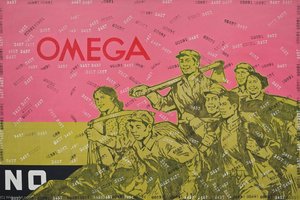
Great Criticism-Marlboro, Great Criticism-Red Parker, Great Criticism Series Nike, Famous Painting Covered with Quick-Drying Industrial Paint 1-5, Great Criticism Series Omega, Great Criticism Series Rolex, Black Rationality-Pathology Analysis, Post-Classical-The Return of Tragic Love, Black Rationality-Pathology Analysis-R and Frozen North Pole No.28. The ranking above gives each one's year and museum.

How many paintings did Wang Guangyi leave?Reveal the answer

Our catalog holds 27 works by Wang Guangyi.

In which museums do Wang Guangyi's masterpieces hang?Reveal the answer

Mostly in Today Art Museum (Beijing) and Busan Biennale (Busan). The museum table above lists them all.

Which subjects did Wang Guangyi choose most often?Reveal the answer

Portrait (2), Social commentary (2) and Cultural revolution (2), across the 27 works on this page.

Which technique did Wang Guangyi use most?Reveal the answer

Oil On Canvas, for 10 of the 27 works on this page.

To which art movement does Wang Guangyi belong?Reveal the answer

Contemporary art and Political pop, judging by the originals on this page.

Which Wang Guangyi works hang at the Today Art Museum?Reveal the answer

Great Criticism-Marlboro, Great Criticism-Red Parker and Black Rationality-Pathology Analysis: the Today Art Museum, Beijing holds 16 of the works on this page.

Wang Guangyi: life and work

Wang Guangyi: A Biography

Early Life and Education

  • Born: Harbin, China (1957)
  • Experienced the Cultural Revolution and worked in a rural village before pursuing art.
  • Studied at the Zhejiang Academy of Fine Arts, graduating from the oil painting department in 1984.

Artistic Development and Key Works

  • Early Works (1980s): Explored Western philosophy through series like "North Pole" and "Post-Classical," often using grey tones and referencing iconic Western artworks to deviate from classical styles.
  • The Great Criticism Series (1990-2007): This is Wang Guangyi's most famous cycle of works, combining socialist imagery from the Cultural Revolution with Western consumer brand logos. The series critiques the conflict between political ideology and commercialism. Examples include "Great Criticism: Coca-Cola."
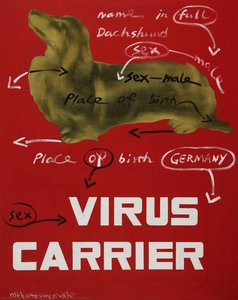
  • VISA, Passport, and Virus Carriers Series (1990s): These installations feature images of individuals accompanied by bureaucratic information, commenting on state control and individual identity.
  • Materialist Series (2001-2005): Explored transcendent themes using sculptures derived from propaganda imagery, reflecting an interest in dialectic materialism.

Influences and Artistic Style

  • Ernst Gombrich: Wang cites Gombrich's theory of inherited "schemata" as influential in his artistic approach to cultural revision and continuity.
  • Andy Warhol & Joseph Beuys: Influenced by these artists, Wang developed a Political Pop style that blends socialist imagery with consumer culture references.
  • Political Pop: Wang is considered a leading figure in the Political Pop movement, using art as a tool to critique political and commercial power structures.

Historical Significance and Legacy

  • Leader of the New Art Movement (Post-1989): Wang Guangyi played a significant role in shaping contemporary Chinese art after 1989.
  • Critique of Propaganda: His work challenges viewers to critically examine propaganda from both socialist and capitalist systems.
  • Global Recognition: Exhibited worldwide, his works are part of major museum collections internationally, solidifying his place as a significant figure in contemporary art.