The Sculptural Legacy of Vincenzo Vela
Born amidst the serene landscapes of Ligornetto, Switzerland, in 1820, Vincenzo Vela emerged as a profound voice in nineteenth-century sculpture, bridging the gap between classical idealism and a burgeoning naturalism. His artistic journey was one of movement and refinement, beginning with foundational training in Viggiù before his ambitions drew him to the vibrant cultural epicenter of Milan. It was here, amidst the soaring heights of the Milan Cathedral and within the prestigious halls of the Brera Academy of Fine Arts, that Vela began to forge a style that would eventually resonate far beyond the borders of his Swiss-Italian heritage. His early years were marked by a rigorous academic discipline, yet beneath the surface of his formal training, a revolutionary spirit was beginning to stir.
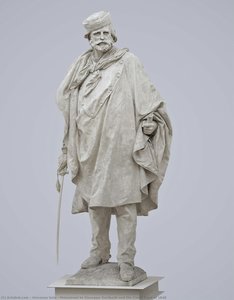
The evolution of Vela’s technique was deeply shaped by the influence of Lorenzo Bartolini, whose naturalistic approach offered an alternative to the rigid, often sterile perfection of traditional neoclassicisms. Embracing this shift, Vela moved away from the idealized, timeless figures of antiquity toward a more humanized representation, often depicting subjects in contemporary dress. This transition allowed him to capture the breath and vitality of his era, imbuing his marble and plaster with an unprecedented sense of life. His rise in prominence was further accelerated by the support of Francesco Hayez, a pivotal figure who helped secure prestigious commissions from the liberal aristocracy and the rising bourgeoisie of Lombardy. Through these connections, Vela’s work became intertwined with the political pulse of Italy, often weaving subtle patriotic themes into his compositions to reflect the complex socio-political landscape of the Risorgimento.
Mastery of Form and Patriotic Resonance
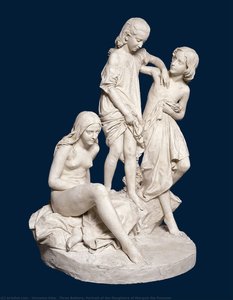
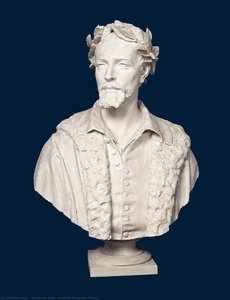
Vela’s repertoire is a testament to his versatility, ranging from the dramatic intensity of historical figures to the quiet dignity of funerary monuments. One of his most enduring achievements is the plaster cast of Spartacus, a work that captures the raw, legendary power of the Thracian gladiator, showcasing his ability to convey profound emotion through physical tension and anatomical precision. Similarly, his depiction of Rizpah after Niobe demonstrates a masterful command over biblical narrative, utilizing sculptural relief to evoke deep pathos and classical tragedy. His talent for portraiture also allowed him to immortalize the faces of his time, creating works that served as both personal tributes and historical records.
Beyond the individual subject, Vela’s work often carried a heavy weight of social and historical significance. He possessed a unique ability to translate collective memory into stone, most notably seen in his naturalistic relief dedicated to the 199 workers who perished during the construction of the Gotthard rail tunnel—a poignant tribute to the human cost of industrial progress. His later career, which included a distinguished professorship at the Accademia Albertina in Turin, saw him further refining his ability to blend monumental scale with intimate detail. Whether capturing the somber reflection of Napoleon’s final days or the stoic grace of a memorial, Vela’s sculptures remain enduring symbols of an era caught between the reverence for the past and the urgent, unfolding reality of the modern world.
Today, the legacy of Vincenzo Vela is preserved through his immense contributions to European art history. His works serve as vital touchstones in museums such as the Museo Vela in Ligornetto, where his sculptures and paintings continue to offer profound insights into the technical mastery and emotional depth of a true master. Through his ability to marry the elegance of classical form with the raw truth of human experience, Vela remains a cornerstone of nineteenth-century sculptural achievement.