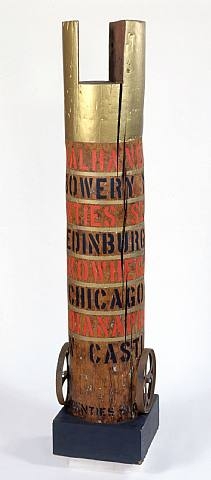
A Life Forged in Signs: The World of Robert Indiana
Robert Indiana, born
Robert Clark in Newcastle upon Tyne, England in 1928 and later raised in Indiana, USA, wasn’t merely a Pop artist; he was an American visual poet. His career, spanning decades, became synonymous with the power of simple imagery to encapsulate complex emotions and reflect the very soul of a nation grappling with its identity. From humble beginnings marked by transience and a strict religious upbringing within the Plymouth Brethren, Indiana emerged as a pivotal figure who redefined how language and
symbolism could function within the realm of
fine art. His journey wasn’t simply about creating aesthetically pleasing objects; it was about distilling American experience into its most potent visual form. He passed away in 2018 on Vinalhaven, Maine, leaving behind a legacy that continues to resonate with audiences worldwide.
Early Influences and Artistic Formation
Indiana’s formative years were characterized by constant relocation throughout Indiana due to his parents' lifestyle, instilling within him a sense of displacement that perhaps fueled his later preoccupation with notions of home and belonging. The rigid doctrines of his Plymouth Brethren upbringing also left an indelible mark, subtly influencing his artistic explorations of
religious iconography and the search for meaning in a rapidly changing world. His formal training began at the
Art Institute of Chicago (1949-1953), followed by studies at the Skowhegan School of Painting and Sculpture, Edinburgh University, and Edinburgh College of Art (1953-1954). These diverse experiences exposed him to a wide range of artistic traditions, from European
Modernism to burgeoning American abstraction. He found particular resonance in the work of
Marsden Hartley, whose exploration of American themes and landscapes mirrored his own developing interests. However, it was upon returning to America that Indiana began to forge his unique visual language, one steeped in the vernacular of
everyday life.
The Rise of ‘LOVE’ and Pop Art Iconography
The late 1950s marked a turning point in Indiana's artistic development. He began experimenting with bold numbers, fragmented words, and ultimately, the motifs that would define his career. Words like “EAT” and “HUG,” presented with stark simplicity, hinted at fundamental human desires and needs. But it was the image of ‘LOVE’—first appearing in a series of poems in 1958, then evolving into a painting featuring the word alongside "love is god," and finally culminating in a Christmas card design for the Museum of
Modern Art in 1964—that catapulted him to international fame. The iconic stacked letters, rendered in
vibrant colors, transcended its artistic origins to become a universally recognized symbol of affection and peace. Indiana didn’t merely create an image; he crafted a cultural touchstone. This success led to monumental sculptural interpretations, most notably the Cor-Ten steel version that became a beloved landmark and was even adopted by the USPS for a widely distributed stamp in 1973. His work is rightfully considered a cornerstone of
Pop Art, not only for its use of everyday language and imagery but also for its bold graphic style and incisive commentary on consumer culture.
Beyond ‘LOVE’: Continued Exploration and Legacy
While indelibly linked to the ‘LOVE’ image, Indiana's artistic vision extended far beyond this single iconic work. He continued to explore the visual power of numbers and short words, often juxtaposing them in provocative ways—such as pairing “EAT” with “DIE”—to contemplate themes of mortality and consumption. His creativity wasn’t confined to traditional media either; he accepted architectural commissions, including designs for the
New York State Pavilion at the 1964 World's Fair (the unforgettable "EAT" sign) and a sculpture for Taipei 101. Following the tragic events of September 11th, Indiana responded with a series of poignant “Peace Paintings,” reflecting on loss, resilience, and the enduring human spirit. In his later years, he retreated to Vinalhaven, Maine, maintaining a studio but becoming increasingly reclusive. Despite this withdrawal from public life, his influence continued to grow. Robert Indiana’s legacy is secure—his ‘LOVE’ image remains one of the most recognizable symbols in contemporary culture, and his innovative use of language has inspired countless artists. His work prompted viewers to reconsider American values and identity, contributing significantly to broader cultural conversations. The complexities surrounding his later life, including disputes over his care and unauthorized reproductions of his work, only add another layer to the fascinating story of this profoundly influential artist—a true sign painter of the American soul.