Portrait of Philipp Otto Runge

The 28 Most Famous Philipp Otto Runge Paintings, a Gallery Selection

Updated November 2026 · ranked by our popularity score (searches, visits and orders for each work) · 28 works by Philipp Otto Runge in our catalogue

In short

Of all the originals Philipp Otto Runge left, the most famous is The Hülsenbeck Children (1805), in the collection of the Hamburger Kunsthalle, Hamburg. Close behind it come The Great Morning (detail) (1809) and The Artist's Parents (1806). Our catalog holds 28 works by Philipp Otto Runge; the gallery has kept the 28 the world admires most, each shown with its date, its museum and its story.

1777 – 1810, Wolgast Romanticism Most works: Hamburger Kunsthalle

Philipp Otto Runge's top 10 paintings: the gallery's choice

1
The Hülsenbeck Children (1805) by Philipp Otto Runge

The Hülsenbeck Children

1805 · Oil On Canvas · Hamburger Kunsthalle, Hamburg

This exquisite painting masterfully captures a tender moment of childhood innocence and familial bonds. Centered around three children engaged in playful interaction within a serene rural setting, the artwork evokes a sense of warmth, joy, and the simple pleasures of family life. The children’s expressive faces and natural poses invite viewers into their private world, celebrating the purity and vitality of childhood.

2
The Great Morning (detail) (1809) by Philipp Otto Runge

The Great Morning (detail)

1809 · Oil On Canvas · Hamburger Kunsthalle, Hamburg

In the quiet transition between night and day, Philipp Otto Runge’s “The Great Morning” captures a moment that transcends mere landscape painting, offering instead a profound visual meditation on the dawn of existence. Completed between 1809 and 1810, this masterpiece stands as a cornerstone of German Romanticism, moving far beyond the simple depiction of a sunrise to explore the very essence of the divine. The scene unfolds with a breathtaking…

3
The Artist's Parents (1806) by Philipp Otto Runge

The Artist's Parents

1806 · Oil On Canvas · Hamburger Kunsthalle, Hamburg

Philipp Otto Runge's “The Artist’s Parents,” painted in 1806, is not merely a portrait; it’s a profound meditation on time, mortality, and the enduring bonds of family. Created during a pivotal period of German Romanticism, this oil-on-canvas work transcends the conventions of traditional familial representation, offering instead a glimpse into the artist's own deeply felt emotions and philosophical inquiries. Runge, grappling with illness and a burgeoning interest in the mystical…

4
Portrait of a Young Man (1801) by Philipp Otto Runge

Portrait of a Young Man

1801 · Oil On Canvas · Statens Museum For Kunst, Copenhagen

The artwork titled Portrait of a Young Man is a painting by the artist Philipp Otto Runge. This specific work is categorized within the genre of portraiture. It is an oil on canvas piece that captures the likeness of a male subject.

5
Study to the Morning (1809) by Philipp Otto Runge

Study to the Morning

1809 · Graphite · Staatliche Museen zu Berlin, Berlin

Philipp Otto Runge's "Study to the Morning," completed in 1809, stands as a cornerstone of German Romantic painting—a testament to an artist grappling with profound philosophical and spiritual currents. More than just a depiction of sunrise, it embodies the burgeoning fascination with mythology and the yearning for transcendence that characterized the era.

6
Lily of Light and Morning Star (1808) by Philipp Otto Runge

Lily of Light and Morning Star

1808 · Acrylic On Canvas · Wallraf-Richartz-Museum, Cologne

Philipp Otto Runge’s “Lily of Light and Morning Star,” painted in 1808, is not merely a depiction of angels; it's a profound meditation on spiritual aspiration, nascent hope, and the delicate balance between earthly existence and divine grace. Created during a pivotal period of German Romanticism, this work transcends simple religious iconography, offering instead a richly layered symbolic landscape that invites contemplation long after initial observation.

8
Self-portrait (1802) by Philipp Otto Runge

Self-portrait

1802 · Oil · Hamburger Kunsthalle, Hamburg

This oil self-portrait, executed in 1802, presents a close-up bust view of a young man. The subject is positioned slightly off-center, directing his gaze toward the viewer's right. He possesses wavy brown hair and blue eyes, with skin rendered in pale, smooth tones. A grey garment with a dark collar is worn over a white shirt. The lighting originates from the upper left, casting subtle shadows across the right side…

9
Rest on the flight into Egypt (1799) by Philipp Otto Runge

Rest on the flight into Egypt

1799 · Oil On Canvas · Bavarian State Painting Collections, Munich

Rest on the flight into Egypt is a subject in Christian art that depicts Mary, Joseph, and the infant Jesus resting during their flight into Egypt. In this specific work, Philipp Otto Runge presents the Holy Family within a landscape. The composition focuses on the three figures—a man, a woman, and an infant—set against a backdrop of lush foliage and natural elements. The scene captures a moment of pause during…

10
The painter and writer Friedrich August von Klinkowström (1808) by Philipp Otto Runge

The painter and writer Friedrich August von Klinkowström

1808 · Oil

A single man occupies the frame, caught in a moment of quietude. He is positioned slightly off-center, his body angled toward the right while his gaze drifts toward the left, away from the viewer. The light enters from the upper left, a soft, directional glow that carves the contours of his face and neck. This illumination creates a gentle chiaroscuro, casting the right side of his features into a soft,…

The Philipp Otto Runge selection continues, 11 to 28

Philipp Otto Runge's famous paintings, period by period

The subjects that held Philipp Otto Runge's eye

The four subjects that come back most often in these originals, each with its finest example.

The museums that keep Philipp Otto Runge's originals

The 8 museums that hold the most of the paintings on this page.

Museum City Works by Philipp Otto Runge Paintings from this list
Hamburger Kunsthalle, HamburgHamburger Kunsthalle Hamburg 15 The Hülsenbeck Children, The Great Morning (detail), The Artist's Parents
Wallraf-Richartz-Museum, CologneWallraf-Richartz-Museum Cologne 2 Lily of Light and Morning Star, Genii on a Lily
Кабінет графіки, ДрезденКабінет графіки Дрезден 2 Times of Day: Day, Times of Day: Evening
Statens Museum For Kunst, CopenhagenStatens Museum For Kunst Copenhagen 1 Portrait of a Young Man
Staatliche Museen zu Berlin, BerlinStaatliche Museen zu Berlin Berlin 1 Study to the Morning
Bavarian State Painting Collections, MunichBavarian State Painting Collections Munich 1 Rest on the flight into Egypt
Nationalgalerie, BerlinNationalgalerie Berlin 1 The Artist's Wife and Son
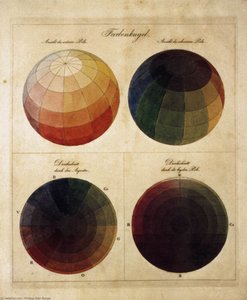
Getty Research Institute, Los AngelesGetty Research Institute Los Angeles 1 Farbenkugel (Color sphere) (detail)

Philipp Otto Runge decade by decade: the original that defines each

Works per decade

Pick a decade to see the original that defines it.

Collectors' questions about Philipp Otto Runge's paintings

Which work is Philipp Otto Runge most famous for?Reveal the answer

The Hülsenbeck Children (1805), Hamburger Kunsthalle, Hamburg. The Great Morning (detail) (1809) and The Artist's Parents (1806) come next.

What age was Philipp Otto Runge when The Hülsenbeck Children was made?Reveal the answer

28 years old: The Hülsenbeck Children dates from 1805, and Philipp Otto Runge was born in 1777.

What are the ten most famous Philipp Otto Runge paintings?Reveal the answer

The Hülsenbeck Children, The Great Morning (detail), The Artist's Parents, Portrait of a Young Man, Study to the Morning, Lily of Light and Morning Star, Self-portrait in a blue skirt, Self-portrait, Rest on the flight into Egypt and The painter and writer Friedrich August von Klinkowström. The ranking above gives each one's year and museum.

How many paintings did Philipp Otto Runge leave?Reveal the answer

Our catalog holds 28 works by Philipp Otto Runge, dated from 1799 to 1810.

In which museums do Philipp Otto Runge's masterpieces hang?Reveal the answer

Mostly in Hamburger Kunsthalle (Hamburg), Wallraf-Richartz-Museum (Cologne) and Кабінет графіки (Дрезден). The museum table above lists them all.

In which years did Philipp Otto Runge paint the most famous works?Reveal the answer

In 1800s: 23 of the 28 works on this page were made then, The Hülsenbeck Children among them.

What are the first and the last famous originals of Philipp Otto Runge?Reveal the answer

On this page, the earliest is Rest on the flight into Egypt (1799) and the latest Pauline Runge, the Artist's Wife (1810).

Which subjects did Philipp Otto Runge choose most often?Reveal the answer

Landscape (10), Portrait (6) and Man (5), across the 28 works on this page.

Which technique did Philipp Otto Runge use most?Reveal the answer

Oil On Canvas, for 11 of the 28 works on this page.

To which art movement does Philipp Otto Runge belong?Reveal the answer

Romanticism, judging by the originals on this page.

Which Philipp Otto Runge works hang at the Hamburger Kunsthalle?Reveal the answer

The Hülsenbeck Children, The Great Morning (detail) and The Artist's Parents: the Hamburger Kunsthalle, Hamburg holds 15 of the works on this page.

Philipp Otto Runge: life and work

A Life Illuminated by Inner Vision

Philipp Otto Runge, a name resonating with the burgeoning spirit of German Romanticism, was an artist whose tragically short life belied the profound depth and originality of his vision. Born in 1777 in Wolgast, then part of Swedish Pomerania, into a family steeped in shipbuilding and connected to Prussian nobility, Runge’s early years were marked by illness, fostering a contemplative nature that would deeply inform his artistic pursuits. This period of physical fragility also nurtured an early talent for *scissor-cut silhouettes*, a practice he continued throughout his life—a testament to his innate ability to distill form and emotion with remarkable precision. His formal training began later than most, initially through a commercial apprenticeship in Hamburg at his brother Daniel’s firm. However, the pull of artistic expression proved too strong, leading him to Copenhagen in 1799 to study painting under Jens Juel. This marked the true beginning of Runge's journey toward becoming one of Germany’s most innovative and spiritually driven artists.

The Dawn of Romantic Symbolism

Runge’s artistic development was profoundly shaped by his move to Dresden in 1801, where he encountered pivotal figures like Caspar David Friedrich and Ludwig Tieck. It was also here that he met Pauline Bassenge, whom he married in 1804. This period witnessed a growing fascination with the mystical writings of Jakob Böhme, whose philosophical explorations of the universe’s hidden harmonies resonated deeply with Runge's own spiritual inclinations. A pivotal moment arrived in 1803 when he unexpectedly met Johann Wolfgang von Goethe in Weimar, forging a friendship built on shared interests in color theory and artistic expression. This encounter proved transformative, encouraging Runge to delve further into the symbolic language of art and explore the interconnectedness of all things. His early works began to reflect this burgeoning Romantic sensibility, moving away from Neoclassical restraint toward emotionally charged landscapes and portraits imbued with personal meaning. The *Hülsenbeck Children* (1805), for example, is not merely a portrait but a poignant depiction of familial intimacy and the innocence of childhood, rendered with an almost ethereal quality.

Color as Cosmic Language

Runge’s most enduring legacy lies in his groundbreaking work on color theory. He believed that color was not simply a visual phenomenon but a fundamental force shaping our perception of reality and reflecting divine order. This conviction led to the development of his *Farben-Kugel* (Color Sphere), published in 1810, shortly before his untimely death from tuberculosis at the age of thirty-three. The Color Sphere was not merely a scientific treatise; it was an attempt to map the entire spectrum of color onto a three-dimensional form, with white and black representing opposing poles and the primary colors—blue, yellow, and red—symbolizing the Christian Trinity. Blue represented God and the night, red symbolized morning, evening, and Jesus, while yellow embodied the Holy Spirit. Runge’s meticulous disk color mixture experiments were an attempt to provide empirical support for his theoretical framework, demonstrating how colors could be harmoniously blended to create a vast range of hues. This exploration wasn't isolated; it was interwoven with his artistic practice, informing the symbolic use of color in his paintings and drawings.

The Unfinished Symphony of ‘Times of Day’

Runge envisioned a *Gesamtkunstwerk*—a total work of art—that would fuse painting, poetry, music, and architecture into a unified sensory experience. This ambition found its most ambitious expression in his series *Tageszeiten* (Times of Day), begun in 1803. The project comprised four monumental paintings representing morning, midday, evening, and night, each designed to be viewed within a specially constructed building accompanied by music and poetry. While only two versions of “Morning” were completed, the drawings for the entire cycle reveal Runge’s profound understanding of symbolism and his desire to capture the spiritual essence of time itself. These works marked a departure from traditional landscape painting, imbuing nature with religious and emotional significance. He sought not merely to depict the external world but to convey its inner harmony and divine presence. The concept was revolutionary for its time, anticipating later developments in abstract art and multimedia installations.

A Lasting Influence

Though his career was cut short by illness, Philipp Otto Runge’s impact on German Romanticism and the development of modern art is undeniable. His exploration of color theory influenced generations of artists, including those associated with the Bauhaus movement. His emphasis on symbolism and emotional expression paved the way for later Expressionist painters. Runge's unique blend of scientific inquiry, spiritual conviction, and artistic innovation continues to captivate and inspire. He remains a pivotal figure in art history—a visionary artist who dared to explore the hidden depths of human perception and the mysteries of the universe through the language of color, form, and symbolism. His works are not merely paintings; they are windows into a world illuminated by inner vision, inviting us to contemplate the profound interconnectedness of all things.