Portrait of Patrick Heron

The 20 Most Famous Patrick Heron Paintings, a Gallery Selection

Updated October 2026 · ranked by our popularity score (searches, visits and orders for each work) · 20 works by Patrick Heron in our catalogue

In short

Of all the originals Patrick Heron left, the most famous is Azalea Garden May 1956 (1956). Close behind it come Market Place (Half Church Tower) St Ives 1950 (1950) and Standing Figure, Rachel (1950). Our catalog holds 20 works by Patrick Heron; the gallery has kept the 20 the world admires most, each shown with its date, its museum and its story.

1920 – 1999, Headingley Abstract expressionism Most works: Tate Modern

Patrick Heron's top 10 paintings: the gallery's choice

6
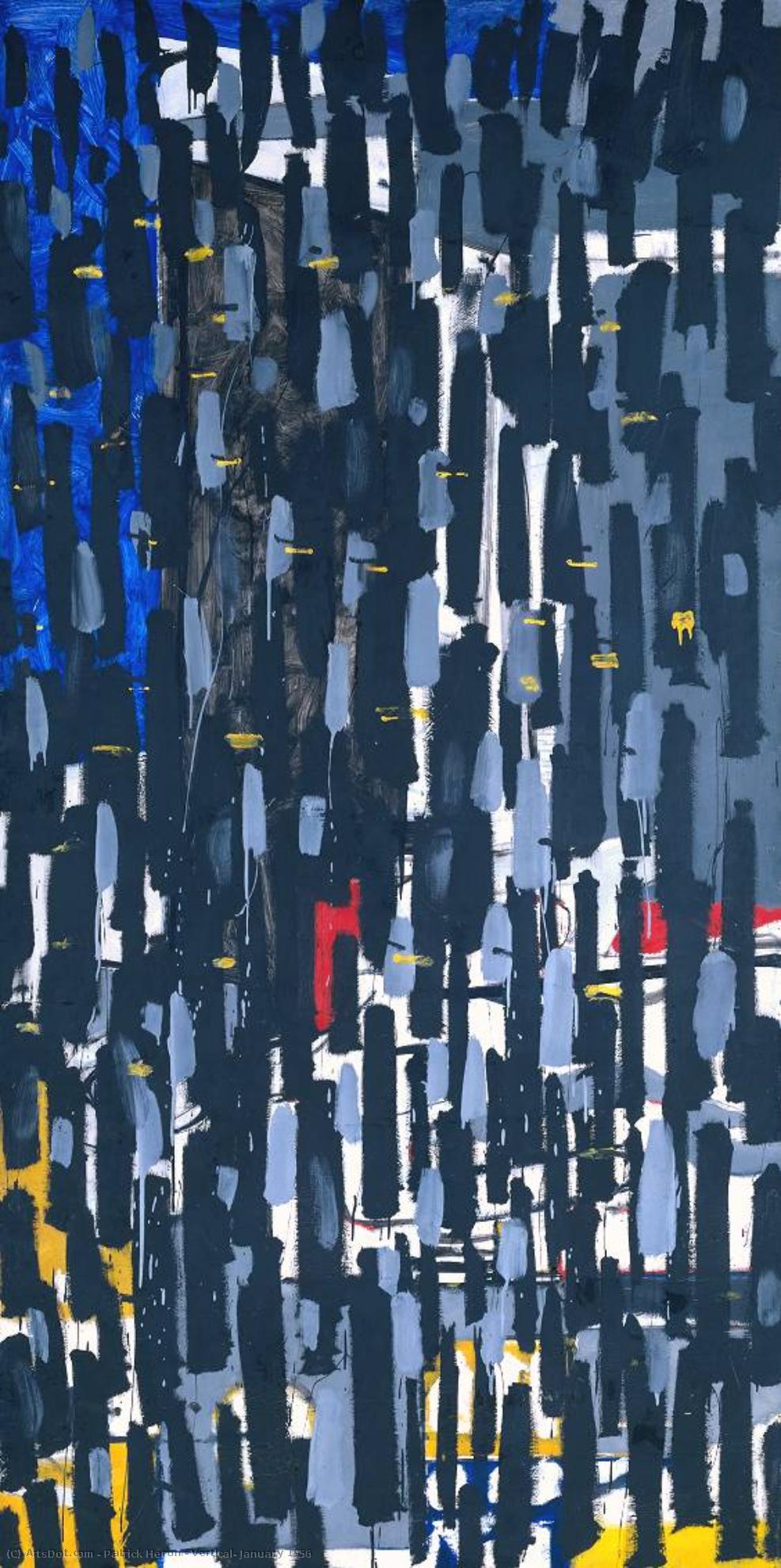
Vertical: January 1956 (1956) by Patrick Heron

Vertical: January 1956

1956 · Oil On Board · Tate Modern, London

Vertical: January 1956 is an abstract work by Patrick Heron. Created in 1956, the piece emerged during the height of Color Field Painting, a movement focused on the expressive potential of pure color and geometric abstraction. This period marked a significant shift in Heron's practice as he moved away from representational constraints toward non-figurative forms.

The Patrick Heron selection continues, 11 to 20

The subjects that held Patrick Heron's eye

The four subjects that come back most often in these originals, each with its finest example.

The museums that keep Patrick Heron's originals

The 8 museums that hold the most of the paintings on this page.

Museum City Works by Patrick Heron Paintings from this list
Tate Modern, LondonTate Modern London 2 Vertical: January 1956, Red Garden
Maclaurin Art Gallery at Rozelle House, AyrMaclaurin Art Gallery at Rozelle House Ayr 1 Market Place (Half Church Tower) St Ives 1950
Nuffield College, OxfordNuffield College Oxford 1 The Blue Check Tablecloth 1948
The Hepworth Wakefield, WakefieldThe Hepworth Wakefield Wakefield 1 St Ives Churchyard
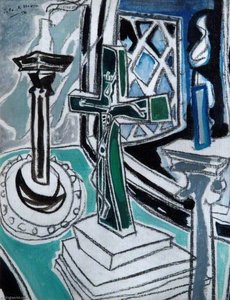
Oxford Brookes University, OxfordOxford Brookes University Oxford 1 Crucifix and Candles, Night
County Hall, LeicesterCounty Hall Leicester 1 Two Women in a Café
Pembroke College Oxford Jcr Art Collection, OxfordPembroke College Oxford Jcr Art Collection Oxford 1 Crambe Vicarage Night 1949
The Basildon Centre, BasildonThe Basildon Centre Basildon 1 Blue November Painting 1963

Patrick Heron decade by decade: the original that defines each

Works per decade

Pick a decade to see the original that defines it.

Collectors' questions about Patrick Heron's paintings

Which work is Patrick Heron most famous for?Reveal the answer

Azalea Garden May 1956 (1956). Market Place (Half Church Tower) St Ives 1950 (1950) and Standing Figure, Rachel (1950) come next.

What age was Patrick Heron when Azalea Garden May 1956 was made?Reveal the answer

36 years old: Azalea Garden May 1956 dates from 1956, and Patrick Heron was born in 1920.

What are the ten most famous Patrick Heron paintings?Reveal the answer

Azalea Garden May 1956, Market Place (Half Church Tower) St Ives 1950, Standing Figure, Rachel, 10 11 July 1992, A. S. Byatt (Portrait of A S Byatt Red, Yellow, Green and Blue 24 September 1997), Vertical: January 1956, The Blue Check Tablecloth 1948, Boats at Night, The Long Table with Fruit 1949 and Harbour Window with Two Figures St Ives July 1950. The ranking above gives each one's year and museum.

How many paintings did Patrick Heron leave?Reveal the answer

Our catalog holds 20 works by Patrick Heron, dated from 1947 to 1997.

In which museums do Patrick Heron's masterpieces hang?Reveal the answer

Mostly in Tate Modern (London), Maclaurin Art Gallery at Rozelle House (Ayr) and Nuffield College (Oxford). The museum table above lists them all.

In which years did Patrick Heron paint the most famous works?Reveal the answer

In 1950s: 11 of the 20 works on this page were made then, Azalea Garden May 1956 among them.

What are the first and the last famous originals of Patrick Heron?Reveal the answer

On this page, the earliest is Boats at Night (1947) and the latest A. S. Byatt (Portrait of A S Byatt Red, Yellow, Green and Blue 24 September 1997) (1997).

Which subjects did Patrick Heron choose most often?Reveal the answer

Buildings (3), Geometric forms (3) and Color field painting (2), across the 20 works on this page.

To which art movement does Patrick Heron belong?Reveal the answer

Abstract expressionism, judging by the originals on this page.

Which Patrick Heron works hang at the Tate Modern?Reveal the answer

Vertical: January 1956 and Red Garden: the Tate Modern, London holds 2 of the works on this page.

Patrick Heron: life and work

A Life Immersed in Colour and Light

Patrick Heron, a pivotal figure in 20th-century British art, wasn’t merely a painter; he was a visual poet, translating the vibrancy of the world onto canvas with an intensely personal language. Born in Headingley, Leeds, in 1920, his artistic journey began not within the hallowed halls of academia, but amidst the practicalities of family business and the burgeoning beauty of the Cornish landscape. His father, a clothes manufacturer and committed pacifist, fostered an environment where creativity flourished, allowing young Patrick to design fabric patterns even as a teenager – an early indication of his innate sensitivity to colour and form. This formative period, culminating in a move to Cornwall in 1925, proved crucial; the dramatic light and rugged scenery would become enduring motifs throughout his career, subtly informing his abstract explorations for decades to come. A pivotal moment arrived during a school trip to London’s National Gallery in 1933, where an encounter with the works of Paul Cézanne ignited a lifelong passion and profoundly shaped his artistic trajectory.

From Figurative Beginnings to Abstract Realms

Heron's initial forays into painting were deeply rooted in the traditions he admired – Matisse, Bonnard, Braque, and Cézanne all cast long shadows over his early work. *The Piano* (1943) is often cited as his first mature piece, demonstrating a nascent ability to capture atmosphere and emotion through colour and composition. Commissions followed, notably portraits of T.S. Eliot in 1947, solidifying his reputation as a skilled figurative artist. However, the post-war era witnessed a seismic shift in Heron’s approach. Influenced by the burgeoning American Abstract Expressionist movement and a renewed engagement with European modernism, he began to dismantle representational forms, venturing into the realm of pure abstraction. This transition wasn't abrupt; it was a gradual unfolding, spurred by his move to Eagles Nest in Cornwall in 1956 – a location that would become synonymous with his artistic identity. Here, surrounded by the raw beauty of the Cornish coast, he fully committed himself to exploring non-figurative forms and the expressive potential of colour relationships.

The Language of Stripes and Beyond

The late 1950s and 1960s saw the emergence of Heron’s signature ‘stripe’ paintings – bold, dynamic compositions characterized by elongated vertical lines and a dazzling array of vibrant hues. These weren't merely decorative exercises; they were rigorous investigations into the interplay of colour and space, pushing abstraction to its very limits. As Alan Bowness observed, these works were “suffused with light and color and full of a positive life-enhancing quality.” He wasn’t simply applying paint to canvas; he was constructing visual experiences, inviting viewers to immerse themselves in the pure sensation of colour. This period marked a high point in Heron's career, establishing him as a leading voice in British abstract art. Later, during the 1960s and 70s, his style evolved again, embracing what became known as ‘wobbly hard-edge’ painting. Works like *Cadmium with Violet, Scarlet, Emerald, Lemon and Venetian: 1969* exemplify this phase – bold colours and defined shapes coexisting in a dynamic tension, showcasing Heron's continued experimentation and refusal to be confined by stylistic conventions.

A Critic as Well as Creator

Patrick Heron was not solely an artist; he was also a formidable art critic and writer. He contributed regularly to publications such as the *New Statesman* and *Arts New York*, offering insightful, often provocative commentary on modern art. His writings weren’t merely supplementary to his painting; they were integral to his artistic practice, reflecting a deep intellectual engagement with the history and theory of art. Through his critical lens, Heron championed modernist ideals, challenging conventional notions of beauty and representation. He sought to illuminate the underlying principles that governed abstract expression, providing valuable context for understanding not only his own work but also the broader currents shaping the art world. This dual role – artist and critic – positioned him as a key intellectual figure in post-war Britain, fostering dialogue and debate within the artistic community.

A Lasting Legacy

Patrick Heron’s contribution to British art is undeniable. He stands as a leading figure in the development of abstraction, bridging the gap between European modernism and American Abstract Expressionism while forging his own unique path. His unwavering commitment to exploring colour, light, and form, coupled with his insightful critical writing, cemented his place in art history. He didn’t simply follow trends; he *created* them, influencing generations of artists who came after him. Heron's ability to “invent an imagery that was unmistakably his own, and yet which connects immediately with the natural world” remains a testament to his enduring artistic vision – a vision that continues to resonate with audiences today. His work serves as a powerful reminder of the transformative power of abstraction and the enduring beauty of colour itself.

All 20 works by Patrick Heron →