Portrait of Keith Haring

Keith Haring Paintings: The 100 Most Famous, Through a Gallery's Eye

Updated October 2026 · ranked by our popularity score (searches, visits and orders for each work) · 101 works by Keith Haring in our catalogue

In short

To the gallery's eye, Keith Haring's most famous painting is Montreux. Untitled (235) and Altarpiece: The Life of Christ (1990) complete the trio every eye recognises. Of the 101 works by Keith Haring in our catalog, the gallery presents the 100 most famous below, each original with its year, its museum and what makes it unique.

1958 – 1990, Reading Pop art Most works: Nakamura Keith Haring Collection

The gallery's top 10 Keith Haring paintings

1
Montreux by Keith Haring

Montreux

Digital Illustration

Dynamic Celebration of Music and Movement This vibrant artwork captures the exhilarating spirit of the Montreux Jazz Festival, a legendary event renowned for its lively performances and cultural significance. Through bold, playful imagery, it celebrates the universal language of music, dance, and artistic expression. The central figure, rendered with exaggerated, fluid limbs, appears to be caught in a moment of joyful motion, embodying the energy and spontaneity of live jazz.…

2
Untitled (235) by Keith Haring

Untitled (235)

Screenprint

Vibrant Celebration of Movement and Culture This dynamic artwork captures a moment of exuberance and community, embodying the spirit of celebration through its lively composition and bold color palette. The central figure, rendered in a vivid pink hue, appears to be in motion—dancing, celebrating, or perhaps engaging in a cultural festivity. The figure’s exaggerated limbs and spiral energy emanating from the torso evoke a sense of rhythm and vitality, inviting…

3
Altarpiece: The Life of Christ (1990) by Keith Haring

Altarpiece: The Life of Christ

1990 · Sculpture · Nakamura Keith Haring Collection, Hōkuto

Located within the Cathedral Church of St. John the Divine in New York City, this sculptural altarpiece utilizes gold, bronze, and gold leaf to render the narrative of Christ. The work consists of three distinct metal sculptures arranged in a unified composition. Each figure is characterized by intricate patterns and detailed surface work, demonstrating a high level of technical precision. The arrangement creates a sense of harmony through the close…

4
Andy Mouse (1986) by Keith Haring

Andy Mouse

1986 · Screenprint · Nakamura Keith Haring Collection, Hōkuto

Andy Mouse is a captivating series of silkscreen prints created in 1986 by the renowned American artist Keith Haring, in collaboration with the legendary Andy Warhol. This unique artwork represents a vibrant fusion of two distinct artistic visions – Haring’s energetic street art style and Warhol's iconic Pop Art aesthetic. The series comprises four individual prints, each depicting a playful reimagining of Andy Warhol as Mickey Mouse, immersed in a…

5
Untitled (1982) by Keith Haring

Untitled

1982 · Pencil · MOMA - Museum of Modern Art, New York City

In the heart of the 1980s, amidst the pulsating energy and social turbulence of New York City, a new visual language emerged from the shadows of the subway stations. Keith Haring, an artist whose name became synonymous with a cultural revolution, possessed the unique ability to transform the grit of urban life into a radiant celebration of humanity. His work, often characterized by its rhythmic vitality and accessible charm, transcends…

6
Secret Pastures (1985) by Keith Haring

Secret Pastures

1985 · Acrylic On Canvas · Nakamura Keith Haring Collection, Hōkuto

Keith Haring’s “Secret Pastures,” a vibrant explosion of black lines and saturated color, isn't merely an image; it’s a visceral experience. Created in 1985 during his prolific period in New York City, the artwork pulsates with the raw energy of the streets – a direct descendant of the graffiti art scene that captivated Haring’s imagination. The composition immediately draws the eye into a dense network of interlocking shapes and figures,…

7
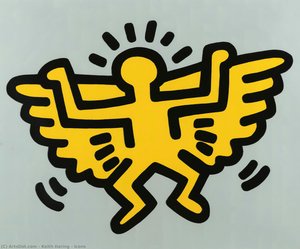
Icons (1990) by Keith Haring

Icons

1990 · Acrylic On Canvas · Nakamura Keith Haring Collection, Hōkuto

Published in 1990, the year of Keith Haring's untimely passing, this striking lithograph series – collectively known as ‘Icons’ – offers a poignant glimpse into the heart of one of New York City’s most influential and enduring artistic voices. More than just a collection of instantly recognizable figures, these images represent a potent distillation of Haring’s vision: a vibrant exploration of innocence, social commentary, and the complexities of human experience.…

8
The Blueprint Drawings (1990) by Keith Haring

The Blueprint Drawings

1990 · Ink On Paper · Nakamura Keith Haring Collection, Hōkuto

To stand before a piece like The Blueprint Drawings is to step directly into the vibrant, pulsating heart of 1980s New York City—a place where art spilled out of galleries and onto the streets. This work by Keith Haring captures that raw, unbridled energy with an immediacy that time seems unable to dull. It is not merely a drawing; it is a visual shout, a celebration rendered in stark black…

9
The Blueprint Drawings (1990) by Keith Haring

The Blueprint Drawings

1990 · Ink On Paper · Nakamura Keith Haring Collection, Hōkuto

To stand before The Blueprint Drawings is to be enveloped in a vibrant, pulsating current of human experience. This work by Keith Haring is not merely an image; it is a captured moment of collective energy, rendered with the immediacy of a spontaneous thought scribbled onto a vast expanse of paper. The composition itself defies singular focus, instead inviting the viewer's eye on a ceaseless journey across overlapping forms and…

10
The Blueprint Drawings (1990) by Keith Haring

The Blueprint Drawings

1990 · Ink On Paper · Nakamura Keith Haring Collection, Hōkuto

To stand before Keith Haring’s The Blueprint Drawings is to step directly into the vibrant, pulsating heart of 1980s New York City—a place where art spilled out of galleries and onto the streets for all to see. This piece is not merely an image; it is a raw transmission of energy, captured in bold, uncompromising black lines against pristine white paper. Haring’s signature style, deeply rooted in Pop Art and…

Keith Haring paintings, ranked 11 to 100

11National Coming Out Day USA (1988) by Keith HaringNational Coming Out Day USA1988 · Nakamura Keith Haring Collection 12The Blueprint Drawings (1990) by Keith HaringThe Blueprint Drawings1990 · Nakamura Keith Haring Collection 13The Blueprint Drawings (1990) by Keith HaringThe Blueprint Drawings1990 · Nakamura Keith Haring Collection 14Icons (1990) by Keith HaringIcons1990 · Nakamura Keith Haring Collection 15Icons (1990) by Keith HaringIcons1990 · Nakamura Keith Haring Collection 16The Blueprint Drawings (1990) by Keith HaringThe Blueprint Drawings1990 · Nakamura Keith Haring Collection 17Free South Africa (1985) by Keith HaringFree South Africa1985 · Inter-American Development Bank 18Sweet Saturday Night (1985) by Keith HaringSweet Saturday Night1985 · Nakamura Keith Haring Collection 19Untitled (people) (1985) by Keith HaringUntitled (people)1985 · Nakamura Keith Haring Collection 20Untitled (1986) by Keith HaringUntitled1986 · Nakamura Keith Haring Collection 21The Blueprint Drawings (1990) by Keith HaringThe Blueprint Drawings1990 · Nakamura Keith Haring Collection 22Free south africa by Keith HaringFree south africa 23Subway Drawing (1981) by Keith HaringSubway Drawing1981 · Nakamura Keith Haring Collection 24The Blueprint Drawings (1990) by Keith HaringThe Blueprint Drawings1990 · Nakamura Keith Haring Collection 25The Blueprint Drawings (1990) by Keith HaringThe Blueprint Drawings1990 · Nakamura Keith Haring Collection 26The Tree of Monkeys (1984) by Keith HaringThe Tree of Monkeys1984 27The Blueprint Drawings (1990) by Keith HaringThe Blueprint Drawings1990 · Nakamura Keith Haring Collection 28The Blueprint Drawings (1990) by Keith HaringThe Blueprint Drawings1990 · Nakamura Keith Haring Collection 29Andy mouse by Keith HaringAndy mouse 30The Blueprint Drawings (1990) by Keith HaringThe Blueprint Drawings1990 · Nakamura Keith Haring Collection 31Slience=Death (1989) by Keith HaringSlience=Death1989 · Nakamura Keith Haring Collection 32Monkey Puzzle (1988) by Keith HaringMonkey Puzzle1988 33Icons (1990) by Keith HaringIcons1990 · Nakamura Keith Haring Collection 34The Story of Red and Blue by Keith HaringThe Story of Red and BlueNakamura Keith Haring Collection 35Untitled (434) by Keith HaringUntitled (434) 36Andy mouse (2) by Keith HaringAndy mouse (2) 37Untitled (701) by Keith HaringUntitled (701) 38The marriage of heaven and hell by Keith HaringThe marriage of heaven and hell 39Untitled (9) by Keith HaringUntitled (9) 40Untitled by Keith HaringUntitled 41The Story of Red and Blue by Keith HaringThe Story of Red and BlueNakamura Keith Haring Collection 42Untitled (215) by Keith HaringUntitled (215) 43Untitled (283) by Keith HaringUntitled (283) 44Untitled (525) by Keith HaringUntitled (525) 45Untitled (281) by Keith HaringUntitled (281) 46Untitled (3) by Keith HaringUntitled (3) 47The Story of Red and Blue by Keith HaringThe Story of Red and BlueNakamura Keith Haring Collection 48Untitled (Day-glo Painting) (1983) by Keith HaringUntitled (Day-glo Painting)1983 · Nakamura Keith Haring Collection 49Three Lithographs (1985) by Keith HaringThree Lithographs1985 · Nakamura Keith Haring Collection 50Untitled (231) by Keith HaringUntitled (231) 51Untitled (472) by Keith HaringUntitled (472) 52Untitled (950) by Keith HaringUntitled (950) 53Untitled (862) by Keith HaringUntitled (862) 54Untitled (778) by Keith HaringUntitled (778) 55Untitled (823) by Keith HaringUntitled (823) 56Untitled (573) by Keith HaringUntitled (573) 57Untitled (213) by Keith HaringUntitled (213) 58Untitled (301) by Keith HaringUntitled (301) 59Untitled (537) by Keith HaringUntitled (537) 60Untitled (445) by Keith HaringUntitled (445) 61Untitled (873) by Keith HaringUntitled (873) 62Untitled (872) by Keith HaringUntitled (872) 63The Story of Red and Blue by Keith HaringThe Story of Red and BlueNakamura Keith Haring Collection 64Untitled (428) by Keith HaringUntitled (428) 65Untitled (564) by Keith HaringUntitled (564) 66Untitled (807) by Keith HaringUntitled (807) 67Untitled (879) by Keith HaringUntitled (879) 68Untitled (601) by Keith HaringUntitled (601) 69Untitled (113) by Keith HaringUntitled (113) 70Untitled (750) by Keith HaringUntitled (750) 71Untitled (812) by Keith HaringUntitled (812) 72Untitled (298) by Keith HaringUntitled (298) 73Untitled (358) by Keith HaringUntitled (358) 74Untitled (992) by Keith HaringUntitled (992) 75Untitled (533) by Keith HaringUntitled (533) 76Untitled (785) by Keith HaringUntitled (785) 77Untitled (163) by Keith HaringUntitled (163) 78Portrait of macho camacho by Keith HaringPortrait of macho camacho 79Untitled (176) by Keith HaringUntitled (176) 80Untitled (901) by Keith HaringUntitled (901) 81Untitled (496) by Keith HaringUntitled (496) 82Untitled (563) by Keith HaringUntitled (563) 83Untitled (6) by Keith HaringUntitled (6) 84Untitled (161) by Keith HaringUntitled (161) 85Untitled (748) by Keith HaringUntitled (748) 86Untitled (4) by Keith HaringUntitled (4) 87Crack is wack by Keith HaringCrack is wack 88Untitled (137) by Keith HaringUntitled (137) 89Untitled (5) by Keith HaringUntitled (5) 90Untitled (102) by Keith HaringUntitled (102) 91Debbie dick by Keith HaringDebbie dick 92Untitled (2) by Keith HaringUntitled (2) 93Untitled (205) by Keith HaringUntitled (205) 94Untitled (731) by Keith HaringUntitled (731) 95Untitled (8) by Keith HaringUntitled (8) 96Moses and the burning bush by Keith HaringMoses and the burning bush 97Untitled (7) by Keith HaringUntitled (7) 98The Story of Red and Blue by Keith HaringThe Story of Red and BlueNakamura Keith Haring Collection 99The Story of Red and Blue by Keith HaringThe Story of Red and BlueNakamura Keith Haring Collection 100The Story of Red and Blue by Keith HaringThe Story of Red and BlueNakamura Keith Haring Collection

Keith Haring's famous paintings, period by period

The subjects that held Keith Haring's eye

The four subjects that come back most often in these originals, each with its finest example.

The museums that keep Keith Haring's originals

The 3 museums that hold the most of the paintings on this page.

Museum City Works by Keith Haring Paintings from this list
Nakamura Keith Haring Collection, HōkutoNakamura Keith Haring Collection Hōkuto 35 Altarpiece: The Life of Christ, Andy Mouse, Secret Pastures
MOMA - Museum of Modern Art, New York CityMOMA - Museum of Modern Art New York City 1 Untitled
Inter-American Development Bank, Washington, D.C.Inter-American Development Bank Washington, D.C. 1 Free South Africa

Keith Haring, the signature paintings of each year

Some ten years, from 1981 to 1990, were enough for Keith Haring: the gallery walks through them year by year, one famous original after another.

Works per year

Pick a year to see its originals.

Keith Haring's paintings: the gallery answers

Which Keith Haring painting is the most famous of all?Reveal the answer

Montreux. Untitled (235) and Altarpiece: The Life of Christ (1990) come next.

Which are Keith Haring's top 10 paintings?Reveal the answer

Montreux, Untitled (235), Altarpiece: The Life of Christ, Andy Mouse, Untitled, Secret Pastures, Icons, The Blueprint Drawings, The Blueprint Drawings and The Blueprint Drawings. The ranking above gives each one's year and museum.

How many works did Keith Haring create?Reveal the answer

Our catalog holds 101 works by Keith Haring, dated from 1981 to 1990.

Where do Keith Haring's most famous originals hang?Reveal the answer

Mostly in Nakamura Keith Haring Collection (Hōkuto), MOMA - Museum of Modern Art (New York City) and Inter-American Development Bank (Washington, D.C.). The museum table above lists them all.

When did Keith Haring create the most famous paintings?Reveal the answer

In 1990: 17 of the 100 works on this page were made then, Altarpiece: The Life of Christ among them.

Which are Keith Haring's earliest and latest famous works?Reveal the answer

On this page, the earliest is Subway Drawing (1981) and the latest Altarpiece: The Life of Christ (1990).

Which subjects did Keith Haring return to most?Reveal the answer

Geometric shapes (7), Black and white (6) and Social commentary (6), across the 100 works on this page.

Which medium did Keith Haring work in most?Reveal the answer

Acrylic On Canvas, for 11 of the 100 works on this page.

Which movement is Keith Haring associated with?Reveal the answer

Pop art, judging by the originals on this page.

Which Keith Haring originals does the Nakamura Keith Haring Collection hold?Reveal the answer

Altarpiece: The Life of Christ, Andy Mouse and Secret Pastures: the Nakamura Keith Haring Collection, Hōkuto holds 34 of the works on this page.

Keith Haring: the artist

A Radiant Legacy: The Life and Art of Keith Haring

Keith Allen Haring, a name inextricably linked to the vibrant pulse of 1980s New York City, was far more than simply an artist; he was a cultural phenomenon. Born on May 4, 1958, in Reading, Pennsylvania, his artistic journey didn’t begin within the formal confines of academic training but rather amidst the playful landscapes of childhood imagination. Influenced by the whimsical cartoons of Walt Disney and Dr. Seuss alongside the classic comic strips of Charles Schulz, young Keith developed a keen eye for visual storytelling. His father, Allan Haring, an amateur cartoonist himself, nurtured this early passion, unknowingly laying the foundation for a revolutionary artistic voice. This formative period instilled in Haring a love for bold lines, simplified forms, and narratives accessible to all – qualities that would come to define his signature style. A brief stint at the Ivy School of Professional Art in Pittsburgh proved stifling; he yearned for direct, personal expression, inspired by Robert Henri’s *The Art Spirit*, embarking on a path of self-discovery determined to forge his own visual language.

From Subway Chalk to Global Icon

Moving to New York City in the late 1970s proved pivotal. The city's downtown art scene was a crucible of creativity, and Haring quickly immersed himself within it, befriending artists like Kenny Scharf and Jean-Michel Basquiat. However, he wasn’t content confining his work to galleries or studios. Instead, he took his art directly to the people, utilizing unused advertising panels in New York City subway stations as his canvas. Using white chalk on black matte paper, Haring created a continuous stream of dynamic figures and symbols – barking dogs, radiant babies, dancing figures – that captivated commuters and transformed the mundane into moments of artistic encounter. These “subway drawings” weren’t acts of vandalism; they were gifts to the public, spontaneous expressions of life and energy. This bold move established him as a unique voice in the burgeoning street art movement, bypassing traditional gatekeepers and connecting directly with his audience. It was here that Haring truly began to develop his iconic visual vocabulary, one characterized by its accessibility, optimism, and underlying social commentary. The radiant baby, perhaps his most recognizable motif, emerged during this period – a symbol of innocence, purity, and the preciousness of life.

Art as Activism: A Voice for Change

As Haring’s fame grew throughout the 1980s, so did his commitment to using art as a vehicle for social change. His work increasingly addressed pressing issues of the time – the AIDS epidemic, drug abuse, racial inequality, and political oppression. The stark mural *Crack is Wack* (1986), painted on a handball court in Harlem, became an iconic symbol of the city’s struggle with the crack cocaine crisis. He designed posters advocating for safe sex practices during the height of the AIDS epidemic, using his vibrant imagery to deliver crucial public health messages. His activism extended beyond national borders; he created a *Free South Africa* poster in 1985 and, in 1986, painted a section of the Berlin Wall – a powerful statement against division and oppression. Haring’s association with Andy Warhol further solidified his place within the art world, leading to collaborations like "Andy Mouse," a playful yet poignant commentary on pop culture and celebrity. He understood that art had the power to transcend boundaries, spark dialogue, and inspire action.

Enduring Influence and Lasting Impact

Despite his untimely death from AIDS-related complications on February 16, 1990, at the age of 31, Keith Haring’s legacy continues to resonate today. His work is celebrated not only for its aesthetic appeal but also for its unwavering commitment to social justice and human connection. The Nakamura Keith Haring Collection in Hokuto, Japan, stands as a testament to his global impact, housing an extensive collection of his drawings, paintings, and sculptures. Museums worldwide showcase his murals and artwork, ensuring that his message reaches new generations. His *Blueprint Drawings*, with their striking black-and-white depictions of falling figures, exemplify his ability to convey complex emotions through simple forms. Haring’s influence can be seen in contemporary street art, graphic design, and popular culture. He demonstrated that art could be both accessible and profound, playful and politically charged.

  • Key Influences: Walt Disney, Dr. Seuss, Charles Schulz, Robert Henri, Andy Warhol.
  • Signature Style: Bold lines, simplified forms, vibrant colors, accessible narratives.
  • Major Themes: Social justice, activism, sexuality, life and death, innocence and corruption.

He proved that a single line, wielded with intention and passion, could change the world. His work remains a powerful reminder of the importance of using creativity as a force for good, inspiring artists and activists alike to speak truth to power and advocate for a more just and equitable future. Exploring Haring’s world offers a deeper understanding of his vision; resources like The Keith Haring Foundation (haring.com) provide an extensive archive of his work and insights into his artistic process. His legacy isn't merely a collection of images, but an invitation to engage with the world around us, question assumptions, and embrace art as a catalyst for change.

All 101 works by Keith Haring →