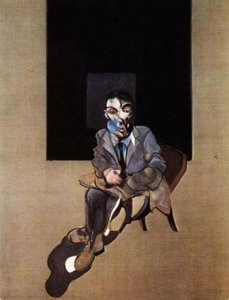
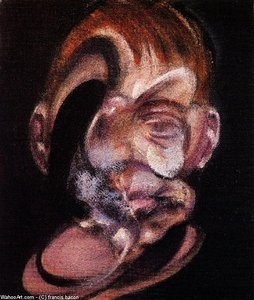
Portrait of Francis Bacon

The 100 Most Famous Francis Bacon Paintings, Each One of a Kind

Updated November 2026 · ranked by our popularity score (searches, visits and orders for each work) · 435 works by Francis Bacon in our catalogue

In short

Three Studies for Figures at the Base of a Crucifixion (1944) is the Francis Bacon painting that draws the most eyes. After it, the eye goes to Three Studies of Lucian Freud, center (1969) and study after velazquez's portrait of pope innocent x, 1953 (1953). Among the 435 works of Francis Bacon in our catalog, these 100 are the most famous, each a unique original presented with its year, its museum and the reason it endures.

1909 – 1992, Dublin Expressionism Most works: MOMA - Museum of Modern Art

Top 10 paintings by Francis Bacon, through the gallery's eye

1
Three Studies for Figures at the Base of a Crucifixion (1944) by Francis Bacon

Three Studies for Figures at the Base of a Crucifixion

1944 · Oil On Board

A Haunting Vision of Human Anguish Francis Bacon’s 1944 triptych is arguably his breakthrough work, marking a pivotal moment in post-war art and establishing him as a leading voice of existential angst. This powerful composition transcends mere depiction; it's a visceral exploration of human suffering, isolation, and the fragility of existence. The three panels present distorted, almost unrecognizable figures set against a searing orange backdrop, creating an atmosphere of claustrophobia…

2
Three Studies of Lucian Freud, center (1969) by Francis Bacon

Three Studies of Lucian Freud, center

1969 · Acrylic On Canvas

A Masterpiece of Modern Art: Francis Bacon's Central Panel of "Three Studies of Lucian Freud"** Subject and Composition This striking central panel from Francis Bacon's iconic triptych "Three Studies of Lucian Freud" (1969) captures the renowned artist Lucian Freud in a contemplative, yet unsettling pose. The subject is seated within a geometric framework, evoking a sense of confinement and introspection. Bacon's use of bold outlines and exaggerated features creates a…

3
study after velazquez's portrait of pope innocent x, 1953 (1953) by Francis Bacon

study after velazquez's portrait of pope innocent x, 1953

1953 · Oil On Canvas · Des Moines Art Center, Des Moines

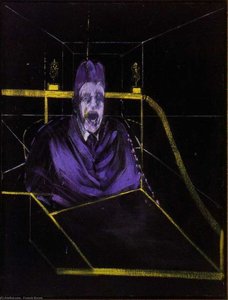
A Masterpiece of Modern Expressionism Francis Bacon's *Study After Velázquez's Portrait of Pope Innocent X* (1953) is a seminal work that redefines the boundaries of portraiture and expressionist art. This haunting reinterpretation of Diego Velázquez's iconic 1650 portrait captures the essence of raw emotion and existential angst, making it a must-have for collectors and art enthusiasts alike. Subject and Composition The artwork depicts a solitary figure seated on a chair…

4
Portrait of George Dyer in a Mirror, 1968 by Francis Bacon

Portrait of George Dyer in a Mirror, 1968

Oil On Canvas

Painted in 1968, this powerful work by Francis Bacon is more than just a portrait; it’s a visceral exploration of human isolation and psychological turmoil. The painting depicts George Dyer, Bacon's longtime lover, seated before a television displaying another anguished face – a doubling that amplifies the sense of unease and fractured identity at the heart of the piece.

5
Three Studies for a Portrait of John Edwards by Francis Bacon

Three Studies for a Portrait of John Edwards

Oil On Canvas

The Essence of Expressionism Francis Bacon's "Three Studies for a Portrait of John Edwards" is a masterclass in expressionist portraiture, capturing the raw emotion and complexity of its subject through bold brushstrokes and a striking color palette. This triptych showcases Bacon's signature style, where abstract forms and vivid colors converge to create a deeply evocative visual experience. A Study in Contrast The artwork presents three distinct yet interconnected portraits of…

6
Three Studies of Lucian Freud, left (1969) by Francis Bacon

Three Studies of Lucian Freud, left

1969 · Oil On Canvas

A Masterpiece of Emotional Depth and Artistic Rivalry Francis Bacon's "Three Studies of Lucian Freud, left" is a captivating exploration of human isolation and psychological tension. This striking triptych panel, created in 1969, captures the essence of Bacon's unique style—bold lines, stark contrasts, and a somber color palette that evokes a sense of melancholy and confinement. Subject and Historical Context The artwork depicts Lucian Freud, a fellow artist and friend-turned-rival…

7
Three Studies of Lucian Freud, right (1969) by Francis Bacon

Three Studies of Lucian Freud, right

1969 · Oil On Canvas

A Masterpiece of Emotional Depth and Expressionism Francis Bacon's "Three Studies of Lucian Freud, right" is a powerful triptych that captures the essence of psychological introspection through bold lines, chaotic brushstrokes, and a muted color palette. This iconic work exemplifies Bacon's unique ability to convey raw emotion and human vulnerability. Subject and Composition The artwork presents a striking portrait of Lucian Freud, seated in a contemplative or distressed state. The…

8
Dog (1952) by Francis Bacon

Dog

1952 · Oil On Canvas · MOMA - Museum of Modern Art, New York City

Subject and Composition This striking artwork centers around a solitary dog, depicted in a raw and emotionally charged manner. The dog, rendered with expressive brushstrokes, appears contemplative, embodying themes of vulnerability, loneliness, and introspection. The composition places the animal within a geometric, almost architectural setting, emphasizing a stark contrast between organic form and rigid structure. The interplay of the figure against the abstract background invites viewers to explore deeper emotional…

9
painting, 1946 (1946) by Francis Bacon

painting, 1946

1946 · Oil On Canvas · MOMA - Museum of Modern Art, New York City

Subject and Composition This powerful artwork presents a haunting reinterpretation of religious symbolism through a modern, surreal lens. At its core, a central figure reminiscent of a crucifixion scene dominates the upper portion of the canvas, with outstretched arms and hanging chains or ropes evoking themes of confinement, suffering, and sacrifice. Below, a mysterious figure holding an umbrella and adorned with a flower on their chest introduces a contrasting element…

10
triptych, may - june, 1973 a by Francis Bacon

triptych, may - june, 1973 a

Oil On Canvas

A Descent into Grief: Exploring Francis Bacon’s 1973 Triptych Francis Bacon's *triptych, may - june, 1973 a* is not merely a painting; it’s a visceral exploration of loss, memory, and the fragmented human condition. Created in the wake of the tragic suicide of his lover, George Dyer, this work stands as one of Bacon’s most profoundly moving and intensely personal statements. It's part of a series of three triptychs –…

Francis Bacon's famous paintings, numbers 11 to 100

11triptych, may - june, 1973 c by Francis Bacontriptych, may - june, 1973 c 12figure with meat, 1954 by Francis Baconfigure with meat, 1954 13second version of triptych 1 (1944) by Francis Baconsecond version of triptych 11944 142nd vers of triptych - (1944) by Francis Bacon2nd vers of triptych -1944 15Portrait of Isabel Rawsthorne standing in a street in Soho by Francis BaconPortrait of Isabel Rawsthorne standing in a street in Soho 16Untitled 1 by Francis BaconUntitled 1 17Three Studies for Self-Portrait (1979) by Francis BaconThree Studies for Self-Portrait1979 · Metropolitan Museum of Art 18STUDIES FROM THE HUMAN BODY (triptych, left) (1970) by Francis BaconSTUDIES FROM THE HUMAN BODY (triptych, left)1970 19Study for Bullfight No.1, second version, (1969) by Francis BaconStudy for Bullfight No.1, second version,1969 20Seated Figure (1961) by Francis BaconSeated Figure1961 21second version of triptych 3 (1944) by Francis Baconsecond version of triptych 31944 22Oedipus and the Sphinx After Ingres by Francis BaconOedipus and the Sphinx After Ingres 233 Studies for a Portrait of John Edwards, right (1984) by Francis Bacon3 Studies for a Portrait of John Edwards, right1984 24Study of a Baboon by Francis BaconStudy of a Baboon 25three studies of the human head, 1953 (center panel) by Francis Baconthree studies of the human head, 1953 (center panel) 26Three Studies for Figures at the Base of a Crucifixion (1944) by Francis BaconThree Studies for Figures at the Base of a Crucifixion1944 · Tate Britain 27Study for the Head of a Screaming Pope, (1952) by Francis BaconStudy for the Head of a Screaming Pope,1952 28STUDIES FROM THE HUMAN BODY (triptych right) (1970) by Francis BaconSTUDIES FROM THE HUMAN BODY (triptych right)1970 29self-portrait, 1969 by Francis Baconself-portrait, 1969 30Head I, Collection of Richard S, Zeisler, New Yo (1949) by Francis BaconHead I, Collection of Richard S, Zeisler, New Yo1949 31Study for self-portrait by Francis BaconStudy for self-portrait 32Three studies of the Human Head left (1953) by Francis BaconThree studies of the Human Head left1953 33three studies of isabel rawsthorne, on single canvas, 1967 by Francis Baconthree studies of isabel rawsthorne, on single canvas, 1967 34Second Version of the triptych (1988) by Francis BaconSecond Version of the triptych1988 35Head-VI Arts council of Great Britain, London (1949) by Francis BaconHead-VI Arts council of Great Britain, London1949 36triptych, may - june, 1973 b by Francis Bacontriptych, may - june, 1973 b 37Head 4 by Francis BaconHead 4 38study for portrait of henrietta moraes on a red ground, 1964 by Francis Baconstudy for portrait of henrietta moraes on a red ground, 1964 39three studies of lucian freud, 1969 a by Francis Baconthree studies of lucian freud, 1969 a 40Figures getting out of a car by Francis BaconFigures getting out of a car 41two figures lying on a bed with attendants, 1968 c by Francis Bacontwo figures lying on a bed with attendants, 1968 c 42Study for a Portrait (1952) by Francis BaconStudy for a Portrait1952 · Tate Britain 43four studies for a self-portrait, 1967 by Francis Baconfour studies for a self-portrait, 1967 44crucifixion, 1965 right by Francis Baconcrucifixion, 1965 right 45two figures, 1953 by Francis Bacontwo figures, 1953 46Study for a Pope VI by Francis BaconStudy for a Pope VI 47henrietta moraes by Francis Baconhenrietta moraes 48Study for Portrait on Folding Bed by Francis BaconStudy for Portrait on Folding Bed 493 Studies for a Portrait of John Edwards, left (1984) by Francis Bacon3 Studies for a Portrait of John Edwards, left1984 50Painting (1950) by Francis BaconPainting1950 · Leeds Art Gallery 51Portrait of Jacques Dupin by Francis BaconPortrait of Jacques Dupin 52portrait of lucian freud by Francis Baconportrait of lucian freud 53portrait of isabel rawsthorn standing in a street in soho, 1967 by Francis Baconportrait of isabel rawsthorn standing in a street in soho, 1967 54Study for Head of Isabel Rawsthorne by Francis BaconStudy for Head of Isabel Rawsthorne 55three studies for a portrait of peter board, 1975 ii center by Francis Baconthree studies for a portrait of peter board, 1975 ii center 56Study for Portrait of Van Gogh V (1957) by Francis BaconStudy for Portrait of Van Gogh V1957 57Study for Portrait II by Francis BaconStudy for Portrait II 58Three Studies of Muriel Belcher by Francis BaconThree Studies of Muriel Belcher 59study for self-portrait, 1973 a by Francis Baconstudy for self-portrait, 1973 a 60self-portrait, 1972 iii by Francis Baconself-portrait, 1972 iii 61Study of a Dog (1952) by Francis BaconStudy of a Dog1952 62Study for Three Heads, right panel, (1962) by Francis BaconStudy for Three Heads, right panel,1962 63head vi, 1949 by Francis Baconhead vi, 1949 64Landscape near Malabata, Tangier by Francis BaconLandscape near Malabata, Tangier 65Three Studies of Muriel Belcher 3 by Francis BaconThree Studies of Muriel Belcher 3 663 Studies for a Portrait of Mick Jagger, right (1982) by Francis Bacon3 Studies for a Portrait of Mick Jagger, right1982 67self-portrait, 1973 v by Francis Baconself-portrait, 1973 v 68Study for a Portrait [looking right], (1962) by Francis BaconStudy for a Portrait [looking right],1962 69Three Figures and Portrait (1975) by Francis BaconThree Figures and Portrait1975 70self-portrait, 1971 by Francis Baconself-portrait, 1971 71Tript. insp. by the Oresteia of Aeschylus, Right (1981) by Francis BaconTript. insp. by the Oresteia of Aeschylus, Right1981 72study for the nurse in the film by Francis Baconstudy for the nurse in the film 73Diptych Study of the Human Body From a Drawing by Ingres (1984) by Francis BaconDiptych Study of the Human Body From a Drawing by Ingres1984 74Two Figures in the Grass 1 by Francis BaconTwo Figures in the Grass 1 75Study for Portrait V (1953) by Francis BaconStudy for Portrait V1953 76Study after Velazquez II, Tony Shafrazi Gallery, (1950) by Francis BaconStudy after Velazquez II, Tony Shafrazi Gallery,1950 77three studies for a crucifixion, 1962 (c) by Francis Baconthree studies for a crucifixion, 1962 (c) 78study for a portrait of isabel rawsthorne, 1966 a by Francis Baconstudy for a portrait of isabel rawsthorne, 1966 a 79Sphinx III (1954) by Francis BaconSphinx III1954 80three studies of lucian freud, 1969 b by Francis Baconthree studies of lucian freud, 1969 b 81sphinx ii, 1952 by Francis Baconsphinx ii, 1952 82Three Figures in a Room, right (1964) by Francis BaconThree Figures in a Room, right1964 83Second Version of Triptych 1944 (1988) by Francis BaconSecond Version of Triptych 19441988 84self-portrait, 1973 vv by Francis Baconself-portrait, 1973 vv 85Study for Portrait VII by Francis BaconStudy for Portrait VII 86study for bullfight no.1, 1969 by Francis Baconstudy for bullfight no.1, 1969 87Man in Blue III by Francis BaconMan in Blue III 88Version Two of Lying Figure with Hypodermic Syringe by Francis BaconVersion Two of Lying Figure with Hypodermic Syringe 89Sphinx - Portrait of Muriel Belcher, (1979) by Francis BaconSphinx - Portrait of Muriel Belcher,1979 90Head (1951) by Francis BaconHead1951 · Cleveland Museum of Art 91Figure in a Landscaspe by Francis BaconFigure in a Landscaspe 92Portrait of a Cardinal I by Francis BaconPortrait of a Cardinal I 93Study for a portrait by Francis BaconStudy for a portrait 94lying figure, 1969 by Francis Baconlying figure, 1969 95Selfportrait Centre Georges Pompidou, PARIS (1971) by Francis BaconSelfportrait Centre Georges Pompidou, PARIS1971 96Crouching nude The Detroit Institute of Arts (1952) by Francis BaconCrouching nude The Detroit Institute of Arts1952 97three studies for a portrait of peter board, 1975 center by Francis Baconthree studies for a portrait of peter board, 1975 center 98Study for a Portrait, March 1991 (1991) by Francis BaconStudy for a Portrait, March 19911991 99Three Figures in a Room 3 by Francis BaconThree Figures in a Room 3 100Study for a Portrait [looking left], (1962) by Francis BaconStudy for a Portrait [looking left],1962

Francis Bacon's famous paintings, period by period

The subjects that held Francis Bacon's eye

The four subjects that come back most often in these originals, each with its finest example.

The museums that keep Francis Bacon's originals

The 6 museums that hold the most of the paintings on this page.

Museum City Works by Francis Bacon Paintings from this list
MOMA - Museum of Modern Art, New York CityMOMA - Museum of Modern Art New York City 2 Dog, painting, 1946
Tate Britain, LondonTate Britain London 2 Three Studies for Figures at the Base of a Crucifixion, Study for a Portrait
Des Moines Art Center, Des MoinesDes Moines Art Center Des Moines 1 study after velazquez's portrait of pope innocent x, 1953
Metropolitan Museum of Art, New YorkMetropolitan Museum of Art New York 1 Three Studies for Self-Portrait
Leeds Art Gallery, LeedsLeeds Art Gallery Leeds 1 Painting
Cleveland Museum of Art, ClevelandCleveland Museum of Art Cleveland 1 Head

Francis Bacon across the decades: one unique original for each

Works per decade

Pick a decade to see the original that defines it.

Francis Bacon's paintings: questions for the gallery

What is the single most famous work of Francis Bacon?Reveal the answer

Three Studies for Figures at the Base of a Crucifixion (1944). Three Studies of Lucian Freud, center (1969) and study after velazquez's portrait of pope innocent x, 1953 (1953) come next.

At what age did Francis Bacon create Three Studies for Figures at the Base of a Crucifixion?Reveal the answer

35 years old: Three Studies for Figures at the Base of a Crucifixion dates from 1944, and Francis Bacon was born in 1909.

Which ten paintings by Francis Bacon are the most famous?Reveal the answer

Three Studies for Figures at the Base of a Crucifixion, Three Studies of Lucian Freud, center, study after velazquez's portrait of pope innocent x, 1953, Portrait of George Dyer in a Mirror, 1968, Three Studies for a Portrait of John Edwards, Three Studies of Lucian Freud, left, Three Studies of Lucian Freud, right, Dog, painting, 1946 and triptych, may - june, 1973 a. The ranking above gives each one's year and museum.

How many works by Francis Bacon are known?Reveal the answer

Our catalog holds 435 works by Francis Bacon, dated from 1944 to 1991.

Where can the most famous Francis Bacon originals be seen?Reveal the answer

Mostly in MOMA - Museum of Modern Art (New York City), Tate Britain (London) and Des Moines Art Center (Des Moines). The museum table above lists them all.

During which period did Francis Bacon create the best-known paintings?Reveal the answer

In 1950s: 13 of the 100 works on this page were made then, study after velazquez's portrait of pope innocent x, 1953 among them.

Which famous Francis Bacon painting is the earliest, and which the latest?Reveal the answer

On this page, the earliest is Three Studies for Figures at the Base of a Crucifixion (1944) and the latest Study for a Portrait, March 1991 (1991).

What subjects did Francis Bacon favour?Reveal the answer

Isolation (40), Distortion (40) and Anxiety (20), across the 100 works on this page.

What materials did Francis Bacon paint with most?Reveal the answer

Oil On Canvas, for 67 of the 100 works on this page.

Which movement does the work of Francis Bacon belong to?Reveal the answer

Expressionism, judging by the originals on this page.

What Francis Bacon originals can I see at the MOMA - Museum of Modern Art?Reveal the answer

Dog and painting, 1946: the MOMA - Museum of Modern Art, New York City holds 2 of the works on this page.

Francis Bacon: a portrait of the artist

Early Life, Family and Training

Francis Bacon was born on October 28, 1909, in Dublin, Ireland. He grew up in a house in the Irish countryside, the son of a racehorse trainer. His childhood was marked by physical struggle; he was severely asthmatic, a condition that often made breathing a difficult task. He also experienced a sense of confinement during his younger years, remembering being shut in dark cupboards by a housemaid for long periods. This feeling of suffocation and the dread of family members hiding in locked rooms during the Irish revolutionary period left a lasting impression on his early years.

His education was largely private, conducted by tutors within the home rather than in a traditional classroom. This unconventional upbringing meant he never followed the standard path of an art school apprenticeship. By the age of sixteen, the restlessness of his youth led him to leave his home in rural Ireland to seek his fortune in London. He arrived in the city at seventeen, surviving on an allowance provided by his mother as he navigated the complexities of urban life.

Life in London, Berlin and Paris

By the late 1920s, Bacon was a man in motion. He drifted through the streets of London, Berlin, and Paris, living a life that was often as unsettled as the cities he inhabited. He settled in London in 1928, finding himself in the middle of the city's bohemian scene. It was a period of wandering and survival, marked by a restless energy as he moved between these European hubs. He lived off an allowance from his mother and took on various odd jobs to make ends meet.

During these years, his professional life was tied to the world of interior design and decoration. He spent much of his time working with textures and shapes, creating structured objects for the homes of others. However, a pivotal moment arrived during a trip to Paris in the late 1920s. He visited an exhibition of Picasso’s work, and the sight of it changed his direction entirely. The way Picasso handled the human form—treating it as something organic and bone-like—offered him a new way to see the world. He decided to leave design behind to pursue painting, a choice that would define the rest of his life.

Interior Design and Early Career

Before the world knew him as a painter, Bacon spent his early professional years working as an interior designer and decorator. This was a practical, structured period of his life that stood in contrast to the turbulent years he spent drifting through London, Berlin, and Paris. He did not follow the traditional path of an artist, bypassing art school and formal apprenticeships entirely. Instead, he was a self-taught man who learned through direct observation and the hands-on work of shaping physical spaces.

His work in design was far from minor. He contributed to the aesthetic of the era by creating Royal Wilton rugs that featured abstract motifs. His eye for form extended to various household objects and furniture, including calfskin pouffes, cocktail shelves, and room screens. He also designed chairs, often utilizing tubular steel and glass to create silhouettes that felt modern and geometric. These early years provided him with a deep understanding of structure and the way objects occupy a room.

This background in decoration left a lasting mark on his later approach to the canvas. The geometric shapes and architectural frames he once built for living spaces eventually transformed into the transparent cages and spatial structures that would define his paintings. He moved from designing the physical environments people inhabited to creating the psychological spaces that trapped his subjects. Even as he abandoned design for the brush, the sense of construction remained.

Technique and Artistic Style

Bacon’s approach to the canvas was physical and direct. He worked with oils and large brushes, applying paint in a way that felt heavy and immediate. His colors were often smeared and violent, used to strip away any sense of decorative comfort. Through this method, he created figural images that expressed a profound sense of isolation, brutality, and terror. He did not aim for the polished finish of traditional portraiture, preferring instead to capture the raw sensation of being alive and vulnerable.

To organize these intense emotions, he often used a specific structural device. He employed a cubic, architectural framing system known as a space-frame. These geometric constructions acted like transparent cages, trapping his subjects within a defined, often claustrophobic, space. By placing figures inside these rigid structures, he was able to concentrate the image and force the viewer to confront the subject's isolation. This technique helped him move away from simple storytelling, focusing instead on the visceral impact of the human form.

He also found a way to use traditional religious imagery without the weight of faith. He utilized the concept of the crucifixion as an armature, a structural support upon which he could hang specific sensations of suffering. This allowed him to explore the human condition through a lens of physical and psychological distress. His work often relied on these skeletal frameworks to hold the weight of his distorted, contorted figures.

Key Works and Major Themes

Bacon’s work often felt like a way to process the heavy, unsettling atmosphere of the mid-twentieth century. In 1945, he exhibited Three Studies for Figures at the Base of a Crucifixion, a work that helped establish his reputation. He did not use the crucifixion for religious devotion, but rather as a structural armature to hang sensations of suffering. He was interested in how the human form could be distorted to express the raw reality of existence, often looking to the studies of motion by Eadweard Muybridge to understand how the body moves and breaks apart.

His fascination with the scream became a recurring part of his visual language. He found a specific kind of terror in the screaming face seen in Sergei Eisenstein's film Battleship Potemkin, and he translated that visceral reaction onto the canvas. This reached a peak in his series of works known as The Screaming Popes, created between 1949 and the mid-1950s. In these paintings, he took the dignified authority of Velázquez’s Portrait of Pope Innocent X and stripped it away, turning the papal figure into a nightmarish specter of hysterical terror.