Portrait of Elsa Schiaparelli

Elsa Schiaparelli Paintings: The 18 Most Famous, Through a Gallery's Eye

Updated November 2026 · ranked by our popularity score (searches, visits and orders for each work) · 18 works by Elsa Schiaparelli in our catalogue

In short

To the gallery's eye, Elsa Schiaparelli's most famous painting is The Tears Dress (1938), whose original hangs in the Victoria and Albert Museum, London. Evening Hat with Rhinestone Trim and Evening ensemble (1937) complete the trio every eye recognises. Of the 18 works by Elsa Schiaparelli in our catalog, the gallery presents the 18 most famous below, each original with its year, its museum and what makes it unique.

1890 – 1973, Rome Surrealism Most works: Victoria and Albert Museum

The gallery's top 10 Elsa Schiaparelli paintings

1
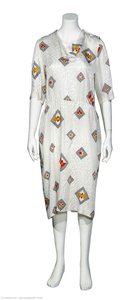
The Tears Dress (1938) by Elsa Schiaparelli

The Tears Dress

1938 · Black and White Photography · Victoria and Albert Museum, London

The gown hangs with a heavy, quiet grace. It is a sheath of viscose rayon and silk marocain, pale and smooth before the disruption begins. Across this surface, jagged lines cascade like sudden wounds. These irregular shapes mimic the appearance of shredded flesh, a trompe-l'œil trick that blurs the boundary between fabric and skin. The print creates an illusion of something torn, a visual echo of the psychological fractures felt…

2
Evening Hat with Rhinestone Trim by Elsa Schiaparelli

Evening Hat with Rhinestone Trim

Mixed Media · Kunstgewerbemuseum, Berlin

To gaze upon this exquisite evening hat is to be transported to an era where fashion was not merely adornment, but wearable sculpture—a breathtaking confluence of artistry and ephemeral glamour. The piece itself, rendered in deep black netting and adorned with delicate rhinestone trim, possesses an immediate aura of sophisticated mystery. It does not shout its presence; rather, it whispers tales of grand galas, hushed ballroom conversations, and the dazzling…

3
Evening ensemble (1937) by Elsa Schiaparelli

Evening ensemble

1937 · Acrylic On Canvas · Metropolitan Museum of Art, New York

Elsa Schiaparelli wasn't merely a fashion designer; she was a provocateur, a visual poet, and a key figure in the burgeoning world of surrealism. Her 1937 creation, "Evening Ensemble," embodies this spirit with audacious elegance and a deliberate rejection of conventional beauty standards. This isn’t simply a gown and jacket; it's a carefully constructed dialogue between art, fashion, and the subconscious – a testament to Schiaparelli’s radical vision that continues…

4
Shocking (1937) by Elsa Schiaparelli

Shocking

1937 · Design Objects

In the pantheon of twentieth-century design, few names evoke as much immediate intrigue and avant-garde audacity as Elsa Schiaparelli. Her creation, Shocking, is not merely a perfume; it is a profound intersection of fashion, fine art, and olfactory storytelling. This exquisite piece, dating from 1937, serves as a masterclass in the Surrealist movement's ability to permeate everyday objects with dreamlike, often provocative, energy. The composition presented—a curated arrangement featuring the…

5
Dress (1940) by Elsa Schiaparelli

Dress

1940 · Acrylic On Canvas · Röhsska Museum, Göteborg

Elsa Schiaparelli, a name synonymous with audacious style and surrealist innovation, irrevocably altered the landscape of 20th-century fashion. Born into an aristocratic Roman family in 1890, her life was anything but conventional. Unlike many of her contemporaries who embraced established societal norms, Schiaparelli possessed a fiercely independent spirit, fueled by intellectual curiosity and a penchant for challenging expectations. Her father, Celestino Schiaparelli, a renowned scholar of Islamic studies and Sanskrit,…

6
Evening ensemble (1937) by Elsa Schiaparelli

Evening ensemble

1937 · Metropolitan Museum of Art, New York

The Evening ensemble, created in 1937 by Elsa Schiaparelli, is a notable example of surrealist couture. This formal ensemble consists of a sleek sheath gown and a jacket, representing a collaboration between Schiaparelli and André Perugia. The gown is constructed from deep purple silk velvet, featuring a trompe l’œil technique where metallic threads are woven into the fabric to create a shimmer reminiscent of dappled light. The accompanying jacket is…

7
Gold Lamé Evening Gown by Elsa Schiaparelli

Gold Lamé Evening Gown

Acrylic On Canvas · Kunstgewerbemuseum, Berlin

The world of haute couture in the 1930s was dominated by elegance and restraint, yet Elsa Schiaparelli dared to inject a potent dose of surrealism into the very heart of Parisian fashion. Her “Gold Lamé Evening Gown,” a breathtaking example of her singular vision, isn’t merely a dress; it's a meticulously crafted embodiment of the era’s anxieties and aspirations, a shimmering testament to collaboration with artists like Salvador Dalí, and…

8
The Circus Collection (1938) by Elsa Schiaparelli

The Circus Collection

1938 · Acrylic On Canvas · Victoria and Albert Museum, London

The Surrealist Echoes of “The Circus Collection” Elsa Schiaparelli’s “The Circus Collection,” debuting in Paris during the summer of 1938, stands as an emblem of her singular artistic vision—a defiant rejection of convention fused with a fascination for theatrical spectacle and unsettling beauty. More than just a fashion show; it was a meticulously crafted performance designed to shock and delight audiences accustomed to the polished elegance of established couture houses.…

9
Evening Cape (1938) by Elsa Schiaparelli

Evening Cape

The light catches the gold of the dress, turning the fabric into a shimmering sun that seems to pulse against the darkness. A woman stands at the center of this celestial vision, her form draped in an extravagant evening cape that defies the quiet elegance of the era. Every inch of the garment tells a story of cosmic wonder, as if she has stepped directly out of a dream of…

10
Jacket (1900) by Elsa Schiaparelli

Jacket

1900

Pink wool jacket with metal star closures. Silk plaid lining edge shaped unlined, no label, lining replacement fabric.

Elsa Schiaparelli paintings, ranked 11 to 18

The subjects that held Elsa Schiaparelli's eye

The four subjects that come back most often in these originals, each with its finest example.

The museums that keep Elsa Schiaparelli's originals

The 8 museums that hold the most of the paintings on this page.

Museum City Works by Elsa Schiaparelli Paintings from this list
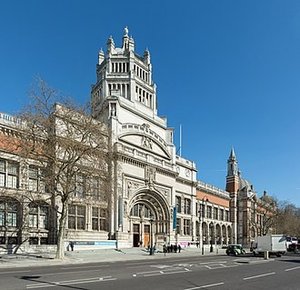
Victoria and Albert Museum, LondonVictoria and Albert Museum London 2 The Tears Dress, The Circus Collection
Kunstgewerbemuseum, BerlinKunstgewerbemuseum Berlin 2 Evening Hat with Rhinestone Trim, Gold Lamé Evening Gown
Metropolitan Museum of Art, New YorkMetropolitan Museum of Art New York 2 Evening ensemble, Evening ensemble
Röhsska Museum, GöteborgRöhsska Museum Göteborg 2 Dress, Dress
The Kyoto Costume Institute, KyotoThe Kyoto Costume Institute Kyoto 2 Evening Cape, Evening Coat
the Robert and Penny Fox Historic Costume Collection at Drexel University, Philadelphiathe Robert and Penny Fox Historic Costume Collection at Drexel University Philadelphia 1 Evening Gown
Museum of the City of New York, New York CityMuseum of the City of New York New York City 1 Strapless Evening dress in white-on-white dotted organdy
Iwami Art Museum, MasudaIwami Art Museum Masuda 1 Evening Dress (Circus Collection)

Elsa Schiaparelli, one signature painting per decade

Works per decade

Pick a decade to see the original that defines it.

Elsa Schiaparelli's paintings: the gallery answers

Which Elsa Schiaparelli painting is the most famous of all?Reveal the answer

The Tears Dress (1938), Victoria and Albert Museum, London. Evening Hat with Rhinestone Trim and Evening ensemble (1937) come next.

How old was Elsa Schiaparelli on completing The Tears Dress?Reveal the answer

48 years old: The Tears Dress dates from 1938, and Elsa Schiaparelli was born in 1890.

Which are Elsa Schiaparelli's top 10 paintings?Reveal the answer

The Tears Dress, Evening Hat with Rhinestone Trim, Evening ensemble, Shocking, Dress, Evening ensemble, Gold Lamé Evening Gown, The Circus Collection, Evening Cape and Jacket. The ranking above gives each one's year and museum.

How many works did Elsa Schiaparelli create?Reveal the answer

Our catalog holds 18 works by Elsa Schiaparelli, dated from 1900 to 1950.

Where do Elsa Schiaparelli's most famous originals hang?Reveal the answer

Mostly in Victoria and Albert Museum (London), Kunstgewerbemuseum (Berlin) and Metropolitan Museum of Art (New York). The museum table above lists them all.

When did Elsa Schiaparelli create the most famous paintings?Reveal the answer

In 1930s: 10 of the 18 works on this page were made then, The Tears Dress among them.

Which are Elsa Schiaparelli's earliest and latest famous works?Reveal the answer

On this page, the earliest is Jacket (1900) and the latest Strapless Evening dress in white-on-white dotted organdy (1950).

Which subjects did Elsa Schiaparelli return to most?Reveal the answer

Fashion (3), Woman (2) and Fashion design (2), across the 18 works on this page.

Which medium did Elsa Schiaparelli work in most?Reveal the answer

Acrylic On Canvas, for 4 of the 18 works on this page.

Which movement is Elsa Schiaparelli associated with?Reveal the answer

Surrealism, judging by the originals on this page.

Which Elsa Schiaparelli originals does the Victoria and Albert Museum hold?Reveal the answer

The Tears Dress and The Circus Collection: the Victoria and Albert Museum, London holds 2 of the works on this page.

Elsa Schiaparelli: the artist

A Rebel Spirit in Haute Couture: The World of Elsa Schiaparelli

Elsa Luisa Maria Schiaparelli, a name synonymous with audacious style and surrealist innovation, irrevocably altered the landscape of 20th-century fashion. Born into an aristocratic Roman family in 1890, her life was anything but conventional. Unlike many of her contemporaries who embraced established societal norms, Schiaparelli possessed a fiercely independent spirit, fueled by intellectual curiosity and a penchant for challenging expectations. Her father, Celestino Schiaparelli, a renowned scholar of Islamic studies and Sanskrit, cultivated an environment rich in learning, while her uncle, the astronomer Giovanni Schiaparelli – famed for his observations of Martian “canals” – sparked within her a lifelong fascination with the cosmos and the unconventional. This unique upbringing instilled a love for art, mythology, and esoteric thought that would profoundly shape her aesthetic vision. Early rebellious tendencies manifested not only in defying societal expectations but also in a tumultuous personal life, including a marriage to the enigmatic Wilhelm de Kerlor, a self-proclaimed psychic whose influence further propelled her into a world of spiritualism and occult practices – themes that subtly permeated her later designs.

From Knitwear to Surrealist Statements: The Rise of a Fashion House

Schiaparelli’s journey into the world of fashion was initially pragmatic, born from dissatisfaction with existing styles. She began by experimenting with knitwear in the late 1920s, recognizing a gap in the market for comfortable yet sophisticated clothing. In 1927, she established her own fashion house in Paris, quickly expanding beyond knitwear to encompass a full range of haute couture designs. However, it was during the 1930s that Schiaparelli truly came into her own, forging groundbreaking collaborations with leading artists of the Surrealist movement. This period marked a radical departure from the prevailing elegance of Parisian fashion, characterized by flowing silhouettes and understated glamour. Schiaparelli’s designs were deliberately provocative, playful, and often unsettling, embracing the absurd and challenging conventional notions of beauty. Her partnership with Salvador Dalí proved particularly fruitful, resulting in iconic creations like the Lobster Dress (1937), featuring a vibrant lobster painted onto silk, and the Shoe Hat (1938), a whimsical headpiece shaped like a high-heeled shoe. Jean Cocteau also contributed significantly to her work, designing striking embroidery and accessories that further enhanced the surrealist aesthetic.

Shocking Pink and Trompe-l'œil: Defining a Unique Aesthetic

Schiaparelli’s designs were instantly recognizable for their bold use of color, most notably her signature “shocking pink” – a vibrant, almost aggressive hue that defied the muted palettes favored by many of her contemporaries. This audacious choice became emblematic of her rebellious spirit and her determination to challenge established norms. Beyond color, Schiaparelli masterfully employed *trompe-l'œil* effects, creating illusions that blurred the boundaries between art and fashion. She incorporated unexpected materials into her designs – leather, metal, even newspaper print – pushing the limits of textile innovation. Her collections often drew inspiration from mythology, nature, and everyday objects, transforming them into wearable works of art. The Circus Collection of 1938 stands as a testament to this playful approach, featuring theatrical costumes adorned with whimsical motifs and exaggerated silhouettes. An Evening Coat from 1936 showcased her daring use of leather in high fashion, demonstrating her willingness to experiment with unconventional materials. Schiaparelli didn’t simply design clothes; she created immersive experiences that captivated the imagination and challenged perceptions.

Legacy and Revival: An Enduring Influence

Despite facing financial difficulties and a decline in popularity after World War II, Elsa Schiaparelli's influence on fashion remains undeniable. She paved the way for future designers to embrace artistic collaborations and push creative boundaries. Her innovative use of materials, her playful approach to design, and her fearless experimentation continue to inspire contemporary artists and fashion houses. Her work is featured in prominent museums worldwide, including the Kyoto Costume Institute and the Victoria and Albert Museum, solidifying her place in fashion history. The Maison Schiaparelli, after decades of dormancy, was re-established in 2014, demonstrating the enduring appeal of her visionary designs. This revival has brought her avant-garde spirit to a new generation, proving that her legacy extends far beyond the confines of the mid-20th century. Elsa Schiaparelli’s true innovation lay not just in creating beautiful clothes but in redefining fashion as an art form – a bold statement that continues to resonate today.

Key Works and Collections

  • Circus Collection (1938): A dazzling display of innovative design featuring theatrical costumes and whimsical motifs.
  • Evening Coat (1936): An example of her use of unconventional materials like leather in high fashion.
  • Lobster Dress (1937): A collaboration with Salvador Dalí, showcasing a lobster image printed on silk.
  • Shoe Hat (1938): Another iconic creation by Schiaparelli and Dalí, a hat shaped like a shoe.