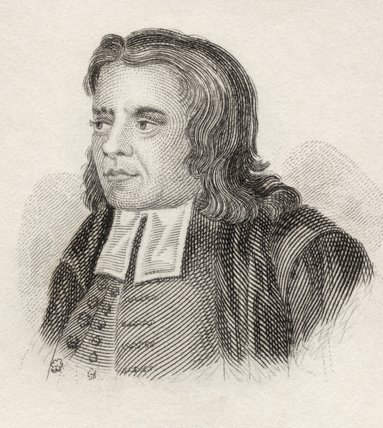
Portrait of Thomas Hearne

The 12 Most Famous Thomas Hearne Paintings, Each One of a Kind

Updated November 2026 · ranked by our popularity score (searches, visits and orders for each work) · 12 works by Thomas Hearne in our catalogue

In short

Glastonbury Abbey (1795) is the Thomas Hearne painting that draws the most eyes; the original belongs to the Birmingham Museum and Art Gallery, Birmingham. After it, the eye goes to Stirling and Elvet Bridge, Durham, 18th Century. Among the 12 works of Thomas Hearne in our catalog, these 12 are the most famous, each a unique original presented with its year, its museum and the reason it endures.

1744 – 1817, Avon Most works: Birmingham Museum and Art Gallery

Top 10 paintings by Thomas Hearne, through the gallery's eye

1
Glastonbury Abbey (1795) by Thomas Hearne

Glastonbury Abbey

1795 · Watercolor · Birmingham Museum and Art Gallery, Birmingham

In this watercolor and ink work, Thomas Hearne presents the ruins of Glastonbury Abbey, a former Benedictine monastery situated in Glastonbury, Somerset, England. Created about 1795, the painting captures the skeletal remains of the structure under a vast, clear sky. The subject matter focuses on the architectural decay of the site, where the once-grand stone masonry now exists in a state of quiet fragmentation. The artist focuses on the interplay…

2
Stirling by Thomas Hearne

Stirling

Watercolor

In this work, titled Stirling, Thomas Hearne turns his attention to the imposing architecture of Stirling Castle in Scotland. The subject is a historically significant landmark, rendered with a focus on the structural presence of the castle within its rugged environment. Hearne captures the essence of the site, presenting the stone fortifications as they sit amidst the rising terrain. It is a quiet study of a place defined by its…

3
Elvet Bridge, Durham, 18th Century by Thomas Hearne

Elvet Bridge, Durham, 18th Century

Watercolor

In Elvet Bridge, Durham, 18th Century, Thomas Hearne captures a quiet moment in the life of Durham, England. The scene unfolds around the stone arches of the bridge as it spans the river, anchoring the townscape in a period of stillness. Buildings line the banks, their structures reflected in the moving water below. A single figure rests on the left bank, providing a sense of scale to the architectural expanse.…

4
Crabbes Historical Dictionary by Thomas Hearne

Crabbes Historical Dictionary

Engraving

In the engraving titled Crabbes Historical Dictionary, Thomas Hearne captures a single man through a series of precise, dark lines. The subject is presented in a frontal view, his gaze meeting the viewer from a position of quiet authority. He is dressed in formal attire, wearing a dark coat that absorbs the light. Beneath the heavy fabric, a shirt with a ruffled collar provides a sharp, pale contrast against the…

5
Saltwood Castle by Thomas Hearne

Saltwood Castle

Watercolor

Saltwood Castle by Thomas Hearne presents a medieval fortification embedded within a lush, overgrown landscape. The composition focuses on the architectural presence of the castle, emphasizing its height and imposing towers against a cloudy sky. Dense foliage partially obscures the structure, integrating the stone walls into the surrounding natural environment. This arrangement highlights the intersection of man-made defense and organic growth.

6
Barnard Castle by Thomas Hearne

Barnard Castle

Watercolor · The Bowes Museum, Barnard Castle

In this watercolor landscape, Thomas Hearne captures a quiet moment within a historical setting. The scene centers on the fortified castle of Barnard Castle, which looms over the surrounding terrain. Beside the stone walls, a bridge spans the river, connecting the various elements of the landscape. The architecture of the castle and its associated infrastructure defines the character of the scene, grounding the viewer in a specific, storied location. Small…

Thomas Hearne's famous paintings, numbers 11 to 12

The subjects that held Thomas Hearne's eye

The four subjects that come back most often in these originals, each with its finest example.

The museums that keep Thomas Hearne's originals

The 2 museums that hold the most of the paintings on this page.

Museum City Works by Thomas Hearne Paintings from this list
Birmingham Museum and Art Gallery, BirminghamBirmingham Museum and Art Gallery Birmingham 1 Glastonbury Abbey
The Bowes Museum, Barnard CastleThe Bowes Museum Barnard Castle 1 Barnard Castle

Thomas Hearne across the years: the unique originals of each

All the dated Thomas Hearne originals shown here belong to a single year, 1795: they appear in order of fame.

Works per year

Pick a year to see its originals.

Thomas Hearne's paintings: questions for the gallery

What is the single most famous work of Thomas Hearne?Reveal the answer

Glastonbury Abbey (1795), Birmingham Museum and Art Gallery, Birmingham. Stirling and Elvet Bridge, Durham, 18th Century come next.

At what age did Thomas Hearne create Glastonbury Abbey?Reveal the answer

51 years old: Glastonbury Abbey dates from 1795, and Thomas Hearne was born in 1744.

Which ten paintings by Thomas Hearne are the most famous?Reveal the answer

Glastonbury Abbey, Stirling, Elvet Bridge, Durham, 18th Century, Crabbes Historical Dictionary, Saltwood Castle, Barnard Castle, Derwentwater from Skiddaw, A View in Suffolk, View from Skiddaw over Derwentwater and Goodrich Castle on the Wye. The ranking above gives each one's year and museum.

How many works by Thomas Hearne are known?Reveal the answer

Our catalog holds 12 works by Thomas Hearne.

Where can the most famous Thomas Hearne originals be seen?Reveal the answer

Mostly in Birmingham Museum and Art Gallery (Birmingham) and The Bowes Museum (Barnard Castle). The museum table above lists them all.

What subjects did Thomas Hearne favour?Reveal the answer

Sky (3), Trees (3) and Stone (2), across the 12 works on this page.

What materials did Thomas Hearne paint with most?Reveal the answer

Watercolor, for 6 of the 12 works on this page.

Thomas Hearne: a portrait of the artist

A Visionary of the English Landscape: The Life and Legacy of Thomas Hearne

The history of British landscape art is often told through the sweeping, dramatic canvases of the giants who followed him, yet the foundation of this Romantic tradition was laid with exquisite precision by Thomas Hearne. Born in 1744 in the quiet village of Marshfield, Gloucestershire, Hearne’s early life was shaped by a profound sense of loss and movement. The death of his father when Thomas was only five years old forced him and his mother to relocate to Brinkworth, Wiltshire. This early exposure to the changing landscapes of the English countryside, coupled with the looming presence of architectural marvels like Malmesbury Abbey, would later manifest in his work as a deep, scholarly fascination with Gothic structures and the enduring spirit of antiquity.

Hearne’s path to artistic mastery was far from conventional. His initial apprenticeship was not in a studio, but in the kitchen of his uncle, a pastry cook in Covent Garden. However, fate intervened through the simple proximity of a print shop next door. The influence of Miller, an engraver, provided the young man with a gateway into the world of fine art, transforming a culinary apprenticeship into a lifelong devotion to line and light. This early training in the meticulous details of engraving would become the hallmark of his style, allowing him to marry the precision of a draftsman with the atmospheric soul of a painter.

Mastery of Line and Wash: The Technical Evolution

As Hearne’s talent matured, he moved beyond simple topographical recording toward a more nuanced, emotive expression of nature. His technique became legendary among his contemporaries for its delicate balance; he possessed a unique ability to apply a wash of subtle, subdued colours over a clear, unwavering outline rendered in fine brush, pen, or pencil. This method created a sense of luminous clarity that felt both grounded in reality and elevated by a poetic atmosphere. His work did not merely depict a place; it captured the very air and light that inhabited it.

The development of his skill was significantly accelerated through his association with the celebrated engraver William Woollett. Under Woollett’s mentorship, Hearne spent six years refining his ability to translate complex landscapes into print, a period during which Woollett himself came to regard him as the preeminent landscape engraver of the era. This rigorous training in tonal depth and structural integrity prepared Hearne for his later explorations, where he would combine the architectural precision of an antiquarian with the burgeoning sensibilities of the Romantic movement.

A Bridge Between Eras: Influence and Historical Significance

Thomas Hearne occupies a vital position in art history as a bridge between the topographical accuracy of the mid-eighteenth century and the emotive landscapes of the nineteenth. His influence was not merely retrospective; it was foundational for the next generation of masters. The techniques he pioneered in watercolor were studied closely by J.M.W. Turner and Thomas Girtin, two artists who would eventually push the boundaries of the medium into even more sublime and tempestuous territories. Hearne provided the structural vocabulary that allowed these later artists to explore the infinite.

His career was marked by significant professional milestones and adventurous travels that expanded his artistic horizons:

  • Recognition from the Royal Society of Arts: Early in his career, Hearle secured prestigious "premiums" for his versatility, winning awards for both still life compositions and equestrian subjects.
  • Exploration and Documentation: Before the era of photography, Hearne undertook vital journeys to record the world, including a significant commission in 1771 to travel to the Leeward Islands under the auspices of Sir Ralph Payne.
  • Collaborative Spirit: His travels through Northern England and Scotland alongside George Beaumont served not only to document the rugged British vistas but also to foster a shared artistic vision that would define English Romanticism.

Ultimately, the work of Thomas Hearne remains a testament to the power of observation. Whether capturing the weathered stone of a Gothic ruin or the soft light filtering through a woodland canopy, his art invites the viewer into a world of quiet contemplation and historical reverence. He remains an essential figure for anyone seeking to understand the roots of the English landscape tradition.