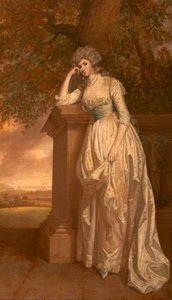
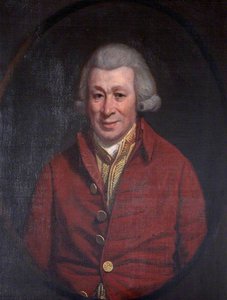
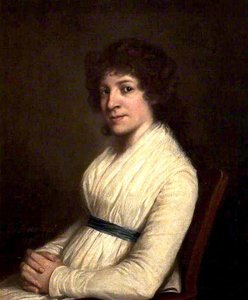
Portrait of Thomas Beach

The 58 Most Famous Thomas Beach Paintings, a Gallery Selection

Updated November 2026 · ranked by our popularity score (searches, visits and orders for each work) · 70 works by Thomas Beach in our catalogue

In short

Of all the originals Thomas Beach left, the most famous is Portrait of William Helyar (d.1820), holding a design for the Georgian wing of Coker Court, Somerset (1760). Close behind it come The Hand that Was Not Called (1775) and Sir Richard Edwards (d. 1794) (1774). Our catalog holds 70 works by Thomas Beach; the gallery has kept the 58 the world admires most, each shown with its date, its museum and its story.

1738 – 1806, Dorchester Neoclassicism Most works: Victoria Art Gallery

Thomas Beach's top 10 paintings: the gallery's choice

1
Portrait of William Helyar (d.1820), holding a design for the Georgian wing of Coker Court, Somerset (1760) by Thomas Beach

Portrait of William Helyar (d.1820), holding a design for the Georgian wing of Coker Court, Somerset

1760 · Oil On Canvas

This formal 18th-century oil portrait depicts William Helyar in a three-quarter length pose. The gentleman stands against a backdrop featuring heavy drapery and classical architectural elements, including a column. He is shown holding a design for the Georgian wing of Coker Court, Somerset, a detail that serves to symbolize his connection to land and architecture. The composition is a standard eye-level portrait view, creating an intimate yet respectful distance between…

2
The Hand that Was Not Called (1775) by Thomas Beach

The Hand that Was Not Called

1775 · Oil · Museum of Fine Arts, Houston

In this 1775 oil painting, titled The Hand that Was Not Called, six men are gathered around a small wooden table in an indoor setting. The composition forms a dense, pyramidal arrangement of figures, creating a sense of social intimacy. The scene captures a moment of calm, focused concentration and gentlemanly camaraderie as the men engage in a game of cards, with hands holding cards and others scattered across the…

3
Sir Richard Edwards (d. 1794) (1774) by Thomas Beach

Sir Richard Edwards (d. 1794)

1774 · Oil On Canvas · Royal Collection, London

The gaze of Sir Richard Edwards (d. 1794) meets the viewer from within this formal oil portrait. Painted by Thomas Beach, the work captures the subject in a moment of quiet authority. The likeness remains fixed in time, preserving the presence of a man who lived through the shifting social landscapes of the eighteenth century. This portrait exists today as a part of the Royal Collection, held within its prestigious…

4
Francis Woodward (1770) by Thomas Beach

Francis Woodward

1770 · Oil On Canvas · Victoria Art Gallery, Bath

This oil painting on canvas, executed around 1770, presents a formal portrait of a man identified as Francis Woodward. The subject is depicted from the upper body, positioned slightly off-center with his gaze directed toward the viewer. He is characterized by a pale complexion with subtle rosy cheeks and wears a large white wig typical of the period. His attire consists of a white shirt collar and cuffs paired with…

5
Portrait of a Man (1782) by Thomas Beach

Portrait of a Man

1782 · Oil · National Gallery of Ireland, Dublin City

In Thomas Beach's Portrait of a Man, the subject is captured in a three-quarter view, positioned slightly off-center. This placement creates a subtle tension against the dark, indeterminate background. The composition relies on a strong chiaroscuro effect, where the void behind the man pushes his form forward into the viewer's space. The perspective remains at eye-level, establishing a direct and intimate connection.

6
Portrait of Sarah Siddons (1782) by Thomas Beach

Portrait of Sarah Siddons

1782 · Oil On Canvas · Auckland Art Gallery Toi o Tāmaki, Auckland

The gaze of the subject meets the observer in this Portrait of Sarah Siddons, a work that captures the presence of the celebrated actress. Thomas Beach, the artist behind this oil on canvas, brings a sense of quiet dignity to the woman who lived from 1755 to 1831. He renders her with a focused attention that suggests a moment of stillness, holding her within the frame of the composition. The…

7
The Honourable Mrs Craven (1776) by Thomas Beach

The Honourable Mrs Craven

1776 · Oil On Canvas

The subject sits in a quiet, centered stillness. She is an elderly woman, her presence defined by the soft weight of her years and the dignity of her station. Her face, etched with the subtle lines of experience, emerges from a background of minimal depth. Light falls across her features in a diffused glow, casting gentle shadows that trace the contours of her cheeks and the delicate folds of her…

8
Mrs Charles Davis (1781) by Thomas Beach

Mrs Charles Davis

1781 · Oil On Canvas · Victoria Art Gallery, Bath

In this 1781 portrait, the sitter is presented in a three-quarter pose, her gaze meeting the viewer with a directness that suggests both composure and social standing. She is draped in a golden gown, accented by delicate white lace at the neckline, while a dark shawl rests upon her shoulders. The composition relies on a soft, diffused light that illuminates her features against an indistinct, dark background, focusing all attention…

9
George Hanger, 4th Lord Coleraine (1751-1824) (1787) by Thomas Beach

George Hanger, 4th Lord Coleraine (1751-1824)

1787 · Oil On Canvas · Royal Collection, London

The portrait presents a gentleman in a three-quarter view, his presence defined by the structured silhouette of a military-style jacket in deep forest green. Light enters from the upper left, carving the contours of his face and casting soft shadows that lend a three-dimensional volume to his features. A crisp white cravat provides a sharp tonal contrast against the dark, heavy wool of his coat, while the large, airy ostrich…

The Thomas Beach selection continues, 11 to 58

11Sir Abraham Isaac Elton (1718–1790), 4th Bt (1790) by Thomas BeachSir Abraham Isaac Elton (1718–1790), 4th Bt1790 · National Trust 12Charles Penruddock (c.1742–1788), MP, of Compton Chamberlayne (1788) by Thomas BeachCharles Penruddock (c.1742–1788), MP, of Compton Chamberlayne1788 · National Trust 13Miss Jenny Davis (1796) by Thomas BeachMiss Jenny Davis1796 · Victoria Art Gallery 14Lewis Dimoke Grosvenor Tregonwell (1753–1831), Dorset Yeomanry (1798) by Thomas BeachLewis Dimoke Grosvenor Tregonwell (1753–1831), Dorset Yeomanry1798 · Bournemouth Town Hall 15Anne Templer (d.1832), Lady De la Pole (1793) by Thomas BeachAnne Templer (d.1832), Lady De la Pole1793 · National Trust 16Portrait of Elizabeth, Lady Craven (Later Margravine of Anspach) by Thomas BeachPortrait of Elizabeth, Lady Craven (Later Margravine of Anspach) 17William, Mary Ann, and John De la Pole as Children (Sir William Templer Pole, 1782–1847, 7th Bt, Mary Ann Pole, b.1783, and John George Pole, 1787–1803) (1793) by Thomas BeachWilliam, Mary Ann, and John De la Pole as Children (Sir William Templer Pole, 1782–1847, 7th Bt, Mary Ann Pole, b.1783, and John George Pole, 1787–1803)1793 · National Trust 18Portrait of a Gentleman in a Green Robe (1773) by Thomas BeachPortrait of a Gentleman in a Green Robe1773 19Miss Elizabeth Phelips, Dressed as Diana (1770) by Thomas BeachMiss Elizabeth Phelips, Dressed as Diana1770 · Manchester Art Gallery 20Francis Woodward (1721–1785) (1770) by Thomas BeachFrancis Woodward (1721–1785)1770 · Victoria Art Gallery 21Portrait of the Children of Charles Blair (1769) by Thomas BeachPortrait of the Children of Charles Blair1769 22Portrait of Francis Steward (1743 1798), Mayor of Weymouth and Melcombe Regis by Thomas BeachPortrait of Francis Steward (1743 1798), Mayor of Weymouth and Melcombe Regis 23Reverend William Phelips II (1755–1806) (1780) by Thomas BeachReverend William Phelips II (1755–1806)1780 · Montacute House 24Edward Phelips VI (1753–1792), MP (1780) by Thomas BeachEdward Phelips VI (1753–1792), MP1780 · Montacute House 25Miss Davis as a Bride (1780) by Thomas BeachMiss Davis as a Bride1780 · Victoria Art Gallery 26Cornet Edmund Pitts Middleton, 2nd Queen's Dragoon Guards (1778) by Thomas BeachCornet Edmund Pitts Middleton, 2nd Queen's Dragoon Guards1778 27Charles Davis (1741–1805) (1784) by Thomas BeachCharles Davis (1741–1805)1784 · Victoria Art Gallery 28Portrait of a Gentleman in Georgian Dress (1780) by Thomas BeachPortrait of a Gentleman in Georgian Dress1780 · Ludlow Library - Museum Resource Centre 29William 'Memory' Woodfall (1746–1803) (1782) by Thomas BeachWilliam 'Memory' Woodfall (1746–1803)1782 30Portrait of a Man (1785) by Thomas BeachPortrait of a Man1785 · Dulwich Picture Gallery 31Mrs Charles Davis (1726–1782) (1781) by Thomas BeachMrs Charles Davis (1726–1782)1781 · Victoria Art Gallery 32The Honourable Mrs Craven (1776) by Thomas BeachThe Honourable Mrs Craven1776 · Walker Art Gallery 33Rebecca Steward (1766–1859) (1783) by Thomas BeachRebecca Steward (1766–1859)1783 34Miss Davis as a Bride (1780) by Thomas BeachMiss Davis as a Bride1780 · Bath Pump Room 35William Woodfall (1782) by Thomas BeachWilliam Woodfall1782 · National Portrait Gallery 36George Pitt (1721–1803), 1st Lord Rivers (1779) by Thomas BeachGeorge Pitt (1721–1803), 1st Lord Rivers1779 · The Keep Military Museum 37Maria Craven (1769–1851), Later Countess of Sefton, as a Young Girl (1776) by Thomas BeachMaria Craven (1769–1851), Later Countess of Sefton, as a Young Girl1776 · Walker Art Gallery 38Portrait of a Gentleman, Aged 53 (1782) by Thomas BeachPortrait of a Gentleman, Aged 531782 · Government Art Collection 39Dr Richard Pulteney (1730–1801), FRS, FLS (1788) by Thomas BeachDr Richard Pulteney (1730–1801), FRS, FLS1788 40The Reverend Edward Pole (1758–1836) (1794) by Thomas BeachThe Reverend Edward Pole (1758–1836)1794 · National Trust 41Sarah Siddons (1755–1831) (1790) by Thomas BeachSarah Siddons (1755–1831)1790 · Llyfrgell Genedlaethol Cymru / The National Library of Wales 42Peter Palmer (Huntsman to Sir John William De la Pole, 6th Bt) (1793) by Thomas BeachPeter Palmer (Huntsman to Sir John William De la Pole, 6th Bt)1793 · National Trust 43The Stapleton Family (1789) by Thomas BeachThe Stapleton Family1789 · The Holburne Museum 44Sir John William De la Pole (1757–1799), 6th Bt (1794) by Thomas BeachSir John William De la Pole (1757–1799), 6th Bt1794 · National Trust 45Portrait of a Girl of the Burnaby Family (1801) by Thomas BeachPortrait of a Girl of the Burnaby Family1801 46Mrs Charles Davis, Grandmother of Major C. E. Davis (1796) by Thomas BeachMrs Charles Davis, Grandmother of Major C. E. Davis1796 · Victoria Art Gallery 47Miss Jenny Davis (1796) by Thomas BeachMiss Jenny Davis1796 · Bath Pump Room 48Thomas Tyndall with Wife and Children (1800) by Thomas BeachThomas Tyndall with Wife and Children1800 · University of Bristol 49Mrs Charles Davis, Grandmother of Major C. E. Davis (1796) by Thomas BeachMrs Charles Davis, Grandmother of Major C. E. Davis1796 · Bath Pump Room 50Thomas Beach (1802) by Thomas BeachThomas Beach1802 · National Portrait Gallery 51John Hungerford Penruddock (1770–1841), MP, DL, of Compton Chamberlayne (1800) by Thomas BeachJohn Hungerford Penruddock (1770–1841), MP, DL, of Compton Chamberlayne1800 · National Trust 52John Montagu, 4th Earl of Sandwich, PC, FRS by Thomas BeachJohn Montagu, 4th Earl of Sandwich, PC, FRSMinistry of Defence 53Henry Hoare of Mitcham Grove, Surrey (1750–1820) by Thomas BeachHenry Hoare of Mitcham Grove, Surrey (1750–1820)National Trust 54John Montagu (1718–1792), 4th Earl of Sandwich (after Thomas Gainsborough) by Thomas BeachJohn Montagu (1718–1792), 4th Earl of Sandwich (after Thomas Gainsborough)Huntingdon Town Hall 55Portrait of the Children of William Craven, 6th Baron Craven by Thomas BeachPortrait of the Children of William Craven, 6th Baron Craven 56Henry Thomas Fox Strangways (1747–1802), 2nd Earl of Ilchester by Thomas BeachHenry Thomas Fox Strangways (1747–1802), 2nd Earl of IlchesterLacock Abbey 57Colonel George Worden Baynton (1738–1806) by Thomas BeachColonel George Worden Baynton (1738–1806)Royal Welch Fusiliers Regimental Museum 58John Montagu, 4th Earl of Sandwich by Thomas BeachJohn Montagu, 4th Earl of Sandwich

Thomas Beach's famous paintings, period by period

The subjects that held Thomas Beach's eye

The four subjects that come back most often in these originals, each with its finest example.

The museums that keep Thomas Beach's originals

The 8 museums that hold the most of the paintings on this page.

Museum City Works by Thomas Beach Paintings from this list
Victoria Art Gallery, BathVictoria Art Gallery Bath 8 Francis Woodward, Mrs Charles Davis, Miss Jenny Davis
National Trust, AntonyNational Trust Antony 5 Anne Templer (d.1832), Lady De la Pole, William, Mary Ann, and John De la Pole as Children (Sir William Templer Pole, 1782–1847, 7th Bt, Mary Ann Pole, b.1783, and John George Pole, 1787–1803), The Reverend Edward Pole (1758–1836)
Bath Pump Room, BathBath Pump Room Bath 3 Miss Davis as a Bride, Miss Jenny Davis, Mrs Charles Davis, Grandmother of Major C. E. Davis
Royal Collection, LondonRoyal Collection London 2 Sir Richard Edwards (d. 1794), George Hanger, 4th Lord Coleraine (1751-1824)
National Trust, GuildfordNational Trust Guildford 2 Charles Penruddock (c.1742–1788), MP, of Compton Chamberlayne, John Hungerford Penruddock (1770–1841), MP, DL, of Compton Chamberlayne
Montacute HouseMontacute House 2 Reverend William Phelips II (1755–1806), Edward Phelips VI (1753–1792), MP
Walker Art Gallery, LiverpoolWalker Art Gallery Liverpool 2 The Honourable Mrs Craven, Maria Craven (1769–1851), Later Countess of Sefton, as a Young Girl
National Portrait Gallery, LondonNational Portrait Gallery London 2 William Woodfall, Thomas Beach

Thomas Beach decade by decade: the original that defines each

Works per decade

Pick a decade to see the original that defines it.

Collectors' questions about Thomas Beach's paintings

Which work is Thomas Beach most famous for?Reveal the answer

Portrait of William Helyar (d.1820), holding a design for the Georgian wing of Coker Court, Somerset (1760). The Hand that Was Not Called (1775) and Sir Richard Edwards (d. 1794) (1774) come next.

What age was Thomas Beach when Portrait of William Helyar (d.1820), holding a design for the Georgian wing of Coker Court, Somerset was made?Reveal the answer

22 years old: Portrait of William Helyar (d.1820), holding a design for the Georgian wing of Coker Court, Somerset dates from 1760, and Thomas Beach was born in 1738.

What are the ten most famous Thomas Beach paintings?Reveal the answer

Portrait of William Helyar (d.1820), holding a design for the Georgian wing of Coker Court, Somerset, The Hand that Was Not Called, Sir Richard Edwards (d. 1794), Francis Woodward, Portrait of a Man, Portrait of Sarah Siddons, The Honourable Mrs Craven, Mrs Charles Davis, George Hanger, 4th Lord Coleraine (1751-1824) and George Damer, Viscount Milton. The ranking above gives each one's year and museum.

How many paintings did Thomas Beach leave?Reveal the answer

Our catalog holds 70 works by Thomas Beach, dated from 1760 to 1802.

In which museums do Thomas Beach's masterpieces hang?Reveal the answer

Mostly in Victoria Art Gallery (Bath), National Trust (Antony) and Bath Pump Room (Bath). The museum table above lists them all.

In which years did Thomas Beach paint the most famous works?Reveal the answer

In 1780s: 19 of the 58 works on this page were made then, Portrait of a Man among them.

What are the first and the last famous originals of Thomas Beach?Reveal the answer

On this page, the earliest is Portrait of William Helyar (d.1820), holding a design for the Georgian wing of Coker Court, Somerset (1760) and the latest Thomas Beach (1802).

Which subjects did Thomas Beach choose most often?Reveal the answer

Man (22), Woman (15) and Portrait (14), across the 58 works on this page.

Which technique did Thomas Beach use most?Reveal the answer

Oil On Canvas, for 30 of the 58 works on this page.

To which art movement does Thomas Beach belong?Reveal the answer

Neoclassicism, judging by the originals on this page.

Which Thomas Beach works hang at the Victoria Art Gallery?Reveal the answer

Francis Woodward, Mrs Charles Davis and Miss Jenny Davis: the Victoria Art Gallery, Bath holds 8 of the works on this page.

Thomas Beach: life and work

A Legacy of Quiet Elegance: The Life and Art of Thomas Beach

In the grand, sweeping narrative of British portraiture, certain names command the spotlight with theatrical brilliance, while others whisper with a more profound, understated grace. Thomas Beach (1738–1806) belongs to that second, more intimate category. A painter whose brush captured the very essence of the Regency era's dignity, Beach navigated an artistic landscape dominated by giants, yet he carved out a niche defined by a distinctive sensitivity and a melancholic beauty that remains deeply moving to the modern eye.

Born in the vibrant, culturally ascending city of Bath around 1738, Beach’s early years were steeped in an environment of burgeoning social prestige. While much of his personal history remains shrouded in the mists of the eighteenth century, his artistic lineage is clearly traced to one of the most formidable figures in art history: Sir Joshua Reynolds. It is believed that Beach received his foundational training at Chiswick House under Reynolds’s direct tutelage. This apprenticeship was more than mere technical instruction; it was an immersion into a philosophy of painting that prioritized classical composition, tonal gradation, and the pursuit of psychological depth. From Reynolds, Beach inherited the ability to render not just a likeness, but a soul, though he would eventually diverge from his master's penchant for the dramatic in favor of a more subdued, reflective elegance.

The Bath Years: Mastery and Influence

As Beach’s career matured during the 1760s and 1770s, he became a fixture of the Bath art scene, a period where his reputation as a premier portraitist solidified among the city's aristocratic and intellectual circles. His work from this era serves as a beautiful synthesis of the Reynoldsian style—characterized by precise facial rendering and masterful use of light—tempered by Beach’s own unique emotional palette. Where Reynolds might employ grand gestures and sweeping landscapes to elevate his subjects, Beach often leaned into a subtle, quiet grace, using soft shading and thoughtful compositions to evoke a sense of introspective calm.

His ability to capture the character of his sitters led to prestigious commissions that placed him at the heart of British cultural life. Among his most notable achievements was his portraiture of Sarah Siddons, the legendary actress whose presence on the stage was as commanding as Beach’s brushwork was delicate. Through these portraits, Beach did more than document the faces of the era; he captured the very atmosphere of a society caught between the Enlightenment and the Romantic movement.

Artistic Significance and Enduring Impression

The historical significance of Thomas Beach lies in his role as a bridge between the grandiosity of the mid-eighteenth century and the more nuanced, emotive portraiture that would follow. While he may not have sought the fame of the more flamboyant masters, his contribution to the British school of painting is undeniable. His works are characterized by several enduring elements:

  • Psychological Insight: A profound ability to convey the inner temperament and quiet dignity of his subjects through subtle facial expressions.
  • Tonal Mastery: The use of light and shadow to create a sense of atmosphere that feels both timeless and intimate.
  • Refined Composition: A commitment to classical principles that provides a structured, balanced beauty to every canvas.

Today, the works of Thomas Beach offer a window into a lost world of refinement. To view a Beach portrait is to experience a moment of stillness amidst the historical noise, finding beauty in the soft shadows and the quiet, enduring strength of his subjects. He remains a vital figure for any student of British art, reminding us that true greatness often resides not in the loudest voice, but in the most thoughtful stroke.