Portrait of Hamilton Sutton Smith

The 25 Most Famous Hamilton Sutton Smith Paintings, Each One of a Kind

Updated November 2026 · ranked by our popularity score (searches, visits and orders for each work) · 25 works by Hamilton Sutton Smith in our catalogue

In short

Elizabeth N. Smith (1880) is the Hamilton Sutton Smith painting that draws the most eyes; the original belongs to the Museum of African American History, Boston. After it, the eye goes to 33rd Degree Masons, Kansas City Group (1897) and John J. Smith (1900). Among the 25 works of Hamilton Sutton Smith in our catalog, these 25 are the most famous, each a unique original presented with its year, its museum and the reason it endures.

1857 – 1924, Boston Most works: Museum of African American History

Top 10 paintings by Hamilton Sutton Smith, through the gallery's eye

1
Elizabeth N. Smith (1880) by Hamilton Sutton Smith

Elizabeth N. Smith

1880 · Photography · Museum of African American History, Boston

The air in the room feels heavy with the stillness of 1880. Elizabeth N. Smith sits before us, her presence anchored by a quiet, unwavering dignity. She does not demand attention through grand gestures; instead, she commands it through a composed, steady gaze that meets the viewer from a slight angle. The light falls softly across her features, casting gentle highlights upon her skin and the subtle contours of her…

3
John J. Smith (1900) by Hamilton Sutton Smith

John J. Smith

John J. Smith (1820-1906), born free in Richmond, Virginia, moved to Boston in the 1840s, joined the antislavery movement, and opened a barbershop. His business became a gathering place for self-liberated people and abolitionists including Charles Sumner, William Lloyd Garrison, and Lewis Hayden. During the Civil War, Smith worked as a recruiter for the 5th Cavalry in Washington, DC. Smith returned to Boston after the Civil War. Elected first in…

Hamilton Sutton Smith's famous paintings, numbers 11 to 25

The subjects that held Hamilton Sutton Smith's eye

The four subjects that come back most often in these originals, each with its finest example.

The museums that keep Hamilton Sutton Smith's originals

The museum that holds the most of the paintings on this page.

Museum City Works by Hamilton Sutton Smith Paintings from this list
Museum of African American History, BostonMuseum of African American History Boston 25 Elizabeth N. Smith, 33rd Degree Masons, Kansas City Group, John J. Smith

Hamilton Sutton Smith across the decades: one unique original for each

Works per decade

Pick a decade to see the original that defines it.

Hamilton Sutton Smith's paintings: questions for the gallery

What is the single most famous work of Hamilton Sutton Smith?Reveal the answer

Elizabeth N. Smith (1880), Museum of African American History, Boston. 33rd Degree Masons, Kansas City Group (1897) and John J. Smith (1900) come next.

At what age did Hamilton Sutton Smith create Elizabeth N. Smith?Reveal the answer

23 years old: Elizabeth N. Smith dates from 1880, and Hamilton Sutton Smith was born in 1857.

Which ten paintings by Hamilton Sutton Smith are the most famous?Reveal the answer

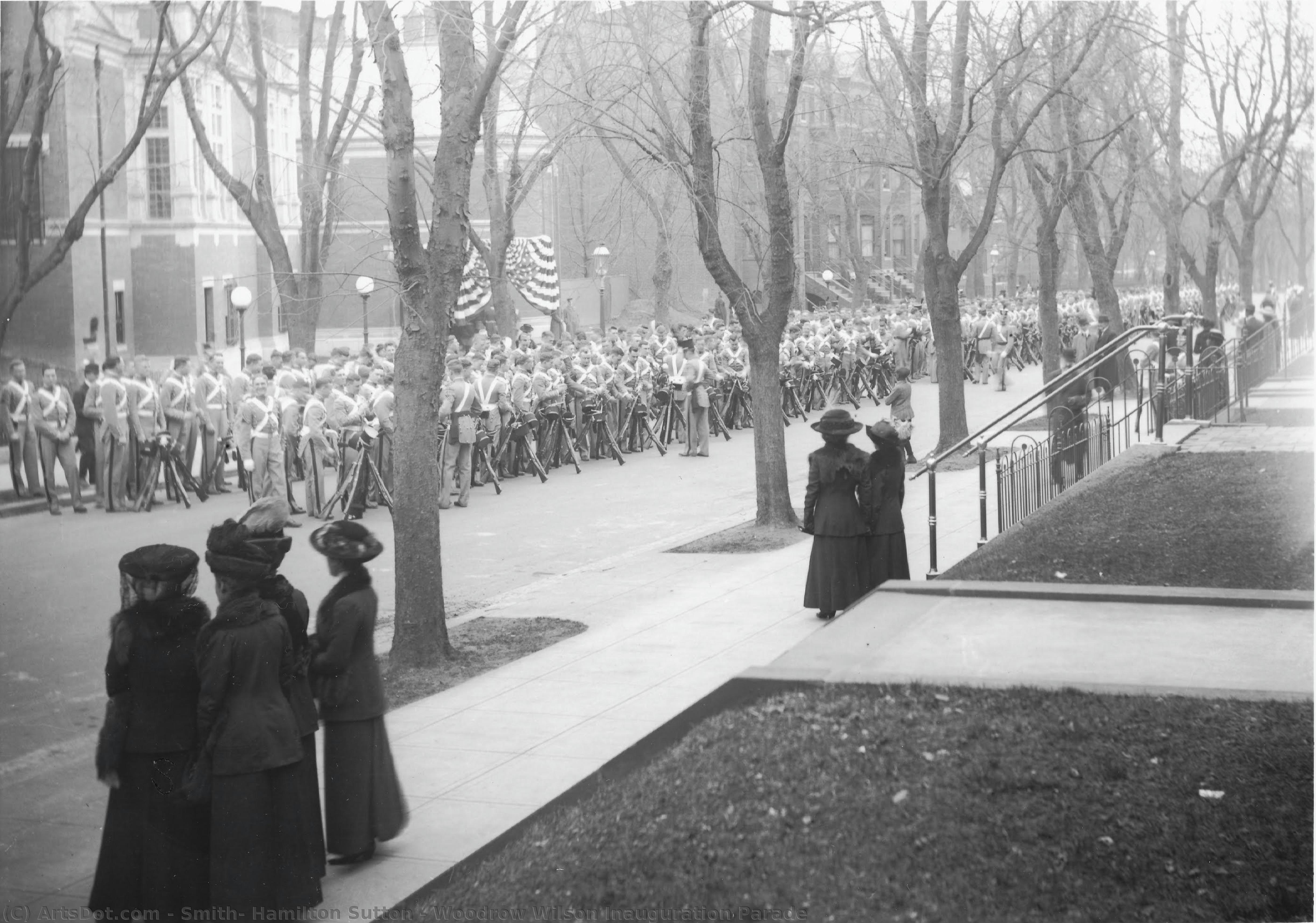
Elizabeth N. Smith, 33rd Degree Masons, Kansas City Group, John J. Smith, Blacksmith Shop, Washington, D.C., M Street High School Cadets, Harriet Louise Smith, Masonic Centennial, Prince Hall Grand Lodge, Hamilton Sutton Smith, Hamilton Sutton Smith with Pipe and Woodrow Wilson Inauguration Parade. The ranking above gives each one's year and museum.

How many works by Hamilton Sutton Smith are known?Reveal the answer

Our catalog holds 25 works by Hamilton Sutton Smith, dated from 1880 to 1915.

Where can the most famous Hamilton Sutton Smith originals be seen?Reveal the answer

Mostly in Museum of African American History (Boston). The museum table above lists them all.

During which period did Hamilton Sutton Smith create the best-known paintings?Reveal the answer

In 1900s: 6 of the 25 works on this page were made then, John J. Smith among them.

Which famous Hamilton Sutton Smith painting is the earliest, and which the latest?Reveal the answer

On this page, the earliest is Elizabeth N. Smith (1880) and the latest Hamilton Sutton Smith (1915).

What subjects did Hamilton Sutton Smith favour?Reveal the answer

Portrait (2) and Black and white image (2), across the 25 works on this page.

What materials did Hamilton Sutton Smith paint with most?Reveal the answer

Photography, for 2 of the 25 works on this page.

What Hamilton Sutton Smith originals can I see at the Museum of African American History?Reveal the answer

Elizabeth N. Smith, 33rd Degree Masons, Kansas City Group and John J. Smith: the Museum of African American History, Boston holds 25 of the works on this page.

Hamilton Sutton Smith: a portrait of the artist

Early Life and Education

Hamilton Sutton Smith, born in Boston, Massachusetts, in 1857, embarked on a life path that defied easy categorization. The third of six children—and the sole son—of John J. and Georgianna Smith, his early years offered little indication of the artistic pursuits that would eventually define him. He initially followed a conventional route, receiving education as both a lawyer and a dentist. However, these professions never fully captured his imagination. A burgeoning fascination with photography began to take hold, ultimately leading him down a path where he could capture moments in time and preserve them for posterity.

A Documentarian of Washington D.C.

Smith’s true calling emerged as a photographer, and it was the nation's capital—Washington, D.C.—that became his primary canvas. He meticulously documented the city’s landmarks with an eye for detail and composition. His photographs weren’t merely records; they were imbued with a sense of civic pride and historical awareness. The Paul Revere House, a symbol of American resilience and revolutionary spirit, was among the many subjects he immortalized through his lens. This dedication to preserving visual history set him apart, offering future generations a glimpse into the architectural and cultural landscape of late 19th-century America.

Beyond Landmarks: Portraits and Personal Connections

While renowned for his Washington D.C. images, Smith’s photographic work extended beyond grand monuments to encompass intimate family portraits. These portraits reveal a sensitivity and skill in capturing the essence of his subjects—their personalities, their hopes, and their place within the social fabric of the time. His ability to connect with individuals on a personal level is evident in the warmth and authenticity that radiate from these images. The photographs offer a poignant counterpoint to his larger-scale documentation, showcasing a commitment to representing both public history and private lives.

The Influence of John J. Smith and Masonic Affiliation

Understanding Hamilton Sutton Smith’s life is inextricably linked to the legacy of his father, John J. Smith—a remarkable figure in his own right. Born free in Richmond, Virginia, John J. Smith became a prominent abolitionist and entrepreneur in Boston, establishing a barbershop that served as a vital hub for the antislavery movement. His business attracted luminaries like Charles Sumner, William Lloyd Garrison, and Lewis Hayden, solidifying its role as a center of social justice. During the Civil War, John J. Smith actively recruited soldiers for the 5th Cavalry in Washington D.C., demonstrating unwavering dedication to the Union cause. Hamilton’s upbringing within this environment undoubtedly shaped his own values and sense of civic responsibility.

Further enriching his life was his involvement with Freemasonry. He rose through the ranks, attaining the prestigious 33rd Degree—a testament to his character and commitment to the fraternity's principles. Photographs documenting his participation in Masonic ceremonies offer a fascinating glimpse into this often-hidden world, revealing a network of brotherhood and shared ideals. His portrait in full Masonic regalia is particularly striking, symbolizing his dedication to both personal growth and communal service.

Legacy and Historical Significance

Hamilton Sutton Smith passed away in Cambridge, Massachusetts, in 1924, leaving behind a rich photographic archive that continues to captivate and inform. His work stands as a valuable historical resource, providing insights into the architectural evolution of Washington D.C., the lives of ordinary Americans, and the social currents of the late 19th century. He wasn’t simply a photographer; he was a documentarian, a portraitist, and a chronicler of his time—a man who used his art to preserve memories, celebrate history, and connect with the human spirit.