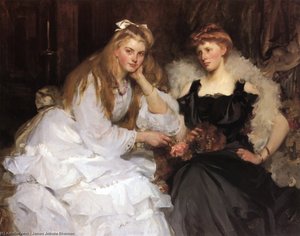
The Elegance of an Era: The Life of Sir James Jebusa Shannon
In the golden twilight of the Victorian and Edwardian eras, few artists captured the refined grace and social splendor of the age as masterfully as Sir James Jebusa Shannon. Born in 1862 in Auburn, United Kingdom, Shannon emerged as a pivotal figure in the world of portraiture, bridging the gap between rigorous academic tradition and the burgeoning aesthetic sensibilities of his time. His life was a testament to the pursuit of beauty, characterized by an unwavering commitment to capturing the dignity, fashion, and soulful presence of the high society figures who graced his canvases.
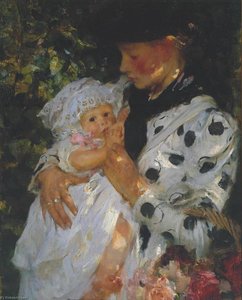
Shannon’s artistic journey was rooted in a profound mastery of classical technique. His ability to manipulate light and texture allowed him to breathe life into his subjects, transforming mere likenesses into enduring icons of elegance. Whether depicting the delicate folds of a silk gown or the subtle, contemplative expression of a sitter, his work possessed a romantic realism that resonated deeply with the collectors and connoisseurs of his day. This technical prowess was not merely about imitation but about an emotional resonance—a way to freeze the fleeting glamour of a vanishing era within the permanence of oil paint.
A Legacy of Portraiture and Prestige
The significance of Shannon’s contribution to the art world extends far beyond his individual canvases. He was not merely a painter of people, but a foundational architect of the institutional art landscape in Britain. His prestige was cemented through several monumental achievements:
- Founding the Royal Society of Portrait Painters: Shannon played a crucial role as a founder of this esteemed organization, helping to establish a dedicated platform for portrait artists to showcase their mastery and elevate the status of the genre.
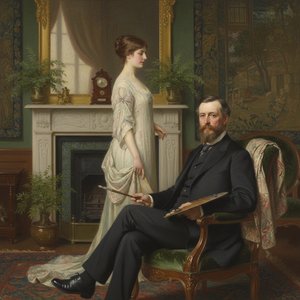
- Mastery of Academic Realism: His work remains a definitive example of late Victorian and Edwardian academic realism, characterized by warm tones, dignified compositions, and an exquisite attention to detail.
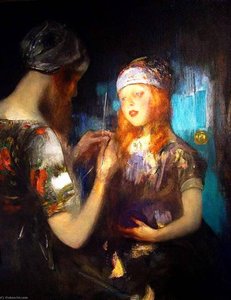
- Cultural Iconography: Through works such as The Green Vase and his various untitled portraits, he provided a visual vocabulary for the era's aesthetic ideals, blending classical form with a soft, romanticized atmosphere.
As a prominent Anglo-American painter, Shannon moved within the most influential circles of the art world, earning him a knighthood that reflected his immense respect within the British establishment. His ability to navigate the transition from the rigid structures of the Royal Academy to a more personal, expressive style allowed him to remain relevant even as modernism began to stir on the horizon.
The Enduring Allure of Shannon’s Vision
To look upon a painting by Sir James Jebusa Shannon is to step into a world of curated beauty and quiet sophistication. His portraits are more than historical documents; they are atmospheric windows into a period defined by its sartorial splendor and social etiquette. The way he utilized light to sculpt the features of his subjects—often imbuing them with a sense of timelessness—ensures that his work continues to captivate modern audiences.
Even today, as we look back from a much more fragmented and digital age, the cohesive elegance of Shannon’s oeuvre offers a sense of nostalgic wonder. His legacy lives on in every brushstroke that celebrates the human form and the quiet majesty of the portraiture tradition. He remains a cornerstone of British art history, a painter who did not just record faces, but captured the very essence of an era's soul.