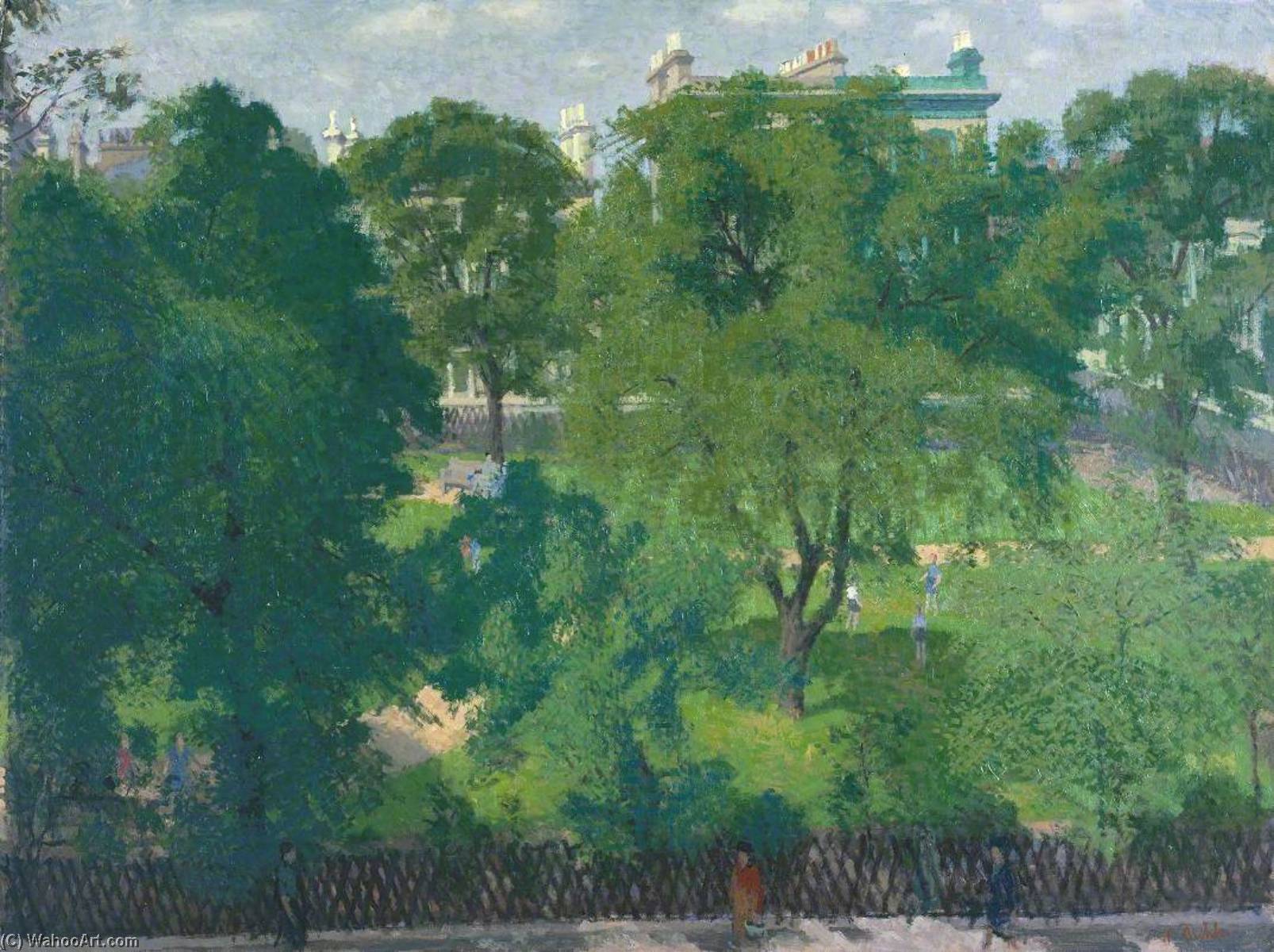
Robert Buhler: A Quiet Master of English Light
Born in London to Swiss parents, Robert Buhler’s artistic journey was a testament to the enduring influence of both heritage and circumstance. His early life, steeped in the cultural richness of his family's background – his father a journalist and aircraft designer, his mother a bookshop owner – provided a foundation for an appreciation of observation and detail that would become hallmarks of his distinctive style. Moving to Switzerland as a young man, he initially studied commercial art before returning to London, where he enrolled at St Martin’s School of Art, absorbing the spirit of the burgeoning Euston Road School movement. This period proved pivotal, exposing him to a group of artists who championed a spare, direct approach to painting – a philosophy that subtly shaped his own distinctive vision.
Buhler's artistic development wasn't solely defined by formal training; it was profoundly influenced by the rhythms and textures of London itself. He found himself drawn to the city’s light, its subtle shifts in atmosphere, and the quiet dignity of everyday life. His early works, often depicting scenes from his neighborhood – Camden Town, Fitzrovia – captured this essence with remarkable sensitivity. These paintings weren't grand statements; rather, they were intimate studies of place, rendered in muted tones and a restrained palette that reflected the city’s understated beauty. He skillfully employed light to create a sense of atmosphere, evoking mood and emotion through subtle variations in color and texture.
The transition from landscape to portraiture marked a significant shift in Buhler's career. His portraits, characterized by their quiet dignity and psychological depth, quickly gained recognition. He possessed an extraordinary ability to capture the essence of his subjects – not merely their physical appearance but also their inner lives. His sitters included prominent figures such as Francis Bacon, John Minton, and Stephen Spender, each portrait revealing a unique facet of the individual’s character. Buhler's portraits weren’t simply likenesses; they were carefully constructed narratives, imbued with a sense of empathy and understanding.
Buhler’s artistic practice extended beyond the confines of London. He spent considerable time in East Anglia, renting cottages and immersing himself in the region’s rural landscapes. This period produced some of his most evocative works – paintings that capture the quiet beauty of the Norfolk countryside with remarkable precision and sensitivity. His approach to landscape painting was deeply rooted in observation, informed by a keen awareness of light, color, and texture. He avoided dramatic gestures or overtly expressive brushstrokes, instead favoring a subtle, understated style that allowed the landscapes themselves to speak for themselves.
Despite his success as a painter and teacher, Robert Buhler’s life was marked by personal challenges. His marriage ended twice, and he struggled with financial difficulties throughout much of his career. Yet, he remained steadfast in his commitment to art, continuing to paint and teach until his death in 1989. His legacy endures not through grand pronouncements or flamboyant displays but through the quiet beauty and profound emotional resonance of his paintings – a testament to the power of observation, restraint, and a deep appreciation for the subtleties of English light.
Key Works
- Early Morning (1939): A quintessential example of Buhler’s early style, depicting a nude man in his bedroom with an emphasis on light and shadow.
- The Saltings (1953): A serene landscape painting capturing the beauty of rural Norfolk, showcasing Buhler's mastery of atmospheric perspective.
- Portrait of John Davenport (1960): A compelling portrait demonstrating Buhler’s ability to capture a subject’s personality and inner life.
- Vineyards, Neuchâtel (1970s?): A later work reflecting Buhler's continued interest in landscape painting, capturing the beauty of the Swiss countryside.
Influences & Style
Buhler’s artistic style was shaped by a confluence of influences. The spare compositions and restrained palettes of the Euston Road School painters – particularly Leon Underwood and Vivian Pitchforth – profoundly impacted his approach to landscape and portraiture. He also drew inspiration from Impressionism, evident in his use of light and color, and from the work of Robert Henri, whose emphasis on American Realism encouraged a direct engagement with the subject matter.
His style is characterized by:
- Muted Tones: A preference for subtle colors rather than bold hues.
- Restrained Brushwork: Avoiding dramatic gestures in favor of smooth, controlled application of paint.
- Atmospheric Perspective: Creating a sense of depth and distance through variations in color and tone.
- Psychological Insight: Capturing the essence of his subjects – both landscapes and people – with remarkable sensitivity and empathy.
Legacy & Recognition
Robert Buhler’s work has been exhibited widely throughout England and abroad, and his paintings are held in numerous public and private collections. He was elected an Associate of the Royal Academy in 1947 and a full Royal Academician in 1956, recognizing his significant contribution to British art. While he never achieved widespread fame during his lifetime, Buhler’s quiet dedication to his craft and his profound understanding of light and atmosphere have earned him a place as a key figure in the history of American Realism.