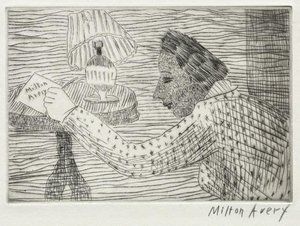
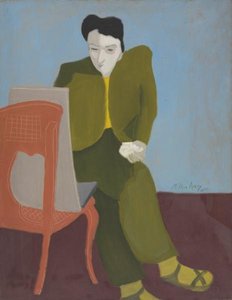
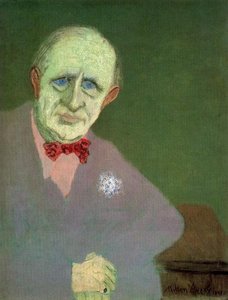
Portrait of Milton Avery

The 100 Most Famous Milton Avery Paintings, Each One of a Kind

Updated November 2026 · ranked by our popularity score (searches, visits and orders for each work) · 211 works by Milton Avery in our catalogue

In short

Interior with Figure (1938) is the Milton Avery painting that draws the most eyes. After it, the eye goes to The Brown Hat and Young Sailor (1933). Among the 211 works of Milton Avery in our catalog, these 100 are the most famous, each a unique original presented with its year, its museum and the reason it endures.

1885 – 1965, Altmar Most works: Philbrook Museum of Art

Top 10 paintings by Milton Avery, through the gallery's eye

1
Interior with Figure (1938) by Milton Avery

Interior with Figure

1938 · Oil On Canvas

Milton Avery produced Interior with Figure in 1938. This oil on canvas work represents a significant contribution to American Modernism. The composition centers on a woman resting on a bed within a room defined by large windows.

2
The Brown Hat by Milton Avery

The Brown Hat

Oil On Canvas

In The Brown Hat by Milton Avery, a single figure occupies the center of the frame. The woman sits within a red chair, her form simplified into broad, blocky shapes. A large brown hat rests upon her head, casting a shadow that partially obscures her face. She is caught in a moment of quiet, downward focus. Her hands hold a rectangular object, perhaps a piece of paper, as she engages…

Milton Avery's famous paintings, numbers 11 to 100

11Nude with Red Drape (1956) by Milton AveryNude with Red Drape1956 12Child with Doll (1944) by Milton AveryChild with Doll1944 · Philbrook Museum of Art 13Florero Naranja by Milton AveryFlorero Naranja 14Oregon Coast by Milton AveryOregon Coast 15Drawing for 'Girl Writing' by Milton AveryDrawing for 'Girl Writing' 16Laurels Number two. My Wife Sally by Milton AveryLaurels Number two. My Wife Sally 17Spring by Milton AverySpring 18Checker Players by Milton AveryChecker Players 19Bucolic Landscape by Milton AveryBucolic Landscape 20Riders in the Park by Milton AveryRiders in the Park 21Blue Nude by Milton AveryBlue Nude 22Nude with Blue Cloth by Milton AveryNude with Blue Cloth 23Sketchers by the Stream by Milton AverySketchers by the Stream 24Burlesque by Milton AveryBurlesque 25The Artist's Daughter in a Blue Gown by Milton AveryThe Artist's Daughter in a Blue Gown 26Reclining Reader by Milton AveryReclining Reader 27Artist and Model by Milton AveryArtist and Model 28Mexican Scene by Milton AveryMexican Scene 29Chariot Race by Milton AveryChariot Race 30Two Figures at Desk by Milton AveryTwo Figures at Desk 31Conversation by Milton AveryConversation 32Nude with Guitar by Milton AveryNude with Guitar 33Winter Riders by Milton AveryWinter Riders 34Two Figures 1 by Milton AveryTwo Figures 1 35Robed Nude by Milton AveryRobed Nude 36Bird and Breaking Wave by Milton AveryBird and Breaking Wave 37Child Cutting by Milton AveryChild Cutting 38Young Girl Nude by Milton AveryYoung Girl Nude 39White Nude No. 2 by Milton AveryWhite Nude No. 2 40Girl in Dotted Dress by Milton AveryGirl in Dotted Dress 41Ensenada canadiense by Milton AveryEnsenada canadiense 42Studious Sketcher by Milton AveryStudious Sketcher 43Girl In Wicker Chair by Milton AveryGirl In Wicker Chair 44Nude in Black Robe by Milton AveryNude in Black Robe 45Marsden Hartley by Milton AveryMarsden Hartley 46Two Women by Milton AveryTwo Women 47The Haircut by Milton AveryThe Haircut 48Morning Call 1 by Milton AveryMorning Call 1 49Belle Gross by Milton AveryBelle Gross 50Self-Portrait by Milton AverySelf-Portrait 51Female Painter by Milton AveryFemale Painter 52Untitled (Seated Woman in Blue) by Milton AveryUntitled (Seated Woman in Blue) 53Sally with Beret by Milton AverySally with Beret 54Girl Writing by Milton AveryGirl Writing 55Gershon Benjamin by Milton AveryGershon Benjamin 56Nude Combing by Milton AveryNude Combing 57Summer Reader by Milton AverySummer Reader 58Bicycle Rider by the Loire by Milton AveryBicycle Rider by the Loire 59Bather by Milton AveryBather 60Interlude by Milton AveryInterlude 61Poetry Reading by Milton AveryPoetry Reading 62Untitled (Rock and Water View) (1925) by Milton AveryUntitled (Rock and Water View)1925 63White Rooster (1947) by Milton AveryWhite Rooster1947 64Sally Avery with Still Life (1926) by Milton AverySally Avery with Still Life1926 65Still Life (1929) by Milton AveryStill Life1929 66Russian Woman (1940) by Milton AveryRussian Woman1940 67Girl Seated on a Stool (1942) by Milton AveryGirl Seated on a Stool1942 68Girl and Dog (1943) by Milton AveryGirl and Dog1943 69Still Life with Figure (1940) by Milton AveryStill Life with Figure1940 70Study for Interior with Figure (1939) by Milton AveryStudy for Interior with Figure1939 71Landscape and Rolling Hills (1942) by Milton AveryLandscape and Rolling Hills1942 72Women Bathing (1943) by Milton AveryWomen Bathing1943 73Portrait of Raphael Soyer (1940) by Milton AveryPortrait of Raphael Soyer1940 74Portrait of Louis M. Eilshemius (1942) by Milton AveryPortrait of Louis M. Eilshemius1942 75The Wave (1948) by Milton AveryThe Wave1948 76Bird (1945) by Milton AveryBird1945 77Morning Call (1946) by Milton AveryMorning Call1946 78Portrait (1948) by Milton AveryPortrait1948 79Nude with Guitar (1947) by Milton AveryNude with Guitar1947 80Private Pier (1945) by Milton AveryPrivate Pier1945 81Girl Reading by a Lake (1944) by Milton AveryGirl Reading by a Lake1944 82Sally and Sara (1947) by Milton AverySally and Sara1947 83Parisian Cart (1952) by Milton AveryParisian Cart1952 84Mandolin Player (1950) by Milton AveryMandolin Player1950 85Green Sea (1954) by Milton AveryGreen Sea1954 86Spring (1954) by Milton AverySpring1954 87Pigeon (1956) by Milton AveryPigeon1956 88Mountain at High Noon (1955) by Milton AveryMountain at High Noon1955 89Mountain and Meadow (1960) by Milton AveryMountain and Meadow1960 90Ruffled Pigeon (1961) by Milton AveryRuffled Pigeon1961 91Dunes and Sea (1958) by Milton AveryDunes and Sea1958 92Spring Orchard (1959) by Milton AverySpring Orchard1959 93Night Harbor (1957) by Milton AveryNight Harbor1957 · Chrysler Museum of Art 94Dikran G. Kelekian (1943) by Milton AveryDikran G. Kelekian1943 95Untitled (Harbor Scene) (1925) by Milton AveryUntitled (Harbor Scene)1925 96Two Chickens (1948) by Milton AveryTwo Chickens1948 97Gay Boat by Milton AveryGay Boat 98Sail by Milton AverySail 99Houses by the Sea by Milton AveryHouses by the Sea 100The Wave by Milton AveryThe Wave

The subjects that held Milton Avery's eye

The four subjects that come back most often in these originals, each with its finest example.

The museums that keep Milton Avery's originals

The 2 museums that hold the most of the paintings on this page.

Museum City Works by Milton Avery Paintings from this list
Philbrook Museum of Art, TulsaPhilbrook Museum of Art Tulsa 1 Child with Doll
Chrysler Museum of Art, NorfolkChrysler Museum of Art Norfolk 1 Night Harbor

Milton Avery across the decades: one unique original for each

Works per decade

Pick a decade to see the original that defines it.

Milton Avery's paintings: questions for the gallery

What is the single most famous work of Milton Avery?Reveal the answer

Interior with Figure (1938). The Brown Hat and Young Sailor (1933) come next.

At what age did Milton Avery create Interior with Figure?Reveal the answer

53 years old: Interior with Figure dates from 1938, and Milton Avery was born in 1885.

Which ten paintings by Milton Avery are the most famous?Reveal the answer

Interior with Figure, The Brown Hat, Young Sailor, Red Boat 2, Man Fishing, Thinking, Artist and Nude, Dog and Rocks verso Landscape with Trees, Swimmers and Sunbathers and Walkers by Sea. The ranking above gives each one's year and museum.

How many works by Milton Avery are known?Reveal the answer

Our catalog holds 211 works by Milton Avery, dated from 1925 to 1961.

Where can the most famous Milton Avery originals be seen?Reveal the answer

Mostly in Philbrook Museum of Art (Tulsa) and Chrysler Museum of Art (Norfolk). The museum table above lists them all.

During which period did Milton Avery create the best-known paintings?Reveal the answer

In 1940s: 24 of the 100 works on this page were made then, Thinking among them.

Which famous Milton Avery painting is the earliest, and which the latest?Reveal the answer

On this page, the earliest is Untitled (Rock and Water View) (1925) and the latest Ruffled Pigeon (1961).

What subjects did Milton Avery favour?Reveal the answer

Landscape (7), American art (7) and Nudes (7), across the 100 works on this page.

What materials did Milton Avery paint with most?Reveal the answer

Oil On Canvas, for 3 of the 100 works on this page.

Milton Avery: a portrait of the artist

A Quiet Revolution in Color: The Life and Art of Milton Avery

Milton Clark Avery, born March 7, 1885, in the small hamlet of Altmar, New York, wasn’t a painter who stormed the art world with manifestos or radical pronouncements. Instead, his revolution unfolded quietly, through a subtle yet profound exploration of color and form that would deeply influence generations of American artists. His early life was steeped in practicality; as the son of a tanner, Avery began working at sixteen to support his family after his father’s untimely death, taking on various blue-collar jobs while nurturing a burgeoning passion for art. This period instilled in him a grounded sensibility, a connection to everyday life that would permeate his work. He pursued formal training at the Connecticut League of Art Students and later at the Art Students League of New York, but it was through self-directed study and an innate sensitivity to visual experience that Avery truly forged his artistic path. For years, he balanced painting with the demands of providing for a large family, working night jobs to allow daylight hours for creative exploration—a testament to his unwavering dedication.

Finding His Voice: Influences and Artistic Development

Avery’s artistic journey wasn't one of immediate recognition. He worked in relative obscurity for decades, refining his vision through persistent experimentation. Early influences included the bold color palettes of French Fauvism—artists like Henri Matisse were pivotal—and the expressive distortions of German Expressionism, particularly the work of Ernst Ludwig Kirchner. However, Avery didn’t simply mimic these styles; he absorbed their lessons and synthesized them into something uniquely his own. He began to distill subjects – landscapes, figures, still lifes – to their essential forms, prioritizing color relationships and emotional resonance over meticulous detail. This simplification wasn't about a lack of skill but rather a deliberate choice to focus on the evocative power of pure color and flattened planes. His palette became increasingly luminous, his compositions more spacious and serene. A crucial turning point came with his marriage to Sally Michel in 1926; her support as an illustrator allowed him greater freedom to dedicate himself fully to painting, and their artistic dialogue proved invaluable. They developed a collaborative spirit, often referred to as “the Avery style,” characterized by its lyrical abstraction and harmonious color schemes.

Recognition and Legacy: A Champion in Roy Neuberger

For many years, Avery’s work remained largely unknown outside of a small circle of artists and collectors. This changed dramatically through the discerning eye of Roy Neuberger, a New York art dealer who recognized the exceptional quality and originality of Avery's paintings. Beginning in the late 1930s, Neuberger embarked on an ambitious campaign to promote Avery’s work, acquiring over one hundred paintings—including the iconic *Gaspé Landscape*—and strategically lending or donating them to museums around the world. This exposure was transformative, bringing Avery's art to a wider audience and establishing his reputation as a significant American modernist. During this period, Avery also forged friendships with prominent artists like Adolph Gottlieb and Mark Rothko, engaging in stimulating conversations about art and aesthetics that further shaped his artistic development. The Phillips Collection in Washington D.C., recognizing the importance of his work, became the first museum to purchase an Avery painting in 1929 and hosted his first solo exhibition in 1944—a landmark moment in his career.

A Bridge to Abstraction: Avery’s Enduring Influence

Milton Avery's contribution to American art extends far beyond his own paintings. He served as a crucial bridge between representational painting and the burgeoning abstract expressionist movement of the 1940s and 50s. Artists like Rothko and Gottlieb, deeply influenced by Avery’s emphasis on color and simplified forms, acknowledged his pivotal role in paving the way for their own explorations of abstraction. Avery's work demonstrated that a painting didn't need to meticulously depict reality to convey profound emotional depth; it could achieve this through the expressive power of color, composition, and gesture. His paintings are not merely representations of landscapes or figures but rather evocations of mood, atmosphere, and personal experience. He died on January 3, 1965, at Montefiore Hospital in the Bronx, leaving behind a legacy that continues to inspire artists today. Sally Avery continued to champion his work after his death, donating his papers to the Archives of American Art, ensuring that future generations would have access to the rich intellectual and artistic heritage he created.

Key Characteristics & Lasting Impact

  • Simplified Forms: Avery deliberately reduced subjects to their essential shapes, prioritizing color and composition over detailed representation.
  • Luminous Color Palettes: His paintings are characterized by a vibrant yet harmonious use of color, creating a sense of light and atmosphere.
  • Emotional Resonance: Avery’s work is deeply evocative, conveying a range of emotions—serenity, melancholy, joy—through subtle nuances of color and form.
  • Influence on Abstract Expressionism: He served as a crucial link between representational painting and the abstract expressionist movement, inspiring artists like Rothko and Gottlieb.
  • A Quiet Innovator: Avery’s artistic revolution was not one of grand gestures but rather a subtle yet profound exploration of color and form that continues to resonate with audiences today.

Milton Avery's art remains a testament to the power of quiet contemplation, the beauty of simplicity, and the enduring legacy of an artist who dared to forge his own path. His paintings invite us to slow down, to look closely, and to experience the world in a new light—a light infused with color, emotion, and a profound sense of harmony.