Portrait of Mervyn Bishop

The 19 Most Famous Mervyn Bishop Paintings, a Gallery Selection

Updated November 2026 · ranked by our popularity score (searches, visits and orders for each work) · 19 works by Mervyn Bishop in our catalogue

In short

Of all the originals Mervyn Bishop left, the most famous is Prime Minister Gough Whitlam pours soil into the hand of traditional land owner Vincent Lingiari (1975), in the collection of the National Portrait Gallery, Canberra. Close behind it come Children playing in river, Mumeka (1991) and Alan Judd, ABC trainee radio announcer, Sydney (2008). Our catalog holds 19 works by Mervyn Bishop; the gallery has kept the 19 the world admires most, each shown with its date, its museum and its story.

born 1945, Brewarrina Contemporary realism Most works: Art Gallery of New South Wales

Mervyn Bishop's top 10 paintings: the gallery's choice

1
Prime Minister Gough Whitlam pours soil into the hand of traditional land owner Vincent Lingiari (1975) by Mervyn Bishop

Prime Minister Gough Whitlam pours soil into the hand of traditional land owner Vincent Lingiari

1975 · Black and White Photography · National Portrait Gallery, Canberra

In the quiet, grainy texture of Mervyn Bishop’s 1975 photograph, we witness more than just a political ceremony; we encounter a profound reclamation of identity and sovereignty. The image captures the historic moment when Prime Minister Gough Whitlam pours soil into the hand of Vincent Lingiari, an Elder of the Gurindji people. This is not merely a gesture of administrative procedure, but a visceral, tactile symbol of land rights being…

3
Alan Judd, ABC trainee radio announcer, Sydney (2008) by Mervyn Bishop

Alan Judd, ABC trainee radio announcer, Sydney

2008 · Gelatin Silver Print · Art Gallery of New South Wales, Sydney

The photograph titled Alan Judd, ABC trainee radio announcer, Sydney is a work by the artist Mervyn Bishop. This portrait captures Alan Judd in his capacity as a trainee radio announcer for the Australian Broadcasting Commission. The image was captured in 1968 in Sydney, New South Wales, Australia. It serves as a documentary record of the subject within a professional setting.

5
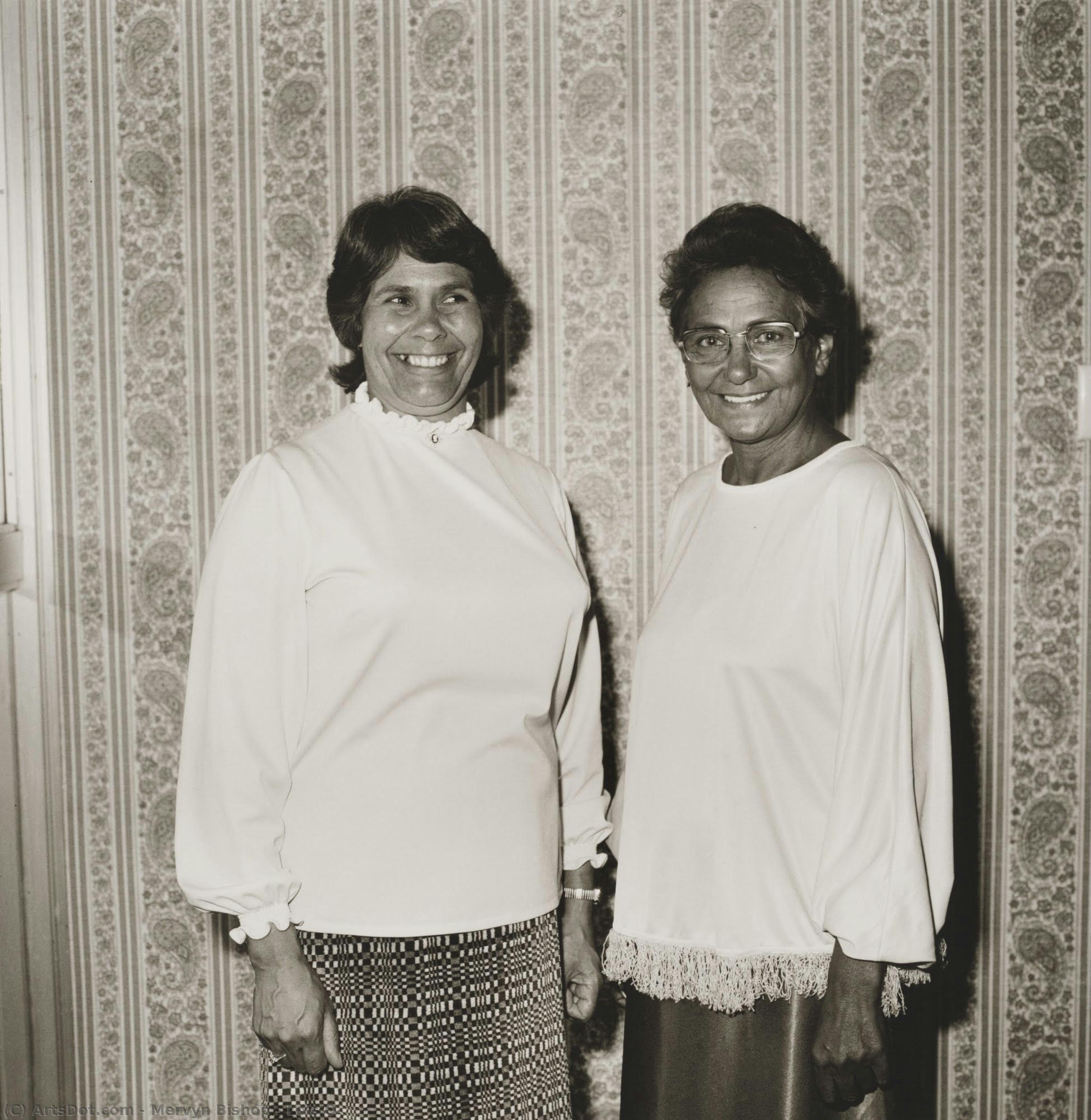
Lois O (2008) by Mervyn Bishop

Lois O

2008 · Photography · Art Gallery of New South Wales, Sydney

Mervyn Bishop's 1974 photograph, “Lois O’Donoghue CBA, AM, and Oodgeroo Noonuccal,” transcends the simple act of portraiture; it’s a deliberate intervention in the historical record. More than just capturing two remarkable women, Bishop confronts the persistent erasure of Indigenous voices within Australian visual culture. The image, rendered in the starkly beautiful tones of black and white, feels both immediate and deeply resonant, inviting viewers to contemplate the complexities of identity,…

9
Lionel Rose at his press conference (1991) by Mervyn Bishop

Lionel Rose at his press conference

1991 · Acrylic On Canvas · Art Gallery of New South Wales, Sydney

Lionel Rose at His Press Conference – A Moment of Triumph Captured in Silver The photograph presents a striking black and white image of Lionel Rose at what appears to be a press conference following his triumphant return from the Olympic Games, specifically his gold medal victory. Shot in 1968 by renowned Australian photographer Mervyn Bishop, this piece resides within the Hallmark Cards Australian Photography Collection Fund and is currently…

The Mervyn Bishop selection continues, 11 to 19

The subjects that held Mervyn Bishop's eye

The four subjects that come back most often in these originals, each with its finest example.

The museums that keep Mervyn Bishop's originals

The 2 museums that hold the most of the paintings on this page.

Museum City Works by Mervyn Bishop Paintings from this list
Art Gallery of New South Wales, SydneyArt Gallery of New South Wales Sydney 18 Children playing in river, Mumeka, Alan Judd, ABC trainee radio announcer, Sydney, Photography cadets with model, Sydney Morning Herald
National Portrait Gallery, CanberraNational Portrait Gallery Canberra 1 Prime Minister Gough Whitlam pours soil into the hand of traditional land owner Vincent Lingiari

Mervyn Bishop decade by decade: the original that defines each

Works per decade

Pick a decade to see the original that defines it.

Collectors' questions about Mervyn Bishop's paintings

Which work is Mervyn Bishop most famous for?Reveal the answer

Prime Minister Gough Whitlam pours soil into the hand of traditional land owner Vincent Lingiari (1975), National Portrait Gallery, Canberra. Children playing in river, Mumeka (1991) and Alan Judd, ABC trainee radio announcer, Sydney (2008) come next.

What age was Mervyn Bishop when Prime Minister Gough Whitlam pours soil into the hand of traditional land owner Vincent Lingiari was made?Reveal the answer

30 years old: Prime Minister Gough Whitlam pours soil into the hand of traditional land owner Vincent Lingiari dates from 1975, and Mervyn Bishop was born in 1945.

What are the ten most famous Mervyn Bishop paintings?Reveal the answer

Prime Minister Gough Whitlam pours soil into the hand of traditional land owner Vincent Lingiari, Children playing in river, Mumeka, Alan Judd, ABC trainee radio announcer, Sydney, Photography cadets with model, Sydney Morning Herald, Lois O, Girl pours tea, Burnt Bridge, Life and death dash, Couple on veranda, Coffs Harbour, Lionel Rose at his press conference and Untitled (Bellbrook NSW, man leaning on fence). The ranking above gives each one's year and museum.

How many paintings did Mervyn Bishop leave?Reveal the answer

Our catalog holds 19 works by Mervyn Bishop, dated from 1975 to 2008.

In which museums do Mervyn Bishop's masterpieces hang?Reveal the answer

Mostly in Art Gallery of New South Wales (Sydney) and National Portrait Gallery (Canberra). The museum table above lists them all.

In which years did Mervyn Bishop paint the most famous works?Reveal the answer

In 2000s: 9 of the 19 works on this page were made then, Alan Judd, ABC trainee radio announcer, Sydney among them.

What are the first and the last famous originals of Mervyn Bishop?Reveal the answer

On this page, the earliest is Prime Minister Gough Whitlam pours soil into the hand of traditional land owner Vincent Lingiari (1975) and the latest Alan Judd, ABC trainee radio announcer, Sydney (2008).

Which subjects did Mervyn Bishop choose most often?Reveal the answer

Black and white (8), Australia (2) and Social justice (2), across the 19 works on this page.

Which technique did Mervyn Bishop use most?Reveal the answer

Black and White Photography, for 6 of the 19 works on this page.

To which art movement does Mervyn Bishop belong?Reveal the answer

Contemporary realism, judging by the originals on this page.

Which Mervyn Bishop works hang at the Art Gallery of New South Wales?Reveal the answer

Children playing in river, Mumeka, Alan Judd, ABC trainee radio announcer, Sydney and Photography cadets with model, Sydney Morning Herald: the Art Gallery of New South Wales, Sydney holds 18 of the works on this page.

Mervyn Bishop: life and work

A Pioneering Lens: The Life and Work of Mervyn Bishop

Mervyn Bishop’s journey as a photographer is more than just a career; it's a testament to breaking barriers, documenting history, and giving voice to Indigenous Australia. Born in Brewarrina, New South Wales, in 1945, his early life was shaped by the complexities of post-war Australia and the restrictive policies impacting Aboriginal communities. His father, “Minty” Bishop, a veteran and shearer, navigated a system that demanded assimilation for even those who had served the nation. This context – a family striving for normalcy while subtly resisting cultural erasure – would profoundly influence Bishop’s perspective and ultimately, his art. The spark ignited with his mother's Kodak 620 camera, transforming everyday scenes into cherished memories and laying the foundation for a lifelong passion. He honed his skills through self-teaching, capturing the essence of family life around Brewarrina before embarking on formal studies at Dubbo High School.

Breaking Ground: A Career Forged in Journalism

In 1962, Bishop shattered expectations by becoming the first Aboriginal Australian cadet photographer at the *Sydney Morning Herald*. This wasn’t merely a personal achievement; it was a symbolic dismantling of systemic exclusion within mainstream media. For seventeen years, he navigated the world of news photography, covering everything from community events to sporting triumphs. He completed his Photography Certificate Course at Sydney Technical College during this time, solidifying his technical expertise. Bishop's dedication and keen eye quickly earned him recognition, culminating in the prestigious Nikon-Walkley Australian Press Photographer of the Year award in 1971 for *Life and Death Dash*. This powerful image – a nun rushing to aid an Aboriginal child – wasn’t just a news photograph; it was a stark commentary on social inequalities and the often-fraught relationship between Indigenous communities and religious missions. The composition, contrast, and raw emotion resonated deeply, foreshadowing the profound impact his work would have on Australian society. He remained the sole indigenous photographer employed by the *Herald* throughout his tenure, paving the way for future generations of Aboriginal visual storytellers.

Documenting a Nation: The Department of Aboriginal Affairs Years

Bishop’s move to the Department of Aboriginal Affairs in 1974 marked a pivotal shift in his career. This role allowed him unprecedented access to Indigenous communities across Australia during a period of significant change and burgeoning self-determination. He became a chronicler of hope, documenting land rights negotiations, cultural revival movements, and the everyday lives of Aboriginal people with sensitivity and respect. It was here that he captured arguably his most iconic photograph: the 1975 image of Prime Minister Gough Whitlam handing soil back to Gurindji elder Vincent Lingiari at Wattie Creek. This moment – a symbolic act of land repatriation – transcended its immediate context, becoming an enduring emblem of the Australian land rights movement and a powerful testament to Indigenous resilience. The photograph wasn’t simply documenting an event; it was capturing the birth of a new era in Aboriginal-government relations.

Beyond the Image: Influence, Legacy, and Continued Impact

Mervyn Bishop's influence extends far beyond his individual photographs. He didn’t just document history; he actively shaped its narrative. His work challenged prevailing stereotypes, fostered empathy, and provided a platform for Indigenous voices often marginalized in mainstream media. He returned to the *Sydney Morning Herald* in 1979 before embracing freelance photography in 1986, working with agencies like National Geographic Society. He also dedicated himself to education, lecturing at Tranby Aboriginal College, Eora College, and the Tin Sheds Gallery at the University of Sydney, nurturing a new generation of Indigenous photographers. His retrospective exhibition, *In Dreams: Mervyn Bishop, Thirty Years of Photography 1960–1990*, curated by Tracey Moffatt, toured nationally and internationally for a decade, solidifying his place as a leading figure in Australian art and photojournalism. He further contributed to the cultural landscape as a stills photographer on Phil Noyce’s film *Rabbit Proof Fence* (2002). The Australia Council's Red Ochre Award in 2000 recognized his pioneering work, but perhaps his greatest legacy lies in the enduring power of his images and the inspiration he continues to provide. His recent retrospective at the Art Gallery of New South Wales further cemented his importance, showcasing not only his iconic photojournalism but also intimate family photographs that reveal the personal roots of his artistic vision.
  • Awards: Nikon-Walkley Australian Press Photographer of the Year (1971), Australia Council’s Red Ochre Award (2000).
  • Key Themes: Indigenous identity, social justice, land rights, cultural preservation.
  • Influences: His family history and experiences growing up in Brewarrina, the burgeoning Aboriginal rights movement of the 1970s.