Markus Pernhart: Pioneer of Alpine Landscape Impressionism
Markus Pernhart (Marko Perhnart), born July 28, 1824, in Untermieger (or Obermieger), Austria – died March 30, 1871, in Klagenfurt, was a Carinthian Slovenian / Austrian painter who stands as a pivotal figure in the burgeoning movement of alpine landscape impressionism. He is considered by many scholars to be the first Slovenian realistic landscape painter, cementing his place within the artistic history of Slovenia and establishing him as an early adopter of stylistic innovations that would soon reshape European art. Pernhart’s artistic journey began amidst the serene beauty of Tainach, where he absorbed foundational influences from Andreas Hauser, a respected instructor at Klagenfurt Academy of Fine Arts. This formative period instilled in him a meticulous approach to observation and representation—a characteristic that would permeate his entire oeuvre.
- Early Life & Artistic Beginnings:
- Influences: Franz Steinfeld and the Viennese Art Scene
- The Flowering of Pernhart’s Style: Landscapes of Carinthia
- Notable Works: Bleed, Maria Wörth & Maria Loretto; Traunsee Scenes
- Legacy & Significance:
His formative years in Tainach proved instrumental in shaping Pernhart’s artistic sensibilities. Recognizing his talent early on, Franz Steinfeld, a prominent Viennese artist and instructor at the Academy of Fine Arts, championed Pernhart's ambitions and introduced him to Archbishop Franz Xaver Luschin—a fellow Carinthian native who served as a generous patron. This connection facilitated access to artistic circles in Vienna, exposing Pernhart to groundbreaking ideas and techniques that would propel his stylistic evolution. Notably, Steinfeld’s guidance emphasized the importance of capturing fleeting moments of light and atmosphere – principles that directly informed Pernhart's distinctive approach to landscape painting.
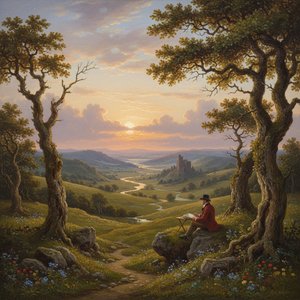
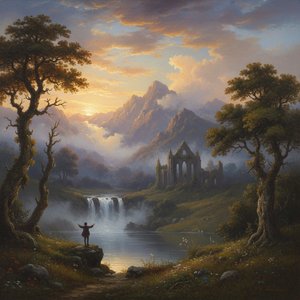
Pernhart’s artistic output primarily focused on documenting the breathtaking vistas of Carinthia—a region he regarded as his spiritual home. He meticulously rendered iconic locations such as Bleed, skillfully incorporating three interwoven perspectives: nature, religion (represented by Maria Wörth and Maria Loretto churches), and a romantic depiction of castle life. These canvases exemplify Pernhart’s commitment to portraying not merely visual appearances but also conveying the emotional resonance of the alpine environment. Similarly, his depictions of Lake Traunsee—featuring the Traunkirche perched atop a dramatic cliff face—demonstrate his masterful ability to capture the grandeur and tranquility of mountainous landscapes. Sketches and oil paintings alike reveal Pernhart’s dedication to capturing the essence of Carinthian scenery with remarkable precision and sensitivity.
Among Pernhart's most celebrated achievements is undoubtedly his series of paintings depicting Lake Bleed, a masterpiece that encapsulates the spirit of Romantic landscape impressionism. The composition deliberately integrates three distinct elements—the natural beauty of the lake and surrounding peaks, the religious significance embodied by Maria Wörth and Maria Loretto churches, and an idealized portrayal of castle life—creating a harmonious visual narrative that transcends mere topographical representation. Furthermore, his meticulous renderings of Lake Traunsee, with its imposing Traunkirche dominating the horizon line, stand as testament to Pernhart’s artistic prowess in conveying both grandeur and serenity.
Markus Pernhart's contribution to art history extends beyond individual paintings; he established a stylistic precedent that profoundly influenced subsequent generations of landscape artists. His pioneering use of impressionistic techniques—characterized by loose brushstrokes and an emphasis on capturing atmospheric effects—challenged academic conventions and paved the way for a more expressive approach to depicting nature. As a result, Pernhart’s legacy continues to inspire artists today who strive to convey emotion and immediacy in their artistic endeavors. He remains recognized as one of the foremost landscape painters of his time, securing his place among the formative figures of alpine art and cementing his enduring influence on European painting traditions.