The Ethereal Tides of Marguerite Grandin Eugène
In the golden era of the Belle Époque, a period defined by its flourishing culture and romanticism, Marguerite Grandin Eugène emerged as a profound voice within the realm of French marine painting. Born in Paris in 1867, her life was an intricate tapestry woven with the salt spray of the Atlantic and the disciplined strokes of a classical education. As the daughter of the esteemed landscape painter Eugène Grandin, she was raised in an environment where the dialogue between light and nature was a constant presence. This familial legacy provided more than just technical instruction; it offered her a window into the soul of the natural world, allowing her to develop a perspective that was both deeply rooted in tradition and vibrantly alive with the spirit of her time.
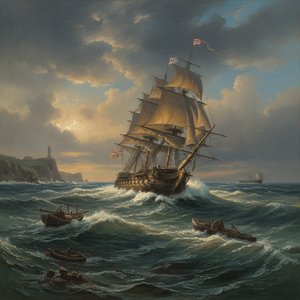
Her artistic journey was profoundly shaped by an enduring fascination with the ocean—a realm of immense power and unpredictable beauty. While many of her contemporaries sought the structured landscapes of the countryside, Eugène found her muse in the restless movement of the sea. Her work serves as a bridge between the meticulous realism of the classical tradition and the atmospheric sensitivity of the Impressionist movement. Influenced by the light-drenched canvases of Claude Monet and Frédéric Bazille, she learned to capture not just the physical presence of water, but the very essence of its atmosphere, documenting the fleeting interplay of sunlight upon cresting waves and the heavy, brooding shadows of approaching storms.
Mastery of the Marine Canvas
The technique employed by Marguerite Grandin Eugène was a testament to her unwavering dedication to the craft of oil painting. She possessed a rare ability to manipulate pigments to achieve a luminous, almost translucent quality in her depictions of water. Her brushwork, though deliberate and controlled, maintained a fluid grace that mirrored the rhythmic pulse of the tides. Through painstaking detail, she could render the rugged textures of rocky coastlines and the intricate rigging of historical vessels with such precision that the viewer could almost feel the spray of the salt air.
Her oeuvre is characterized by several defining elements:
- Dynamic Realism: A commitment to portraying the sea's power, from the tranquil stillness of a sheltered bay to the violent upheaval of a tempestuous ocean.
- Atmospheric Depth: The skillful use of color blending to evoke the shifting moods of the sky and the way light penetrates the depths of the waves.
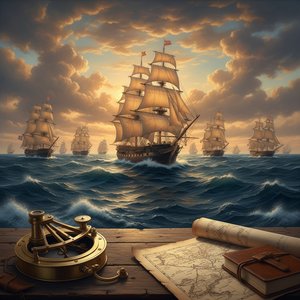
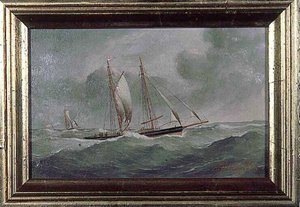
- Historical Narrative: A fascination with maritime life, often featuring sailing ships such as the Saint Simon or the Pierre Marthe, which imbues her work with a sense of historical grandeur and nostalgia.
A Lasting Legacy in Maritime Art
Beyond the technical brilliance of her canvases, Eugène’s significance lies in her ability to evoke an emotional response through the depiction of the maritime landscape. Her paintings are not merely records of ships and seascapes; they are meditations on the sublime—the intersection of human endeavor and the overwhelming majesty of nature. Works such as Voiliers en régate showcase a celebratory side of marine life, capturing the elegance of competition and movement, while her more turbulent scenes remind us of the ocean's indomitable spirit.
As time progressed, her contributions became part of the broader narrative of French art history. Her works found their way into esteemed collections, including the Musée Des Terre-neuvas in Le Havre, ensuring that her vision of the sea would endure for future generations. Today, Marguerite Grandin Eugène is remembered not only as a pioneer of marine painting during a transformative era but as an artist who successfully captured the heartbeat of the ocean, leaving behind a legacy of beauty, strength, and profound oceanic wonder.
Questions & Answers
How popular are Margueritte Grandin Eugène's artworks?
A Stats page exists for Margueritte Grandin Eugène, presenting statistics about the artist's artworks on this website.
What other names is Margueritte Grandin Eugène known by?
Margueritte Grandin Eugène appears under the alternate names Margueritte Grandin Eugene.
Where can I see Margueritte Grandin Eugène's artworks arranged by atmosphere?
The Mood Room of Margueritte Grandin Eugène is a page that arranges the artist's artworks by mood.