Manuel Gallego Suárez-Somonte: A Soldier, a President, and an Artist
Manuel Gallego Suárez-Somonte (1894-1965) was a man of remarkable contrasts – a decorated Spanish soldier and lieutenant general of the Air Force, a passionate football administrator who led Atlético Madrid to its second league title, and a quietly influential painter whose evocative landscapes capture the spirit of Spain’s rural heartland. His life unfolded across several distinct chapters, each contributing to a complex and fascinating persona rarely found in one individual. Born in Mérida, Badajoz, his early years were shaped by military service during the turbulent period leading up to the Spanish Civil War, experiences that would profoundly inform both his artistic vision and his later leadership roles.
Gallego’s military career began with entry into the Toledo Infantry Academy at the young age of twenty. He quickly distinguished himself as a skilled pilot, earning numerous commendations during the Rif War in Morocco and participating in significant aerial operations throughout the 1930s. His bravery and aptitude led to promotions within the Air Force, culminating in his appointment as Governor of the Air Ministry in 1940. This position provided him with invaluable insight into Spain’s burgeoning aviation industry and a deeper understanding of national priorities during a time of immense political upheaval. His service during the Civil War was marked by both danger and dedication; he bravely served on multiple fronts, enduring enemy fire and contributing significantly to the war effort.
However, Gallego's story takes an unexpected turn when he transitions from military life to the world of football. In 1941, he assumed the presidency of Atlético Madrid, a club then struggling for stability and recognition. His leadership proved transformative. He skillfully navigated the challenges of post-war reconstruction, fostering economic growth within the club while simultaneously restoring its competitive spirit. Under his guidance, Atlético achieved a remarkable feat – winning their second league title in 1941, a victory that cemented the team’s legacy and returned them to the iconic Metropolitano stadium. This period represents not just sporting success but also a testament to Gallego's strategic vision and ability to unite a city behind a common goal.
Despite his prominent roles in military and sports administration, Gallego remained a dedicated artist throughout his life. His paintings are characterized by a distinctive style – a blend of realism and impressionism that captures the essence of the Spanish countryside. He frequently depicted landscapes bathed in golden light, evoking a sense of nostalgia and timelessness. His works often feature humble rural scenes: shepherds tending their flocks, ancient stone walls, and vast expanses of wheat fields—elements deeply rooted in the traditions and identity of Spain’s interior. Gallego's artistic approach reflects his own multifaceted life – a synthesis of military discipline, administrative acumen, and an appreciation for the simple beauty of the Spanish landscape.
Gallego’s paintings are not merely representations of scenery; they are imbued with a profound sense of place and history. His use of color is particularly noteworthy, employing warm earth tones and vibrant hues to create a visual harmony that resonates with the spirit of Spain. He often incorporated subtle details—a weathered farmhouse, a solitary tree—that hint at the stories and experiences of generations past. While his artistic output was relatively modest compared to some of his contemporaries, Gallego’s work offers a unique window into the mind of a man who experienced life through multiple lenses – as a soldier, a leader, and an artist deeply connected to his homeland.
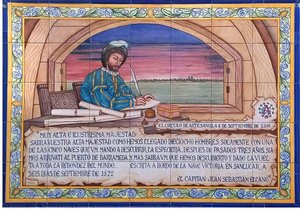
His legacy extends beyond his military achievements and football presidency. The commemorative tiles created in his honor (available on OriginalUniqueArt) serve as a tangible reminder of his impact on Spanish society. His life story is a compelling illustration of how diverse experiences can converge to shape an individual’s identity and leave a lasting mark on the world.