


1


Updated November 2026 · ranked by our popularity score (searches, visits and orders for each work) · 68 works by Joseph Henderson in our catalogue
In short
Near Machrihanish is the Joseph Henderson painting that draws the most eyes. After it, the eye goes to The Storm, Ballantrae, South Ayrshire and Lobster Fishers. Among the 68 works of Joseph Henderson in our catalog, these 68 are the most famous, each a unique original presented with its year, its museum and the reason it endures.


 A Northerly Breeze
12
 Haul On The Sands
13
 A Seascape With Figures On The Shore
14
 James Wilson
15
 At Play On The Shore
16
 A Windswept Beach
17
 Sir John Muir
18
 Fisherfolk On The West Coast
19
 The Summer Sea
20
 Beach Scene With Figures Tending Fishing Boats
21
 Summer Clouds
22
 The Flowing Tide
23
 Rocky Beach Scene
24
 Waves Breaking On A Rocky Coast
25
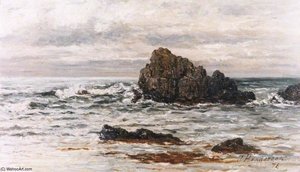 Sea Piece
26
 A Fresh Breeze
27
 Waves Breaking On A Deserted Rocky Coast
28
 Sea Piece
29
 Seascape
30
 The Boat In Sight
31
 Seascape, The Butts
32
 Sunset Over The Sea
33
 Seascape
34
 Fishing Boat At Sunset
35
 From The Cliffs Of Ailsa
36
 Ayrshire Coast Scene
37
 Seascape
38
 Playmates
39
 Fisher Children
40
 Seascape
41
 Herring Fleet Going Out
42
 Sail Off An Ayrshire Headland
43
 Wind And Rain
44
 Robert Frew, Dd
45
 Reverend William Blair
46
 Gathering Wild Flowers
47
 The Hideout
48
 Kelp Burning
49
 A Fishing Smack On The Open Sea
50
 James Docharty
51
 Alexander Duncan
52
 By The Loch
53
 The Beach Comber
54
 Councillor Alexander Waddell
55
 Mr William Ewing GilmourHarvard Art Museums
56
 Portrait Of A Man
57
 Mrs William Ewing Gilmour
58
 Looking Off Shore
59
 Beach Scene
60
 The Right Honourable Lord Charles Scott Dickson
61
 Among The Dunes
62
 Cock And Magpie
63
 Sir Samuel Chisholm
64
 What Can A Young Lassie Dae Wi An Old Man
65
 Children By The Sea
66
 Mother And Child By A Loch
67
 James Paton
68
 Lucero's Place, Springtime
The four subjects that come back most often in these originals, each with its finest example.
The museum that holds the most of the paintings on this page.
| Museum | City | Works by Joseph Henderson | Paintings from this list |
|---|---|---|---|
 Harvard Art Museums |
Cambridge | 1 | Mr William Ewing Gilmour |
Near Machrihanish. The Storm, Ballantrae, South Ayrshire and Lobster Fishers come next.
Near Machrihanish, The Storm, Ballantrae, South Ayrshire, Lobster Fishers, Mending The Nets, Bathing On The Ayrshire Coast, On The Sea Shore, Fishing Off The Coast, Picking Mussels, Picnic By The Sea and A Boy And His Dog On The Shore. The ranking above gives each one's year and museum.
Our catalog holds 68 works by Joseph Henderson.
Mostly in Harvard Art Museums (Cambridge). The museum table above lists them all.
Beach (21), Scenes (7) and Coastal scene (4), across the 68 works on this page.
Impressionism and Contemporary realism, judging by the originals on this page.
In the annals of nineteenth-century Scottish art, few names evoke the rugged dignity of the working class and the untamed majesty of the sea quite like Joseph Henderson. Born in Stanley in 1832, Henderson was a man whose artistic journey was defined by a profound evolution of vision. While his early years were spent mastering the delicate nuances of portraiture—a craft he practiced with precision for two decades—his true spirit was never captured in the static faces of the elite. Instead, his heart belonged to the movement of the tides and the quiet, rhythmic toil of the Scottish people. This transition from the studio's controlled light to the unpredictable elements of the coast marked the birth of a master marine and landscape painter.
Henderson’s formal training at the Trustees' Academy in Edinburgh provided him with a rigorous technical foundation, yet it was his later discovery of his true vocation that would define his legacy. He became captivated by the sea, finding endless inspiration in its myriad conditions, from the tranquil, sun-dappled shallows to the tempestuous, churning grey of a North Sea storm. His ability to translate the shifting qualities of light upon water allowed him to capture not just a scene, but an atmosphere. This fascination with the maritime world was complemented by his deep empathy for the human condition, particularly the lives of those whose existence was inextricably linked to the land and sea.
What distinguishes Henderson’s oeuvre is his profound dedication to genre painting that celebrates the dignity of labor. He turned his brush toward the unsung heroes of the Scottish landscape: the shepherds tending flocks in remote glens, the crofters working the stony soil, and the fishermen braving the unpredictable Atlantic. Through his work, the pedlars, cobblers, and farm laborers are elevated from mere subjects of reportage to symbols of endurance and resilience. His paintings serve as a visual chronicle of a vanishing way of life, capturing the grit and grace of nineteenth-century rural Scotland with an intimacy that feels both historical and deeply personal.
His technical mastery allowed him to blend these human elements seamlessly into the broader landscape. In his compositions, a lone shepherd is never isolated from his environment; rather, he is an organic extension of the rolling hills and misty horizons. This integration of man and nature became a hallmark of his style, earning him significant acclaim within the prestigious circles of the British art world. His frequent exhibitions at the Royal Scottish Academy and the Royal Glasgow Institute of the Fine Arts solidified his standing as a premier chronicler of his nation's character.
The influence of Joseph Henderson extended far beyond his own canvases, weaving into the very fabric of Scottish art history through his family. His life was one of both professional triumph and personal complexity, marked by his leadership as the President of the Glasgow Art Club and his presence in the London art scene via the Royal Academy and Suffolk Street Galleries. The artistic flame continued to burn brightly through his sons, John Henderson and J. Morris Henderson, both of whom established themselves as notable painters in their own right.
Even his familial connections bridged the gap between different movements of the era; his daughter, Marjory, married the celebrated Scottish painter William McTaggart. This connection highlights the interconnectedness of the Scottish art community during this golden age. Today, Henderson’s work remains a vital window into the past, offering a poignant look at the intersection of human industry and natural beauty. His paintings are more than mere depictions; they are enduring tributes to the strength of the Scottish spirit and the eternal, changing face of the sea.


