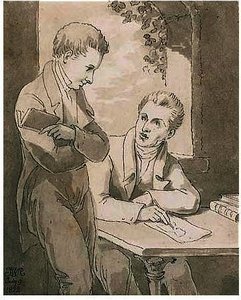
Portrait of John White Abbott

John White Abbott Paintings: The 56 Most Famous, Through a Gallery's Eye

Updated November 2026 · ranked by our popularity score (searches, visits and orders for each work) · 57 works by John White Abbott in our catalogue

In short

To the gallery's eye, John White Abbott's most famous painting is An Italianate Landscape (1800), whose original hangs in the Yale Center for British Art, New Haven. The Old Lime Kilns near Topsham on the Exe, Devon (1808) and Thirlmere and Skiddaw, Lake District complete the trio every eye recognises. Of the 57 works by John White Abbott in our catalog, the gallery presents the 56 most famous below, each original with its year, its museum and what makes it unique.

1763 – 1851, Exeter Romanticism Most works: Yale Center for British Art

The gallery's top 10 John White Abbott paintings

1
An Italianate Landscape (1800) by John White Abbott

An Italianate Landscape

1800 · Oil On Canvas · Yale Center for British Art, New Haven

An Italianate Landscape is an oil on canvas painting by the British artist John White Abbott. Created about 1800, the work presents an Italianate (Romanist) landscape. The artist, John White Abbott, was born in 1763 in Cowick near Exeter, Devon. This specific composition focuses on a wide natural setting characterized by hills, mountains, and various rock landforms.

2
The Old Lime Kilns near Topsham on the Exe, Devon (1808) by John White Abbott

The Old Lime Kilns near Topsham on the Exe, Devon

1808 · Oil On Canvas

In this 1808 oil on canvas, we find ourselves standing on the banks of the Exe, looking toward the old lime kilns near Topsham. The scene is one of profound stillness, a pastoral moment captured with a gentle, observant hand. To the right, a cluster of mature, heavy-canopied trees anchors the composition, their dark trunks and textured bark providing a sturdy frame for the view. Beneath these trees, a rustic…

3
Thirlmere and Skiddaw, Lake District by John White Abbott

Thirlmere and Skiddaw, Lake District

Watercolor

In this work, titled Thirlmere and Skiddaw, Lake District, the artist John White Abbott presents a quiet view of the English Lake District. The composition centers on a valley where a river flows through a landscape of lush greenery. Above the terrain, mountains rise toward a sky where clouds hover, casting a soft light over the scene. It is a moment of stillness captured in the natural world.

4
John White Abbott, Hill Crag on Grasmere Lake by John White Abbott

John White Abbott, Hill Crag on Grasmere Lake

Watercolor · Wordsworth Grasmere, Grasmere

The watercolor painting titled John White Abbott, Hill Crag on Grasmere Lake by John White Abbott captures a specific moment of stillness. This work measures 19 x 29 cm. It presents a view of the rugged terrain and the quiet waters of the Lake District. The paper holds the light of a soft sky and the shadows of the hills.

5
Near New Bridge on the Dart Devon by John White Abbott

Near New Bridge on the Dart Devon

Watercolor

The landscape unfolds with a quiet focus on the grazing life near the River Dart. A herd of cattle occupies the central meadow, their forms scattered across the grass in various stages of repose and movement. Among the cows, several sheep are interspersed, adding a subtle layer of variety to the pastoral assembly. The composition is anchored by rugged rocks in the foreground, which provide a textural contrast to the…

John White Abbott paintings, ranked 11 to 56

11THE HURDY-GURDY PLAYER AND HIS MONKEY by John White AbbottTHE HURDY-GURDY PLAYER AND HIS MONKEY 12A Bacchanal by John White AbbottA Bacchanal 13CATTLE ON THE VILLAGE ROAD by John White AbbottCATTLE ON THE VILLAGE ROAD 14The head of the Lake of Geneva from Vevay by John White AbbottThe head of the Lake of Geneva from Vevay 15Figures on the shore at Dawlish, Devon by John White AbbottFigures on the shore at Dawlish, Devon 16A View of Bristol from the down by John White AbbottA View of Bristol from the down 17Naples, The Island of Capria.Evening by John White AbbottNaples, The Island of Capria.Evening 18New Road to Twerton by John White AbbottNew Road to Twerton 19HAVEN BANK, EXETER; EXETER CATHEDRAL FROM THE HAVEN BANK by John White AbbottHAVEN BANK, EXETER; EXETER CATHEDRAL FROM THE HAVEN BANK 20Linmouth, Devon by John White AbbottLinmouth, Devon 21ON THE WARREN NEAR DAWLISH, DEVON by John White AbbottON THE WARREN NEAR DAWLISH, DEVON 22A study of undergrowth at Chudleigh, Devon by John White AbbottA study of undergrowth at Chudleigh, Devon 23Sheepstor and village, Devon by John White AbbottSheepstor and village, Devon 24Chudleigh, Devon by John White AbbottChudleigh, Devon 25Peamore, Devon by John White AbbottPeamore, Devon 26Sharper Tor with Sheep Tor beyond, Devon by John White AbbottSharper Tor with Sheep Tor beyond, Devon 27Landscape with a view on the Teign by John White AbbottLandscape with a view on the Teign 28The river near Hawthornden, Devon by John White AbbottThe river near Hawthornden, Devon 29DUNSFORD BRIDGE, EAST DEVON by John White AbbottDUNSFORD BRIDGE, EAST DEVON 30Borrowdale and Derwentwater, Lake District by John White AbbottBorrowdale and Derwentwater, Lake District 31Ugbrooke, Devon 1 by John White AbbottUgbrooke, Devon 1 32Watendlath, Cumberland by John White AbbottWatendlath, Cumberland 33VIEW OF BUCKLAND, DEVON by John White AbbottVIEW OF BUCKLAND, DEVON 34Chepstow Castle on the Wye, Monmouthshire by John White AbbottChepstow Castle on the Wye, MonmouthshireBirmingham Museum and Art Gallery 35Near Canonteign by John White AbbottNear Canonteign 36On the Dart, from Holne Chase by John White AbbottOn the Dart, from Holne Chase 37A folio of thirty-nine landscape, animal and figure studies, including Barton by John White AbbottA folio of thirty-nine landscape, animal and figure studies, including Barton 38Portrait of the artist and his friend, William Jackson of Exeter by John White AbbottPortrait of the artist and his friend, William Jackson of Exeter 39Near Roslyn Castle, Edinburgh by John White AbbottNear Roslyn Castle, Edinburgh 40VIEW OF LOCH LONG FROM A HILL NEAR ARROCHAR, SCOTLAND by John White AbbottVIEW OF LOCH LONG FROM A HILL NEAR ARROCHAR, SCOTLAND 41Near Chudleigh by John White AbbottNear Chudleigh 42LANDSCAPE WITH RUSTICS MEETING ON A PATH by John White AbbottLANDSCAPE WITH RUSTICS MEETING ON A PATH 43From the churchyard at Dulverton, Somerset by John White AbbottFrom the churchyard at Dulverton, Somerset 44Houses at the Edge of a Wood by John White AbbottHouses at the Edge of a Wood 45A view of Bideford on the River Torridge, Devon by John White AbbottA view of Bideford on the River Torridge, Devon 46Canonteign, Devon by John White AbbottCanonteign, Devon 47Fishermen unloading their boats on the shore by John White AbbottFishermen unloading their boats on the shore 48Cascade of the Aray at Inveraray (Scotland) by John White AbbottCascade of the Aray at Inveraray (Scotland) 49The lower part of Corra Lynn, one of the Falls of the Clyde, Lanarkshire by John White AbbottThe lower part of Corra Lynn, one of the Falls of the Clyde, Lanarkshire 50View near Canonteign, Devon by John White AbbottView near Canonteign, Devon 51Fishermen hauling a boat to shore, Devon by John White AbbottFishermen hauling a boat to shore, Devon 52VIEW OF MORPETH, NORTHUMBERLAND by John White AbbottVIEW OF MORPETH, NORTHUMBERLAND 53Trees in Ugbrooke Park, Devon by John White AbbottTrees in Ugbrooke Park, Devon 54Trees in Peamore Park, Exeter by John White AbbottTrees in Peamore Park, Exeter 55Caton-Clam-Bridge near Ivy Bridge on the Erme, Devon by John White AbbottCaton-Clam-Bridge near Ivy Bridge on the Erme, Devon 56Canonteign, Devon 2 by John White AbbottCanonteign, Devon 2

John White Abbott's famous paintings, period by period

The subjects that held John White Abbott's eye

The four subjects that come back most often in these originals, each with its finest example.

The museums that keep John White Abbott's originals

The 3 museums that hold the most of the paintings on this page.

Museum City Works by John White Abbott Paintings from this list
Yale Center for British Art, New HavenYale Center for British Art New Haven 1 An Italianate Landscape
Wordsworth Grasmere, GrasmereWordsworth Grasmere Grasmere 1 John White Abbott, Hill Crag on Grasmere Lake
Birmingham Museum and Art Gallery, BirminghamBirmingham Museum and Art Gallery Birmingham 1 Chepstow Castle on the Wye, Monmouthshire

John White Abbott, the signature paintings of each year

Some ten years, from 1800 to 1808, were enough for John White Abbott: the gallery walks through them year by year, one famous original after another.

Works per year

Pick a year to see its originals.

John White Abbott's paintings: the gallery answers

Which John White Abbott painting is the most famous of all?Reveal the answer

An Italianate Landscape (1800), Yale Center for British Art, New Haven. The Old Lime Kilns near Topsham on the Exe, Devon (1808) and Thirlmere and Skiddaw, Lake District come next.

How old was John White Abbott on completing An Italianate Landscape?Reveal the answer

37 years old: An Italianate Landscape dates from 1800, and John White Abbott was born in 1763.

Which are John White Abbott's top 10 paintings?Reveal the answer

An Italianate Landscape, The Old Lime Kilns near Topsham on the Exe, Devon, Thirlmere and Skiddaw, Lake District, John White Abbott, Hill Crag on Grasmere Lake, Near New Bridge on the Dart Devon, Landscape with Abraham and Isaac, THE COTTAGE BY THE BRIDGE, GATHERING FIREWOOD, WOODCUTTERS and CHILDREN BATHING IN A MOUNTAIN STREAM. The ranking above gives each one's year and museum.

How many works did John White Abbott create?Reveal the answer

Our catalog holds 57 works by John White Abbott, dated from 1800 to 1808.

Where do John White Abbott's most famous originals hang?Reveal the answer

Mostly in Yale Center for British Art (New Haven), Wordsworth Grasmere (Grasmere) and Birmingham Museum and Art Gallery (Birmingham). The museum table above lists them all.

Which are John White Abbott's earliest and latest famous works?Reveal the answer

On this page, the earliest is An Italianate Landscape (1800) and the latest The Old Lime Kilns near Topsham on the Exe, Devon (1808).

Which subjects did John White Abbott return to most?Reveal the answer

Forests (13), Landscape (10) and Scenes (8), across the 56 works on this page.

Which medium did John White Abbott work in most?Reveal the answer

Watercolor, for 3 of the 56 works on this page.

Which movement is John White Abbott associated with?Reveal the answer

Romanticism, judging by the originals on this page.

John White Abbott: the artist

John White Abbott: A Quiet Master of Devon’s Landscapes

John White Abbott, born in Exeter in 1763 and passing away in 1851, remains a quietly significant figure within the history of British watercolour painting. Often overshadowed by his influential teacher, Francis Towne, Abbott's work reveals a distinct sensibility—a meticulous observation of light, texture, and the subtle beauty of the Devon countryside and the Scottish Highlands. His life was one of understated dedication to both art and profession; he practiced as a surgeon and apothecary while simultaneously pursuing his artistic passions with remarkable consistency over several decades. Abbott’s legacy isn't one of grand, dramatic canvases but rather a collection of exquisitely rendered landscapes that offer intimate glimpses into the world around him, reflecting a deep connection to the land and a refined artistic eye.

Abbott’s early training was undeniably shaped by Towne, whose influence is readily apparent in Abbott's loose brushwork and atmospheric perspective. However, while Towne frequently depicted Italianate scenes – often with a theatrical flair – Abbott focused primarily on his native Devon and Scotland. This shift reflects a growing interest in the natural world and a desire to capture the authentic character of these regions. He spent considerable time touring the Lake District in 1791, meticulously sketching and studying the dramatic landscapes, which undoubtedly informed his later work. His style evolved over time, moving from a more direct imitation of Towne’s techniques to a greater degree of independence, characterized by a delicate handling of colour and an emphasis on capturing the fleeting effects of light.

A Life Divided: Surgeon, Apothecary, and Painter

Born into a prosperous family with estates in Exeter, Abbott's life was structured around both professional responsibilities and artistic pursuits. He received his medical training in Exeter, becoming a respected surgeon and apothecary – skills that provided him with a stable income while allowing him the time and resources to dedicate to painting. His family’s wealth afforded him access to materials and opportunities unavailable to many artists of the period. This comfortable existence enabled Abbott to pursue his artistic endeavors without the constant pressure of financial insecurity, fostering a sustained commitment to his craft.

Abbott's career as an artist unfolded gradually, beginning in the 1790s and continuing until shortly before his death. He exhibited regularly at the Royal Academy between 1795 and 1822, though his presence there diminished significantly after the early 1820s. Notably, Abbott never actively sold his paintings during his lifetime; they were largely retained within his family’s collection, suggesting a deep personal attachment to his work and a lack of commercial ambition. This relative obscurity contributed to his underestimation by art historians for many years, until more recent scholarship has begun to recognize the depth and subtlety of his artistic vision.

The Language of Landscape: Technique and Subject Matter

Abbott’s watercolour technique is characterized by a remarkable control of colour and texture. He employed a delicate layering approach, building up tones gradually to create subtle gradations of light and shadow. His brushwork is generally loose and expressive, yet always meticulously observed – capturing the nuances of foliage, water surfaces, and atmospheric conditions with impressive accuracy. He was particularly adept at depicting the effects of light on landscape features, creating a sense of depth and atmosphere that is both captivating and serene.

While his early works often mirrored Towne’s style, Abbott developed his own distinctive approach to subject matter. He frequently depicted scenes from the Lake District – rolling hills, shimmering lakes, and dramatic mountainscapes – but also produced numerous landscapes of Devon, including familiar locations like Gowerbarrow Park in Ullswater and Sharper Tor near Exeter. He occasionally ventured into history painting, as evidenced by his oil paintings “Macbeth Recoiling from the Apparition of the Crowned Child” and “Prospero Commanding Ariel,” demonstrating a broader artistic range than initially apparent. These historical works, though less numerous than his landscapes, showcase his ability to render dramatic figures and complex compositions with considerable skill.

Legacy and Rediscovery

Despite his consistent output and occasional recognition at the Royal Academy, John White Abbott’s work remained largely unknown for much of the 20th century. The bulk of his paintings were held within his family's estate until well into the latter half of the century, limiting their exposure to the wider art world. However, in recent decades, there has been a growing appreciation for Abbott’s quiet mastery and understated beauty. His watercolours are now recognized as significant examples of 18th and 19th-century British landscape painting, offering a valuable window into the artistic sensibilities of his time.

Today, Abbot's works can be found in collections around the world, and reproductions are increasingly available through platforms like OriginalUniqueArt.com. His legacy is one of quiet dedication, meticulous observation, and a profound connection to the natural world—a testament to the enduring power of landscape painting.