Portrait of John Gilbert

The 100 Most Famous John Gilbert Paintings, a Gallery Selection

Updated November 2026 · ranked by our popularity score (searches, visits and orders for each work) · 204 works by John Gilbert in our catalogue

In short

Of all the originals John Gilbert left, the most famous is Fair Saint George (1881), in the collection of the Guildhall Art Gallery, London. Close behind it come The Taming of the Shrew (1860) and Sir John Falstaff Reviewing His Ragged Regiment (1858). Our catalog holds 204 works by John Gilbert; the gallery has kept the 100 the world admires most, each shown with its date, its museum and its story.

1817 – 1897, Blackheath Romanticism Most works: Guildhall Art Gallery

John Gilbert's top 10 paintings: the gallery's choice

1
Fair Saint George (1881) by John Gilbert

Fair Saint George

1881 · Oil On Canvas · Guildhall Art Gallery, London

The air feels heavy with the scent of damp earth and the metallic tang of polished steel. In this frozen moment, a knight stands as a pillar of strength against a backdrop of rolling hills and a restless, cloudy sky. He holds his lance upright, his hands gripping the shaft with a steady, practiced ease that suggests a pause in a much longer, more perilous trek. His armor catches the…

2
The Taming of the Shrew (1860) by John Gilbert

The Taming of the Shrew

1860 · Oil On Canvas · Birmingham Museum and Art Gallery, Birmingham

The Taming of the Shrew is a dramatic scene rendered by the English artist John Gilbert. This work captures a moment of friction from a comedy written by William Shakespeare between 1590 and 1592. The image functions as an illustration for the publication of Tales from Shakespeare by Charles Lamb. George Routledge released this specific version of the work.

3
Sir John Falstaff Reviewing His Ragged Regiment (1858) by John Gilbert

Sir John Falstaff Reviewing His Ragged Regiment

1858 · Oil · Birmingham Museum and Art Gallery, Birmingham

In this 1858 work, we find ourselves drawn into a dense, theatrical scene that feels less like a static image and more like a captured moment from a stage play. The composition centers on Sir John Falstaff, draped in heavy red robes, as he conducts a meticulous review of his ragged regiment. Around him, a crowd of rustic characters gathers, their presence creating a sense of bustling, lived-in energy. The…

4
Scene From Shakespeare's The Merchant Of Venice (1864) by John Gilbert

Scene From Shakespeare's The Merchant Of Venice

1864 · Watercolor · Birmingham Museum and Art Gallery, Birmingham

Scene From Shakespeare's The Merchant Of Venice by John Gilbert, a 19th-century watercolor painting, captures a dramatic moment from the play. Created about 1864, the work reflects the artist's deep engagement with literary narratives and the theatricality of the era. Gilbert, a prominent figure in British art, utilized the medium of watercolor to translate dramatic tension into a visual format.

5
The Return Of The Victors (1878) by John Gilbert

The Return Of The Victors

1878 · Oil On Canvas · Birmingham Museum and Art Gallery, Birmingham

The air thickens with the dust of a thousand marching feet in The Return Of The Victors. This grand scene, painted in 1878, captures a moment of triumphant movement as a victorious army sweeps through the landscape. The scale of the work suggests a panoramic view of history in motion, where the weight of victory meets the chaotic energy of a returning crowd. Every figure contributes to a sense of…

6
Margaret of Anjou Taken Prisoner after the Battle of Tewkesbury (1875) by John Gilbert

Margaret of Anjou Taken Prisoner after the Battle of Tewkesbury

1875 · Oil On Canvas · Guildhall Art Gallery, London

The oil painting titled Margaret of Anjou Taken Prisoner after the Battle of Tewkesbury was executed by the British artist John Gilbert in 1875. This work depicts a specific historical event centered on the aftermath of the Battle of Tewkesbury. The subject matter focuses on the immediate consequences of the conflict, specifically capturing the brutality and the state of the battlefield following the engagement.

7
Don Quixote and Sancho at the Castle of the Duke (1883) by John Gilbert

Don Quixote and Sancho at the Castle of the Duke

1883 · Oil On Canvas

The scene unfolds within a stone courtyard, where the heavy architecture of a castle provides a rigid backdrop to a moment of profound human interaction. Two figures dominate the composition, their physical presence defined by a stark contrast in stature and temperament. One figure, clad in the metallic sheen of armor, reaches upward with an air of lofty idealism, his posture embodying the very essence of knightly fantasy. Beside him,…

8
Landscape with a Gypsy Encampment (1888) by John Gilbert

Landscape with a Gypsy Encampment

1888 · Oil On Canvas

A steep hillside descends toward a valley, where the earth meets a turbulent sky. Beneath a canopy of dark, heavy clouds, a small fire flickers, casting a warm glow against the encroaching gloom. Figures huddle near the flames, surrounded by the quiet presence of horses, camels, and sheep. The air feels thick with the scent of woodsmoke and the weight of an approaching storm. Light breaks through the darkness in…

9
Lancelot du Lac (1886) by John Gilbert

Lancelot du Lac

1886 · Oil On Canvas · Guildhall Art Gallery, London

The river churns with a heavy, white froth, swallowing the light beneath the weight of armored horses. Two knights collide in the center of the surge, their swords and shields cutting through the spray. A tree leans precariously over the bank, its branches heavy with the threat of falling into the chaos below. In the foreground, a woman watches. Her face is a pale study in melancholy, a quiet stillness…

10
Ego et Rex Meus (1888) by John Gilbert

Ego et Rex Meus

1888 · Oil · Guildhall Art Gallery, London

In this 1888 oil painting, two men are positioned in a close, vertical composition against the architectural backdrop of a stone building. The figure on the left wears a crown and is draped in heavy red robes accented with gold. He is turned toward the second man, his posture suggesting he is in the middle of speaking. The second man, characterized by a beard, is dressed in similar red and…

The John Gilbert selection continues, 11 to 100

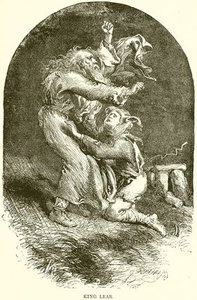
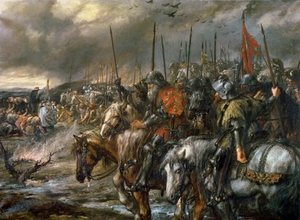
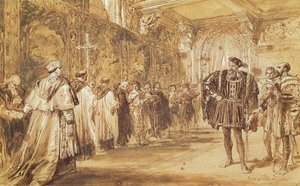
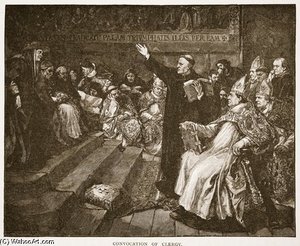
11The Ford (1891) by John GilbertThe Ford1891 · Guildhall Art Gallery 12Don Quixote and Sancho Panza (1840) by John GilbertDon Quixote and Sancho Panza1840 13Don Quixote Disputing with the Priest and the Barber (1844) by John GilbertDon Quixote Disputing with the Priest and the Barber1844 14Her Majesty the Queen Holding a Drawing Room at St James's Palace (1851) by John GilbertHer Majesty the Queen Holding a Drawing Room at St James's Palace1851 15'Henry VIII', Act I, Scene 1, Cardinal Wolsey and Buckingham (1861) by John Gilbert'Henry VIII', Act I, Scene 1, Cardinal Wolsey and Buckingham1861 · Royal Shakespeare Company Collection 16Keston Common, Kent (1856) by John GilbertKeston Common, Kent1856 17Study Of Trees (1874) by John GilbertStudy Of Trees1874 · Birmingham Museum and Art Gallery 18Old Cottages At Lewisham (1876) by John GilbertOld Cottages At Lewisham1876 · Birmingham Museum and Art Gallery 19Preparing For The Charge (1873) by John GilbertPreparing For The Charge1873 · Birmingham Museum and Art Gallery 20Landscape Sketch (1877) by John GilbertLandscape Sketch1877 · Birmingham Museums And Art Gallery 21Don Sancho Panza, Governor of Barataria (1875) by John GilbertDon Sancho Panza, Governor of Barataria1875 · Manchester Art Gallery 22The Baggage Wagon (1884) by John GilbertThe Baggage Wagon1884 · Birmingham Museum and Art Gallery 23A Windy Day (1885) by John GilbertA Windy Day1885 · Birmingham Museum and Art Gallery 24The Horse Pond at Tarring, Sussex (1882) by John GilbertThe Horse Pond at Tarring, Sussex1882 25The Morning of the Battle of Agincourt (1884) by John GilbertThe Morning of the Battle of Agincourt1884 · Guildhall Art Gallery 26Don Quixote's Niece and Housekeeper (1891) by John GilbertDon Quixote's Niece and Housekeeper1891 · Guildhall Art Gallery 27Stock exchange by John GilbertStock exchange 28The aberdeen cabinet by John GilbertThe aberdeen cabinet 29King John by John GilbertKing John 30King Henry's Forces At The Siege Of Harfleur, by John GilbertKing Henry's Forces At The Siege Of Harfleur, 31Richard Ii by John GilbertRichard Ii 32Henry Iv, Part I by John GilbertHenry Iv, Part I 33War - After The Battle by John GilbertWar - After The Battle 34Marmion's Defence to Douglas by John GilbertMarmion's Defence to Douglas 35Queen Elizabeth I Knighting Francis Drake by John GilbertQueen Elizabeth I Knighting Francis Drake 36Coriolanus, by John GilbertCoriolanus, 37As You Like It by John GilbertAs You Like It 38King Lear by John GilbertKing Lear 39King Lear by John GilbertKing Lear 40The Battle Of The Standard by John GilbertThe Battle Of The Standard 41Morning Of The Battle Of Agincourt by John GilbertMorning Of The Battle Of Agincourt 42Titus Andronicus by John GilbertTitus Andronicus 43The Heir Of Linne by John GilbertThe Heir Of Linne 44Guy Fawkes Before King James by John GilbertGuy Fawkes Before King James 45Much Ado About Nothing by John GilbertMuch Ado About Nothing 46King Henry Vi by John GilbertKing Henry Vi 47The Merchant Of Venice by John GilbertThe Merchant Of Venice 48The Merchant Of Venice by John GilbertThe Merchant Of Venice 49Battle of the Standard, by John GilbertBattle of the Standard, 50Henry Viii And Cardinal Thomas Wolsey by John GilbertHenry Viii And Cardinal Thomas Wolsey 51Cordelia by John GilbertCordelia 52Convocation Of Clergy by John GilbertConvocation Of Clergy 53What Shall He Have That Killed The Deer by John GilbertWhat Shall He Have That Killed The Deer 54Wolsey by John GilbertWolsey 55King Henry VI, Part I by John GilbertKing Henry VI, Part I 56Cardinal Wolsey On His Way To Westminster Hall, by John GilbertCardinal Wolsey On His Way To Westminster Hall, 57The Brave Lord Willoughby by John GilbertThe Brave Lord Willoughby 58Valentine And Ursine by John GilbertValentine And Ursine 59Under The Greenwood Tree by John GilbertUnder The Greenwood Tree 60Rembrandt in his Studio by John GilbertRembrandt in his Studio 61Fairies In A Bird's Nest by John GilbertFairies In A Bird's Nest 62A Girl with Fruit (1882) by John GilbertA Girl with Fruit1882 · Guildhall Art Gallery 63Landscape with Hunting Party (1893) by John GilbertLandscape with Hunting Party1893 · Guildhall Art Gallery 64King Henry's Fleet Sails For France, by John GilbertKing Henry's Fleet Sails For France, 65Malvolio by John GilbertMalvolio 66Measure For Measure, by John GilbertMeasure For Measure, 67The Tempest by John GilbertThe Tempest 68Julius Caesar by John GilbertJulius Caesar 69Henry Iv, Part Ii by John GilbertHenry Iv, Part Ii 70Henry Vi, Part I, by John GilbertHenry Vi, Part I, 71Come Away, Come Away, Death by John GilbertCome Away, Come Away, Death 72The Merchant Of Venice, by John GilbertThe Merchant Of Venice, 73The Two Gentlemen Of Verona by John GilbertThe Two Gentlemen Of Verona 74Romeo And Juliet, by John GilbertRomeo And Juliet, 75Othello by John GilbertOthello 76Henry Vi, Part Iii, by John GilbertHenry Vi, Part Iii, 77After The Battle Of Naseby by John GilbertAfter The Battle Of Naseby 78Twelfth Night by John GilbertTwelfth Night 79The Merry Wives Of Windsor by John GilbertThe Merry Wives Of Windsor 80Joan La Pucelle Abandoned by John GilbertJoan La Pucelle Abandoned 81Valentine And Ursine by John GilbertValentine And Ursine 82As You Like It by John GilbertAs You Like It 83The Yellow Dwarf, by John GilbertThe Yellow Dwarf, 84Investiture Of A Knight Of The Garter by John GilbertInvestiture Of A Knight Of The Garter 85Andrew Barton by John GilbertAndrew Barton 86Macbeth by John GilbertMacbeth 87Henry Viii by John GilbertHenry Viii 88Hamlet by John GilbertHamlet 89Tempest by John GilbertTempest 90Taming Of The Shrew by John GilbertTaming Of The Shrew 91Othello by John GilbertOthello 92A Midsummer Night's Dream by John GilbertA Midsummer Night's Dream 93King Richard Ii by John GilbertKing Richard Ii 94Henry V by John GilbertHenry VMuseum of Fine Arts 95Timon Of Athens by John GilbertTimon Of Athens 96Joan Of Arc by John GilbertJoan Of Arc 97Apotheosis Of Shakespeare's Characters by John GilbertApotheosis Of Shakespeare's Characters 98Guy Fawkes Brought Before James I And His Council by John GilbertGuy Fawkes Brought Before James I And His Council 99Come Away Death by John GilbertCome Away Death 100The Merchant Of Venice by John GilbertThe Merchant Of Venice

John Gilbert's famous paintings, period by period

The subjects that held John Gilbert's eye

The four subjects that come back most often in these originals, each with its finest example.

The museums that keep John Gilbert's originals

The 6 museums that hold the most of the paintings on this page.

Museum City Works by John Gilbert Paintings from this list
Guildhall Art Gallery, LondonGuildhall Art Gallery London 9 Fair Saint George, Margaret of Anjou Taken Prisoner after the Battle of Tewkesbury, Lancelot du Lac
Birmingham Museum and Art Gallery, BirminghamBirmingham Museum and Art Gallery Birmingham 9 The Taming of the Shrew, Sir John Falstaff Reviewing His Ragged Regiment, Scene From Shakespeare's The Merchant Of Venice
Manchester Art Gallery, ManchesterManchester Art Gallery Manchester 2 Don Sancho Panza, Governor of Barataria
Royal Shakespeare Company Collection, AvonRoyal Shakespeare Company Collection Avon 1 'Henry VIII', Act I, Scene 1, Cardinal Wolsey and Buckingham
Birmingham Museums And Art Gallery, BirminghamBirmingham Museums And Art Gallery Birmingham 1 Landscape Sketch
Museum of Fine Arts, BostonMuseum of Fine Arts Boston 1 Henry V

John Gilbert decade by decade: the original that defines each

Works per decade

Pick a decade to see the original that defines it.

Collectors' questions about John Gilbert's paintings

Which work is John Gilbert most famous for?Reveal the answer

Fair Saint George (1881), Guildhall Art Gallery, London. The Taming of the Shrew (1860) and Sir John Falstaff Reviewing His Ragged Regiment (1858) come next.

What age was John Gilbert when Fair Saint George was made?Reveal the answer

64 years old: Fair Saint George dates from 1881, and John Gilbert was born in 1817.

What are the ten most famous John Gilbert paintings?Reveal the answer

Fair Saint George, The Taming of the Shrew, Sir John Falstaff Reviewing His Ragged Regiment, Scene From Shakespeare's The Merchant Of Venice, The Return Of The Victors, Margaret of Anjou Taken Prisoner after the Battle of Tewkesbury, Don Quixote and Sancho at the Castle of the Duke, Landscape with a Gypsy Encampment, Lancelot du Lac and Ego et Rex Meus. The ranking above gives each one's year and museum.

How many paintings did John Gilbert leave?Reveal the answer

Our catalog holds 204 works by John Gilbert, dated from 1840 to 1893.

In which museums do John Gilbert's masterpieces hang?Reveal the answer

Mostly in Guildhall Art Gallery (London), Birmingham Museum and Art Gallery (Birmingham) and Manchester Art Gallery (Manchester). The museum table above lists them all.

In which years did John Gilbert paint the most famous works?Reveal the answer

In 1880s: 10 of the 100 works on this page were made then, Fair Saint George among them.

What are the first and the last famous originals of John Gilbert?Reveal the answer

On this page, the earliest is Don Quixote and Sancho Panza (1840) and the latest Landscape with Hunting Party (1893).

Which subjects did John Gilbert choose most often?Reveal the answer

Victorian era (8), Battle scene (6) and Dramatic lighting (5), across the 100 works on this page.

Which technique did John Gilbert use most?Reveal the answer

Oil On Canvas, for 8 of the 100 works on this page.

To which art movement does John Gilbert belong?Reveal the answer

Romanticism, judging by the originals on this page.

Which John Gilbert works hang at the Guildhall Art Gallery?Reveal the answer

Fair Saint George, Margaret of Anjou Taken Prisoner after the Battle of Tewkesbury and Lancelot du Lac: the Guildhall Art Gallery, London holds 9 of the works on this page.

John Gilbert: life and work

Sir John Gilbert RA: The Sculptor of Victorian Imagination

John Gilbert (July 21, 1817 – October 5, 1897), born in Blackheath, Surrey, was a British artist whose prolific output cemented his reputation as “the Scott of painting,” an accolade reflecting his unparalleled skill in capturing the spirit and grandeur of literary classics. Unlike many artists of his era who pursued formal training, Gilbert honed his craft through self-discipline and meticulous observation—primarily copying prints—establishing himself as a master of watercolour, oils, and crucially, wood engraving. His artistic journey began with an apprenticeship at a firm of estate agents but quickly transitioned towards a passion for visual storytelling that would define his career.

Early Life and Artistic Beginnings

Gilbert’s formative years instilled in him a profound appreciation for detail and precision—qualities he would later translate into breathtaking illustrations. George Lance, his sole instructor, nurtured Gilbert's talent, encouraging him to experiment with various mediums and fostering an unwavering dedication to artistic excellence. Despite being denied admission to the Royal Academy Schools, Gilbert’s determination propelled him forward, mastering techniques that allowed him to produce works of remarkable beauty and complexity. His initial exposure to art came through printmaking, a practice he embraced wholeheartedly, recognizing its ability to convey emotion and narrative with striking effectiveness.

The Illustrated London News and Shakespeare

Gilbert's breakthrough arrived in 1856 when he accepted an invitation from William Mulready and Thomas Sheepshanks to contribute woodcuts for *The Illustrated London News*. This collaboration marked the beginning of a prolific partnership that would yield over 2000 engravings—a staggering achievement for the time—demonstrating Gilbert’s mastery of this demanding medium. However, his most enduring legacy resides in his monumental undertaking: the illustrated Shakespeare folio (1862–63). With nearly 750 drawings meticulously crafted to capture the essence of Shakespeare's plays, Gilbert achieved a feat considered impossible by many contemporaries and established himself as the foremost interpreter of Shakespeare’s dramatic vision. The sheer scale and ambition of this project underscored his belief in the transformative power of art—specifically its capacity to illuminate the human condition.

Technique and Style

Gilbert’s artistic style was characterized by a masterful command of chiaroscuro, employing dramatic contrasts between light and shadow to heighten emotional impact and convey depth of feeling. He favored meticulous detail, painstakingly rendering textures and surfaces with remarkable accuracy—a hallmark of his oeuvre that distinguishes him from many other artists of the Victorian period. His paintings often depicted landscapes imbued with atmospheric grandeur, reflecting a fascination with Romantic ideals and an unwavering commitment to capturing sublime beauty. Furthermore, Gilbert’s artistic explorations extended beyond painting into sculpture, where he created evocative figures that embodied both strength and grace.

Legacy and Recognition

Gilbert's influence on Victorian art and illustration is undeniable. He served as president of the Royal Watercolour Society from 1871, solidifying his position as a leading figure in British artistic circles. In recognition of his contributions to the visual arts, he was knighted in 1872 and subsequently elected into the Royal Academy in 1876—a testament to his enduring reputation for excellence and innovation. His work continues to inspire artists today, serving as an exemplar of artistic discipline, technical virtuosity, and imaginative storytelling. The Gilbert-Garret Competition for Sketching Clubs established in 1870 at St. Martins School of Art stands as a lasting tribute to his pioneering spirit and unwavering belief in the importance of artistic education. John Gilbert’s legacy extends beyond his artistic achievements; he is remembered as a champion of humanist values—a man who sought to elevate the human spirit through beauty and contemplation. He rests peacefully at Brockley and Ladywell Cemeteries, Surrey.