A Life Depicted on Canvas: The Maritime World of John Fairbairn Fannen
John Fairbairn Fannen, born in London in 1847 and passing away in 1904, was a British artist whose name resonates with the evocative power of marine painting. While not as widely celebrated as some of his contemporaries, Fannen carved a distinctive niche for himself through meticulously detailed depictions of ships, seascapes, and architectural scenes—particularly those associated with St John’s College, Cambridge. His work offers a fascinating glimpse into Victorian maritime life, capturing the grandeur of steamships alongside the romantic allure of sailing vessels. Fannen's artistic journey wasn’t one of radical innovation but rather of refined skill and dedicated observation, resulting in paintings that are both historically informative and aesthetically pleasing. He was a chronicler of an era defined by naval power, global trade, and technological advancement, translating the energy and scale of these developments onto canvas with remarkable precision.
Early Life and Artistic Development
Details regarding Fannen’s formal artistic training remain somewhat elusive; however, his style suggests a strong grounding in traditional techniques. He appears to have been largely self-taught or received instruction from lesser-known masters of the period. His early works demonstrate an aptitude for architectural rendering, hinting at potential commissions related to documenting buildings and estates. It was his fascination with ships that ultimately defined his career trajectory. The mid-19th century witnessed a dramatic shift in naval technology—the transition from sail to steam—and Fannen became adept at portraying both forms. He wasn’t merely interested in replicating the appearance of vessels; he sought to capture their essence, the interplay of light on water, and the dynamic relationship between ship and sea. His paintings are characterized by a warm, textured style, often employing a rich palette of browns, blues, and grays to convey atmosphere and depth.
The St John’s College Connection
A significant portion of Fannen's output was dedicated to documenting scenes at St John’s College, Cambridge. He produced a series of detailed illustrations depicting the college buildings, grounds, and river activities. These works weren’t simply topographical records; they were imbued with a sense of place and history. The college commissioned him for these paintings, recognizing his ability to capture the unique character of their institution. This long-standing relationship provided Fannen with both financial stability and artistic focus. The St John's College commissions allowed him to hone his skills in architectural perspective and detail, qualities that would later inform his marine scenes. These works offer valuable insights into the appearance of the college during this period, serving as important historical documents alongside their aesthetic merit.
Maritime Masterpieces: Ships and Seascapes
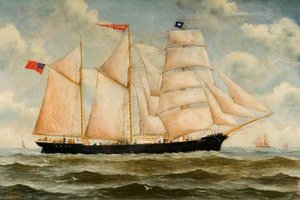
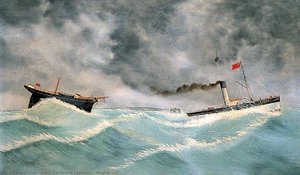
Fannen’s most celebrated paintings are undoubtedly those depicting ships at sea. He painted a wide variety of vessels—from majestic ocean liners to sturdy barques and nimble sailing yachts.
“The Surprise”, completed in 1895, exemplifies his style: a captivating oil painting showcasing a sailing ship navigating warm waters, the textured brushwork conveying both the power of the wind and the tranquility of the sea.
Iron Barque ‘Regent’ and
The Royal Duke are further examples of his ability to capture the grandeur of Victorian-era shipping. He wasn't a painter of dramatic storms or shipwrecks; instead, he focused on scenes of everyday maritime life—ships underway, entering harbors, or at anchor. This focus lends his work a sense of authenticity and realism. He meticulously researched each vessel, ensuring accurate depictions of rigging, hull design, and other details.
Legacy and Historical Significance
While John Fairbairn Fannen may not be a household name, his contribution to Victorian maritime art is significant. His paintings provide valuable insights into the ships, seascapes, and social contexts of the era. He was a skilled craftsman who dedicated his life to capturing the beauty and complexity of the marine world.
- His work serves as an important historical record of Victorian-era shipping.
- The St John’s College paintings offer valuable documentation of the college's appearance during this period.
- Fannen’s meticulous attention to detail and realistic style appeal to both art enthusiasts and maritime historians.
His legacy lies in his ability to translate the energy and scale of a rapidly changing world onto canvas, leaving behind a collection of paintings that continue to captivate and inform audiences today. His work is a testament to the enduring power of observation, skill, and dedication—qualities that ensure his place within the pantheon of British marine artists.