A Neapolitan Luminary: The Life and Art of Giovanni Battista Ruoppolo
Giovanni Battista Ruoppolo emerged from the vibrant artistic milieu of 17th-century Naples, a city brimming with dramatic energy and a burgeoning Baroque sensibility. Born in 1629, his career unfolded during a period where realism was not merely sought but celebrated—a direct response to the theatrical grandeur that swept across Europe. Ruoppolo wasn’t simply *in* this world; he helped define it, becoming a pivotal figure in establishing Naples as a significant center for still life painting. His journey began under the tutelage of Paolo Porpora, a leading master of naturalistic detail, whose studio served as a crucible for a distinctive Neapolitan style. Alongside Ruoppolo, other talented artists like Giuseppe Recco and his brother, Giuseppe Ruoppolo, honed their skills within Porpora’s workshop, forming a formidable school dedicated to the meticulous rendering of the tangible world. This early training instilled in Ruoppolo not just technical proficiency but also an appreciation for the subtle nuances of light, texture, and form—elements that would become hallmarks of his mature work.
The Allure of the Everyday: Ruoppolo’s Artistic Development
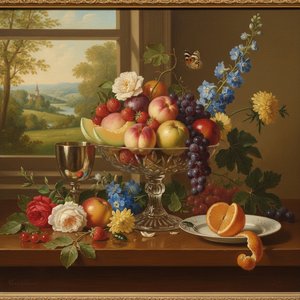
Ruoppolo specialized almost exclusively in still life paintings, a genre often underestimated yet demanding immense skill. He didn't merely *depict* fruit, flowers, vegetables, or even the occasional animal; he elevated them to subjects worthy of profound artistic attention. His canvases are characterized by an astonishing level of detail—each peach fuzz, each dewdrop on a leaf rendered with painstaking accuracy. But Ruoppolo’s artistry extended beyond mere imitation. He possessed a masterful command of color, employing rich, vibrant hues that brought his compositions to life. Perhaps most importantly, he understood the power of chiaroscuro, the dramatic interplay between light and shadow—a technique deeply influenced by Caravaggio, whose impact resonated throughout Italian art during this period. This use of light wasn’t simply aesthetic; it imbued his still lifes with a sense of drama, depth, and almost tangible presence. He arranged his subjects in dynamic groupings, creating visually compelling scenes that celebrated the abundance of nature while hinting at its fleeting beauty. The luxurious textures he achieved—the smooth skin of a plum, the delicate petals of a rose—testify to his exceptional technical prowess.
Echoes and Innovations: Influences and Contemporaries
While Paolo Porpora provided the foundational training, the shadow of Caravaggio looms large over Ruoppolo’s work. The dramatic lighting and intense realism are clear echoes of the master's influence. However, Ruoppolo wasn’t simply a follower; he synthesized these influences with his own unique sensibility. He worked alongside contemporaries like Salvatore Rosa, though their artistic paths diverged significantly—Rosa being renowned for his landscapes and battle scenes. Other artists who shaped or were shaped by Ruoppolo’s style include Andrea Belvedere and Giacomo Nani. A recurring challenge in attributing works from this period stems from the similarity in initials between Ruoppolo and Giuseppe Recco, leading to occasional misattributions and highlighting the complexities of cataloging their respective oeuvres. This underscores the importance of careful scholarship and a nuanced understanding of each artist’s individual style.
A Legacy in Stillness: Major Works and Historical Significance
Ruoppolo's body of work is primarily comprised of still life paintings, each a testament to his skill and artistic vision. “Fruit Still-Life,” housed in Dresden, stands as a prime example of his masterful chiaroscuro and meticulous attention to detail. "Still-Life with Watermelons, Plums, Cherries, a Basket of Figs, Pears and a Monkey" showcases his ability to integrate animals into these compositions, adding another layer of complexity and visual interest. His paintings frequently explore themes of abundance—the overflowing cornucopia of nature’s gifts—but also hint at the transience of beauty, reminding viewers of the ephemeral nature of life itself. He wasn't merely painting objects; he was contemplating existence. Giovanni Battista Ruoppolo played a vital role in solidifying Naples’ reputation as a prominent center for still life painting during the Baroque period. His meticulous technique and dramatic use of light influenced subsequent generations of Italian artists, contributing to the development of a distinctly Neapolitan style within the broader context of European art. While perhaps not as widely celebrated today as some of his contemporaries, Ruoppolo's work remains highly valued for its artistic merit and historical importance, offering invaluable insights into 17th-century Italian culture and aesthetics. His paintings are not just beautiful objects; they are windows into a world—a world meticulously observed, lovingly rendered, and imbued with a profound sense of beauty and contemplation.