Portrait of George Luks

The 100 Most Famous George Luks Paintings, a Gallery Selection

Updated November 2026 · ranked by our popularity score (searches, visits and orders for each work) · 371 works by George Luks in our catalogue

In short

Of all the originals George Luks left, the most famous is Holiday on the Hudson, in the collection of the Cleveland Museum of Art, Cleveland. Close behind it come Hester Street (1905) and Sulky Boy (1908). Our catalog holds 371 works by George Luks; the gallery has kept the 100 the world admires most, each shown with its date, its museum and its story.

1867 – 1933, Williamsport Ashcan school Most works: Metropolitan Museum of Art

George Luks's top 10 paintings: the gallery's choice

1
Holiday on the Hudson by George Luks

Holiday on the Hudson

Oil On Canvas · Cleveland Museum of Art, Cleveland

George Luks painted Holiday on the Hudson around 1912. This oil on canvas work captures a moment of leisure at a harbor, focusing on the interaction between the water, the pier, and the figures gathered there. The piece reflects the artist's mature period, a time when his engagement with the realities of American life was firmly established.

2
Hester Street (1905) by George Luks

Hester Street

1905 · Oil On Canvas · Brooklyn Museum, New York City

George Benjamin Luks's "Hester Street," painted in 1905, is a remarkable example of American realism, capturing the vibrant energy and everyday life of New York City’s Lower East Side. This oil on canvas piece, now residing at the Brooklyn Museum, offers viewers a window into a bustling marketplace teeming with people from diverse backgrounds. The painting isn't merely a depiction; it's an immersive experience that transports us to a pivotal…

3
Sulky Boy (1908) by George Luks

Sulky Boy

1908 · Oil On Canvas · The Phillips Collection, Washington, D.C.

In the quiet intimacy of George Benjamin Luks’s 1908 masterpiece, Sulky Boy, we are invited into a private, domestic sanctuary where time seems to decelerate. The painting presents a poignant portrait of a young boy, seated at a table, his expression heavy with the unmistakable, brooding weight of childhood melancholy. This is not a staged, formal portrait intended for grandeur, but rather a tender observation of a fleeting emotional state.…

4
John Quinn (1908) by George Luks

John Quinn

1908 · Oil On Canvas · National Portrait Gallery, Washington, D.C.

The sitter emerges from a deep, ink-like darkness, his presence defined by a single source of light from the upper left. This light brushes against the high ridge of a forehead and the curve of a cheek, leaving the rest of the face to settle into soft, quiet shadow. He wears the formal attire of the early 20th century: a dark suit, a crisp white high-collared shirt, and a dark…

5
The Wrestler (1906) by George Luks

The Wrestler

1906 · Oil · Yale University Art Gallery, New Haven

In "The Wrestler" by George Luks, the composition is structured around a tense, nocturnal struggle. The scene is dominated by deep shadows and a strong chiaroscuro effect, where a single, unseen light source illuminates a specific portion of the action against an expansive dark background. From a slightly elevated perspective, the viewer looks down upon the central conflict. In the center-left, a man dressed in dark formal attire leans forward…

6
Knitting for the Soldiers High Bridge Park (1918) by George Luks

Knitting for the Soldiers High Bridge Park

1918 · Acrylic · Terra Museum of American Art Location, Chicago

“Knitting for the Soldiers, High Bridge Park,” painted by George Benjamin Luks in 1918, stands as a poignant testament to resilience and compassion during the tumultuous years of World War I. This evocative scene captures a seemingly simple act – knitting – undertaken by a group of women in Central Park, New York City, offering solace and support to those serving overseas.

7
Fifth Avenue, New York (1920) by George Luks

Fifth Avenue, New York

1920 · Oil On Canvas

George Luks captured the pulse of the city in his 1920 painting, Fifth Avenue, New York. This cityscape presents a slice of Manhattan, where the verticality of tall buildings forms a backdrop to the movement below. The canvas holds a moment of urban life, frozen in the transition of a changing era.

8
Morning Shadows by George Luks

Morning Shadows

Oil On Canvas

In Morning Shadows, George Luks presents a scene of quiet industry set against a natural backdrop. The composition centers on a boat resting upon the water, its presence marked by the steady plumes of smoke rising from its stacks. This steamboat serves as a focal point, anchoring the viewer amidst the movement of the landscape. In the distance, the silhouettes of mountains rise to meet a sky punctuated by soft…

9
Telling Fortunes (1914) by George Luks

Telling Fortunes

1914 · Oil · The Phillips Collection, Washington, D.C.

In this 1914 work, George Luks presents us with Telling Fortunes, a dark and intimate study of a gypsy fortuneteller. The subject is drawn from the gritty streets of New York’s Lower East Side, a place Luks knew with profound familiarity. There is a quiet, heavy atmosphere here, focusing on a single figure caught in a moment of private occupation.

10
Street scene (1900) by George Luks

Street scene

1900 · Oil

George Luks captures a fleeting moment of urban existence in his painting, Street scene. Created about 1900, the work presents a close-up view of figures navigating a city environment. The composition centers on the profiles of two women, their presence felt through the textures of their fashionable attire and the decorative elements of their hats. They exist side-by-side, yet their gazes drift in different directions, caught in a transient intersection…

The George Luks selection continues, 11 to 100

11Man and Child with Guitar (also known as Portrait of the Artist's Brother with His Son) (1908) by George LuksMan and Child with Guitar (also known as Portrait of the Artist's Brother with His Son)1908 12Upper Manhattan (1915) by George LuksUpper Manhattan1915 13The Trapper's Daughter (1920) by George LuksThe Trapper's Daughter1920 · Buffalo AKG Art Museum 14Boy with Violin (1922) by George LuksBoy with Violin1922 · Metropolitan Museum of Art 15Flyweight Champion of Jumel Place (1920) by George LuksFlyweight Champion of Jumel Place1920 16Trout Fishing (1921) by George LuksTrout Fishing1921 17Polish Dancer (1927) by George LuksPolish Dancer1927 · Pennsylvania Academy of Fine Arts 18Landscape, Upstate (1928) by George LuksLandscape, Upstate1928 19The Clown (1928) by George LuksThe Clown1928 20Pam (1929) by George LuksPam1929 · New Britain Museum of American Art 21Self-Portrait with Pince-Nez (1930) by George LuksSelf-Portrait with Pince-Nez1930 · New York Historical Society 22New Year's Shooter (1917) by George LuksNew Year's Shooter1917 · Smithsonian American Art Museum 23The Dominican (1912) by George LuksThe Dominican1912 · The Phillips Collection 24The L Street Brownies (1922) by George LuksThe L Street Brownies1922 25Child with a Toy (1919) by George LuksChild with a Toy1919 26Woman and Macaws (1907) by George LuksWoman and Macaws1907 · Detroit Institute of Arts 27Pedro by George LuksPedroLos Angeles County Museum of Art 28Winter - High Bridge Park (1912) by George LuksWinter - High Bridge Park1912 · High Museum of Art 29Old Gristmill, The Berkshires (1925) by George LuksOld Gristmill, The Berkshires1925 · Metropolitan Museum of Art 30The Spielers (1905) by George LuksThe Spielers1905 · Addison Gallery of American Art 31Mining Village No. 3 (1923) by George LuksMining Village No. 31923 32The Little Madonna (1907) by George LuksThe Little Madonna1907 · Addison Gallery of American Art 33Little Lore with Her Hat (1904) by George LuksLittle Lore with Her Hat1904 34Copley Square (1904) by George LuksCopley Square1904 35The Sand Artist (1905) by George LuksThe Sand Artist1905 36Man with Hands Folded by George LuksMan with Hands Folded 37The Park by George LuksThe Park 38Seated Woman and Poodle by George LuksSeated Woman and Poodle 39Dorothy by George LuksDorothy 40Mine-Mule by George LuksMine-Mule 41Street Scene by George LuksStreet Scene 42Self-Portrait - Caricature by George LuksSelf-Portrait - Caricature 43Meeting at the Church by George LuksMeeting at the Church 44Two Seated Figures by George LuksTwo Seated Figures 45Street, East Side, New York by George LuksStreet, East Side, New York 46Self-Portrait by George LuksSelf-Portrait 47Man and Woman Dancing by George LuksMan and Woman Dancing 48Fruit Stand by George LuksFruit Stand 49Two men- Nose to Nose by George LuksTwo men- Nose to Nose 50Wagon in Alleyway by George LuksWagon in Alleyway 51Fisherman by George LuksFisherman 52Drawing On Back Of Envelope by George LuksDrawing On Back Of Envelope 53Portrait of Herman Muller by George LuksPortrait of Herman Muller 54Man Who Writes Lyrics by George LuksMan Who Writes Lyrics 55David Parrish. Interior of a Tavern by George LuksDavid Parrish. Interior of a Tavern 56Rue Royal, Paris by George LuksRue Royal, Paris 57Marie-Jeanne...Listened and Waited by George LuksMarie-Jeanne...Listened and Waited 58Inside Looking Out by George LuksInside Looking Out 59Study for ''Bulfinch Houses, Beacon Hill'' by George LuksStudy for ''Bulfinch Houses, Beacon Hill'' 60Studies of Polo Players by George LuksStudies of Polo Players 61On The 3rd Ave. El by George LuksOn The 3rd Ave. El 62Man Reading by George LuksMan Reading 63City Scene by George LuksCity Scene 64Man on Park Bench Figure Study by George LuksMan on Park Bench Figure Study 65John's House by George LuksJohn's House 66Seated Man with Hat Figure Study by George LuksSeated Man with Hat Figure Study 67Landscape by George LuksLandscape 68Tom by George LuksTom 69Pony Ride by George LuksPony Ride 70Picnic by George LuksPicnic 71Unloading Shaft by George LuksUnloading Shaft 72The Black Hat by George LuksThe Black Hat 73Landscape with Red House by George LuksLandscape with Red House 74Peaceful Woods by George LuksPeaceful Woods 75Portrait of A Child by George LuksPortrait of A Child 76The Dancers by George LuksThe Dancers 77Boy With Suspenders by George LuksBoy With Suspenders 78The Miner by George LuksThe Miner 79Portrait Of A Young Girl by George LuksPortrait Of A Young Girl 80Child In Grey by George LuksChild In Grey 81Tea Party by George LuksTea Party 82Drawing Of Eliza Doolittle by George LuksDrawing Of Eliza Doolittle 83Concierge by George LuksConcierge 84View of Beacon street from Boston common by George LuksView of Beacon street from Boston common 85The Wedding Cake by George LuksThe Wedding Cake 86The Harmonica Player by George LuksThe Harmonica Player 87The Rag Picker by George LuksThe Rag Picker 88Breaker Boy of Shenandoah by George LuksBreaker Boy of Shenandoah 89Studies of Men's and Boy's Heads by George LuksStudies of Men's and Boy's Heads 90Railroad Crossing, The Berkshires by George LuksRailroad Crossing, The BerkshiresMetropolitan Museum of Art 91Portrait of an Actor by George LuksPortrait of an Actor 92Man with a Monocle by George LuksMan with a Monocle 93Winter, High Bridge Park by George LuksWinter, High Bridge Park 94The North River, New York (1910) by George LuksThe North River, New York1910 95Lily Williams (1909) by George LuksLily Williams1909 96The Little Madonna (1907) by George LuksThe Little Madonna1907 · Addison Gallery of American Art 97The Breaker Boys by George LuksThe Breaker Boys 98Madison Square (1915) by George LuksMadison Square1915 99Hitch Team (1916) by George LuksHitch Team1916 100The Green Tie (also known as Portrait of Edward H. Smith) (1915) by George LuksThe Green Tie (also known as Portrait of Edward H. Smith)1915

George Luks's famous paintings, period by period

The subjects that held George Luks's eye

The four subjects that come back most often in these originals, each with its finest example.

The museums that keep George Luks's originals

The 8 museums that hold the most of the paintings on this page.

Museum City Works by George Luks Paintings from this list
Metropolitan Museum of Art, New YorkMetropolitan Museum of Art New York 6 Boy with Violin, Old Gristmill, The Berkshires, Railroad Crossing, The Berkshires
The Phillips Collection, Washington, D.C.The Phillips Collection Washington, D.C. 4 Sulky Boy, Telling Fortunes, The Dominican
Addison Gallery of American Art, MassachusettsAddison Gallery of American Art Massachusetts 2 The Spielers, The Little Madonna
Smithsonian American Art Museum, Washington, D.C.Smithsonian American Art Museum Washington, D.C. 3 New Year's Shooter
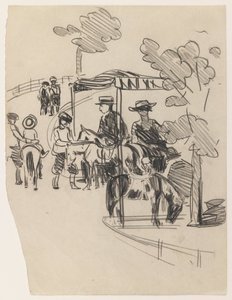
Detroit Institute of Arts, DetroitDetroit Institute of Arts Detroit 3 Woman and Macaws
New Britain Museum of American Art, New BritainNew Britain Museum of American Art New Britain 2 Pam
Los Angeles County Museum of Art, Los AngelesLos Angeles County Museum of Art Los Angeles 2 Pedro
Cleveland Museum of Art, ClevelandCleveland Museum of Art Cleveland 1 Holiday on the Hudson

George Luks decade by decade: the original that defines each

Works per decade

Pick a decade to see the original that defines it.

Collectors' questions about George Luks's paintings

Which work is George Luks most famous for?Reveal the answer

Holiday on the Hudson, Cleveland Museum of Art, Cleveland. Hester Street (1905) and Sulky Boy (1908) come next.

What are the ten most famous George Luks paintings?Reveal the answer

Holiday on the Hudson, Hester Street, Sulky Boy, John Quinn, The Wrestler, Knitting for the Soldiers High Bridge Park, Fifth Avenue, New York, Morning Shadows, Telling Fortunes and Street scene. The ranking above gives each one's year and museum.

How many paintings did George Luks leave?Reveal the answer

Our catalog holds 371 works by George Luks, dated from 1900 to 1930.

In which museums do George Luks's masterpieces hang?Reveal the answer

Mostly in Metropolitan Museum of Art (New York), The Phillips Collection (Washington, D.C.) and Addison Gallery of American Art (Massachusetts). The museum table above lists them all.

In which years did George Luks paint the most famous works?Reveal the answer

In 1900s: 14 of the 100 works on this page were made then, Hester Street among them.

What are the first and the last famous originals of George Luks?Reveal the answer

On this page, the earliest is Street scene (1900) and the latest Self-Portrait with Pince-Nez (1930).

Which subjects did George Luks choose most often?Reveal the answer

Urban life (16), American art (15) and Portrait (14), across the 100 works on this page.

Which technique did George Luks use most?Reveal the answer

Oil On Canvas, for 18 of the 100 works on this page.

To which art movement does George Luks belong?Reveal the answer

Ashcan school, judging by the originals on this page.

Which George Luks works hang at the Metropolitan Museum of Art?Reveal the answer

Boy with Violin, Old Gristmill, The Berkshires and Railroad Crossing, The Berkshires: the Metropolitan Museum of Art, New York holds 3 of the works on this page.

George Luks: life and work

A Life Forged in the Crucible of American Realism

George Benjamin Luks, a name synonymous with the gritty energy and unvarnished truth of early 20th-century America, was more than just a painter; he was a chronicler of an era. Born in Williamsport, Pennsylvania, in 1867 to immigrant parents – his father a Polish physician, his mother a German musician – Luks’s upbringing instilled within him a deep empathy for the struggles and triumphs of everyday people. This sensitivity would become the defining characteristic of his artistic vision. His early life was anything but conventional; before dedicating himself to canvas and brush, he and his brother trod the boards as vaudeville performers, honing an observational skill and understanding of human character that would later prove invaluable. It was a world of fleeting moments, exaggerated gestures, and raw emotion – a training ground for capturing the essence of life itself. This period instilled in him a love for performance and spectacle, elements subtly woven into the dynamic compositions of his paintings.

From European Studies to the Ashcan School

Luks’s formal artistic education began at the Pennsylvania Academy of the Fine Arts, but it was his subsequent travels to Europe that truly shaped his aesthetic sensibilities. He immersed himself in the works of the Old Masters – Velázquez and Hals particularly resonated with him – absorbing their mastery of light, shadow, and characterization. However, he wasn’t merely imitating; he was synthesizing these influences into something uniquely his own. Upon returning to America, Luks found work as a newspaper illustrator, first in Philadelphia and then in New York City. This experience proved pivotal. It exposed him to the bustling streets, diverse populations, and stark realities of urban life – subjects that would dominate his artistic output for years to come. He connected with a circle of like-minded artists—Robert Henri, John Sloan, William Glackens—who shared a rejection of academic conventions and a desire to depict the world as they saw it, honestly and without pretense. This collective spirit gave rise to what became known as the Ashcan School, a movement that challenged the prevailing artistic norms and celebrated the beauty in the mundane.

Capturing the Pulse of Urban Life

Luks’s paintings are characterized by their vigorous brushwork, bold compositions, and unflinching portrayal of urban life. He didn't shy away from depicting the poverty, hardship, and social inequalities that plagued early 20th-century America. His subjects were often drawn from the streets of New York City – cab drivers, street performers, laborers, and ordinary people going about their daily lives. The Cabby, for example, is a powerful depiction of a working man, his face etched with weariness but radiating a quiet dignity. Similarly, Sulky Boy captures the vulnerability and introspection of youth with remarkable sensitivity. Luks’s technique was as distinctive as his subject matter. He employed a thick impasto style, applying paint liberally to the canvas, creating a textured surface that seemed to vibrate with energy. His use of color was often muted, reflecting the grimy realities of urban life, but punctuated by flashes of brilliance that drew the viewer's eye.

A Voice for the Underrepresented and Lasting Legacy

As a member of “The Eight,” Luks played a crucial role in challenging the established art world and paving the way for American modernism. The group’s independent exhibition in 1908 was a watershed moment, sparking controversy but also garnering attention for their innovative approach to painting. Luks wasn't simply interested in documenting reality; he sought to convey its emotional weight, its inherent drama. He wanted his paintings to be felt as much as seen. Beyond his artistic achievements, Luks was also a passionate advocate for American art and artists. He taught at the Art Students League, inspiring generations of young painters to embrace their own unique voices and perspectives. His influence can be seen in the work of countless subsequent artists who sought to capture the spirit of the urban experience. George Benjamin Luks died in 1933, leaving behind a body of work that continues to resonate with viewers today. His paintings are not merely historical documents; they are powerful testaments to the human condition, reminders of the struggles and triumphs of those whose stories might otherwise have been forgotten. He remains a vital figure in American art history, a champion of realism, and a voice for the underrepresented.