


1


Updated November 2026 · ranked by our popularity score (searches, visits and orders for each work) · 67 works by George Jones in our catalogue
In short
Turner's Burial In The Crypt Of St. Paul's (1775) is the George Jones painting that draws the most eyes. After it, the eye goes to Horatio Nelson Boarding The San Josef At The Battle Of Cape St Vincent, 14th February (1797) and Anquet In Thames Tunnel Held On 10th November To Celebrate The Tunnel's Progress (1827). Among the 67 works of George Jones in our catalog, these 66 are the most famous, each a unique original presented with its year, its museum and the reason it endures.


 Battle Of Borodino
12
 The Battle Of HyderabadBirmingham Museum and Art Gallery
13
 The Battle Of VittoriaPetworth House
14
 The Battle Of Waterloo
15
 Place Gutenberg, StrasbourgMusée Des Beaux
16
 The Battle Of Waterloo -
17
 Sir Francis Freeling
18
 The Battle Of Meeanee
19
 Street Scene In Frankfurt, Germany
20
 Manning The Guns - British Bluejackets Firing On A French Island FortNational Maritime Museum
21
 The Battle Of Waterloo - The Retreat Of The FrenchPetworth House
22
 The Battle Of The Alma
23
 Wellington With Frontline Artillery At WaterlooHatchlands Park
24
 View In Rome, The Forum Of Nerva
25
 The Conflict At The Guns, BalaclavaBirmingham Museum and Art Gallery
26
 An Officer Of The Life Guards
27
 Utrecht
28
 View In Nuremberg, Germany
29
 The Visit Of The Prince Regent To Oxford
30
 The Meeting Of Wellington And Blucher At Waterloo
31
 Market Place At Péronne
32
 Studies of Military Accoutrements
33
 The Market Place, St Albans, HertfordshireTyntesfield
34
 Turner's Burial In The Crypt Of St Paul's
35
 Trukkee
36
 Edinburgh Castle From The Grass Market
37
 The Village Of Waterloo
38
 He Royal Procession At The Opening Of London Bridge
39
 Malines
40
 John Colborne, 1st Baron SeatonNational Portrait Gallery
41
 Field-marshal William Carr BeresfordHatchlands Park
42
 Cawnpore, Passage Of The Ganges
43
 The Battle Of Hyderabad -
44
 H.R.H. The Prince Regent Received By The University And City Of Oxford
45
 Robert VernonNational Portrait Gallery
46
 Studies of a Coldstream Guards Officer and Military Portraits
47
 A Continental Market Place
48
 Turner's Body Lying In State
49
 The Burning Fiery Furnace
50
 The Last Moment Of Titian
51
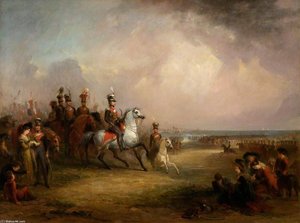 Colonel Sir John Leicester, Bt, And The King's Cheshire Yeomanry Cavalry Exercising On The Sands At Liverpool
52
 William LightNational Portrait Gallery
53
 Napoleon Leaving The Field Of Waterloo
54
 Sir Charles James NapierNational Portrait Gallery
55
 Lucknow - Evening. The Sufferers Besieged At Lucknow, Rescued By General Lord Clyde
56
 An Archway At Bologna, With The Piazza Maggiore Beyond
57
 Interior Of Turner's Gallery -the Artist Showing His Works
58
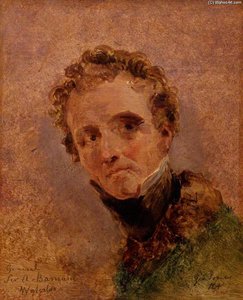 Sir Andrew Francis BarnardNational Portrait Gallery
59
 The Smoking House At Chelsea Hospital
60
 Coronation Banquet Of George Iv
61
 The Royal Procession At The Opening Of The New London Bridge
62
 Captain George Napier
63
 Banquet In The Thames Tunnel
64
 The Conferment Of Honorary Degrees On The Allied Sovereigns In The Sheldonian Theatre
65
 Nelson Boarding The 'san Josef' At The Battle Of Cape St VincentNational Maritime Museum
66
 Godiva Preparing To Ride Through Coventry
The four subjects that come back most often in these originals, each with its finest example.
The 7 museums that hold the most of the paintings on this page.
| Museum | City | Works by George Jones | Paintings from this list |
|---|---|---|---|
 National Portrait Gallery |
London | 5 | John Colborne, 1st Baron Seaton, Robert Vernon, William Light |
 Birmingham Museum and Art Gallery |
Birmingham | 2 | The Battle Of Hyderabad, The Conflict At The Guns, Balaclava |
 Petworth House |
Petworth | 2 | The Battle Of Vittoria, The Battle Of Waterloo - The Retreat Of The French |
 National Maritime Museum |
London | 2 | Manning The Guns - British Bluejackets Firing On A French Island Fort, Nelson Boarding The 'san Josef' At The Battle Of Cape St Vincent |
 Hatchlands Park |
Guildford | 2 | Wellington With Frontline Artillery At Waterloo, Field-marshal William Carr Beresford |
 Musée Des Beaux |
Strasbourg | 1 | Place Gutenberg, Strasbourg |
 Tyntesfield |
1 | The Market Place, St Albans, Hertfordshire |
Turner's Burial In The Crypt Of St. Paul's (1775). Horatio Nelson Boarding The San Josef At The Battle Of Cape St Vincent, 14th February (1797) and Anquet In Thames Tunnel Held On 10th November To Celebrate The Tunnel's Progress (1827) come next.
Turner's Burial In The Crypt Of St. Paul's, Horatio Nelson Boarding The San Josef At The Battle Of Cape St Vincent, 14th February, Anquet In Thames Tunnel Held On 10th November To Celebrate The Tunnel's Progress, Commodore Nelson Boarding The San Joseph In The Battle Of St Vincent, Domestic Scene, From 'the Social Day' By Peter Coxe, Engraved By William Bond, The Battle Of Waterloo -, View Of High Street, Oxford, Andernach, Prussia, The Relief Of Lucknow and Wollenberg - Entrance To A Courtyard. The ranking above gives each one's year and museum.
Our catalog holds 67 works by George Jones.
Mostly in National Portrait Gallery (London), Birmingham Museum and Art Gallery (Birmingham) and Petworth House (Petworth). The museum table above lists them all.
Wars (12), Royalty (6) and Saints (5), across the 66 works on this page.
Romanticism, judging by the originals on this page.
John Colborne, 1st Baron Seaton, Robert Vernon and William Light: the National Portrait Gallery, London holds 5 of the works on this page.
George Glenn Jones was undeniably the quintessential voice of American country music—a singular performer whose soulful delivery and distinctive phrasing cemented his place as “the greatest living country singer.” To listen to Jones was to experience a profound immersion into the human condition; as the esteemed critic Bill C. Malone eloquently observed, for the few minutes consumed by a song, Jones could transport a listener so completely into the lyrics and mood that escape became impossible. His extraordinary career spanned decades, marked by prolific recording sessions, unforgettable performances, and a tumultuous personal life that captivated audiences worldwide with its raw, unvarnished truth.
Born in 1931, his musical journey began modestly, honing his skills performing gospel music as a teenager. This spiritual foundation would later inform the deep, resonant sincerity found in his most melancholic ballads. He quickly transitioned to country music, establishing himself in Nashville during the mid-19rollies 50s and achieving early success with hits like “She Believed in Him” and “Walk On By.” His distinctive vocal style—characterized by its raw emotion and masterful phrasing—immediately distinguished him from his contemporaries, creating a sonic identity that felt both ancient and immediate.
The ascent of George Jones was propelled by a series of monumental milestones that redefined the genre. His breakthrough arrived in 1959 with the recording of "White Lightning," a track written by The Big Bopper that launched his career into the national spotlight. This era of rapid development saw him earning recognition as “Most Promising New Country Vocalist,” a title that barely scratched the surface of his eventual impact. As he matured, he became known as “The Rolls-Royce of Country Music,” a moniker reflecting both the high quality of his vocal craftsmanship and the smooth, sophisticated nuances of his delivery.
His artistry was often defined by his legendary collaborations, most notably with the incomparable Tammy Wynette. Their partnership produced some of the most enduring songs in the country canon, including “Help Me Make It Through the Night” and “Amarillo By Dawn,” tracks that captured the very essence of heartache and resilience. Beyond these duets, his influence extended through work with legends such as Merle Haggard and Johnny Cash, weaving him into the very fabric of American musical history.
However, the brilliance of his music was often shadowed by the complexities of his personal life. Years of struggle with alcoholism severely compromised his health and led to many missed performances, earning him the nickname “No Show Jones.” Yet, it was precisely this vulnerability—the ability to channel personal pain into melodic mastery—that solidified his historical significance. He did not merely sing about heartbreak; he embodied it, leaving behind a vast discography that includes:
Ultimately, George Jones remains a titan of the genre, a man whose voice served as a vessel for the joys and sorrows of the American experience. His death in 2013 marked the end of an era, but his legacy continues to resonate through every soulful note and every tear-stained lyric he left behind.


