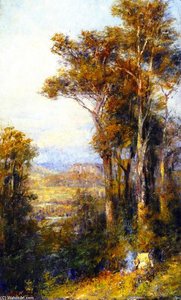
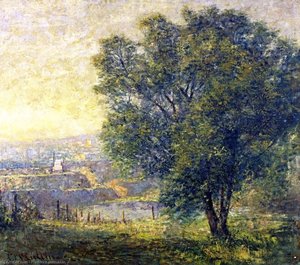
Portrait of Frederick McCubbin

Frederick McCubbin Paintings: The 100 Most Famous, Through a Gallery's Eye

Updated November 2026 · ranked by our popularity score (searches, visits and orders for each work) · 103 works by Frederick McCubbin in our catalogue

In short

To the gallery's eye, Frederick McCubbin's most famous painting is Williamstown Landscape (1910), whose original hangs in the Art Gallery of South Australia, Adelaide. On the wallaby track (1896) and Winter Sunlight (1908) complete the trio every eye recognises. Of the 103 works by Frederick McCubbin in our catalog, the gallery presents the 100 most famous below, each original with its year, its museum and what makes it unique.

1855 – 1917, Melbourne Heidelberg school Most works: National Gallery of Victoria

The gallery's top 10 Frederick McCubbin paintings

1
Williamstown Landscape (1910) by Frederick McCubbin

Williamstown Landscape

1910 · Oil On Canvas · Art Gallery of South Australia, Adelaide

To gaze upon Williamstown Landscape is to step directly into a moment suspended in time—a quintessential portrait of early 20th-century Australian leisure. Frederick McCubbin, the master chronicler of the continent's burgeoning identity, has gifted us a scene steeped in pastoral tranquility. The composition immediately draws the eye across the expansive body of water, where a graceful pier extends like an invitation into the shimmering expanse. This is not merely a…

2
On the wallaby track (1896) by Frederick McCubbin

On the wallaby track

1896 · Acrylic On Canvas · Art Gallery of New South Wales, Sydney

To gaze upon On the wallaby track is to be gently ushered into a sun-dappled moment of profound stillness within the vast, embracing landscape of colonial Australia. This masterful painting by Frederick McCubbin captures more than just a scene; it encapsulates a feeling—the quiet resilience of life continuing amidst the grandeur and occasional harshness of nature. The composition centers on a tender tableau: a woman seated upon the earth, cradling…

3
Winter Sunlight (1908) by Frederick McCubbin

Winter Sunlight

1908 · Oil On Canvas · Art Gallery of South Australia, Adelaide

To gaze upon Winter Sunlight is to step across the threshold of time and into an idyllic moment suspended by the gentle hand of nature. Frederick McCubbin, through this masterful oil on canvas painted in 1908, did not merely record a scene; he captured the very breath of rural Australian life. The painting unfolds as a breathtaking tableau of pastoral serenity, where the soft glow of sunlight filters down upon…

4
Lost (1886) by Frederick McCubbin

Lost

1886 · Acrylic On Canvas · National Gallery of Victoria, Melbourne

Frederick McCubbin's "Lost," painted in 1886, isn’t merely a landscape; it’s a poignant meditation on vulnerability, isolation, and the enduring spirit of the Australian outback. This evocative work, housed within the National Gallery of Victoria, transcends its simple depiction of a young girl wandering through a eucalyptus forest to become a powerful symbol of Australia's nascent national identity and the complex relationship between humanity and the vast wilderness.

5
J. A. Panton, Esq. M.P. (1904) by Frederick McCubbin

J. A. Panton, Esq. M.P.

1904 · Acrylic On Canvas · National Gallery of Victoria, Melbourne

Frederick McCubbin’s 1904 painting, “J. A. Panton, Esq. M.P.,” is more than a simple likeness; it's a carefully constructed tableau of Victorian society, imbued with a subtle melancholy and a poignant awareness of the passage of time. The portrait depicts a distinguished gentleman, identified as J.A. Panton, a prominent figure in colonial administration – an Esquire and Member of Parliament – seated within a richly appointed interior that speaks volumes…

6
Lost (1886) by Frederick McCubbin

Lost

1886 · Acrylic On Canvas · National Gallery of Victoria, Melbourne

Frederick McCubbin's "Lost," painted in 1886, isn’t merely a depiction of the Australian outback; it’s a profound meditation on vulnerability, isolation, and the enduring pull of the wilderness. The painting immediately arrests the viewer with its muted palette – ochre yellows, dusty browns, and slate greys dominate, creating an atmosphere thick with both heat and impending storm. At the heart of the composition stands a young girl, her posture suggesting…

7
Roadmaking (1907) by Frederick McCubbin

Roadmaking

1907 · Oil On Canvas · National Gallery of Victoria, Melbourne

Roadmaking – A Vision of Australian Resilience Frederick McCubbin’s “Roadmaking,” completed in 1907, stands as an emblem of the Heidelberg School's preoccupation with capturing the rugged beauty and spirit of rural Australia. Painted during a period of significant social change—the burgeoning industrial revolution juxtaposed against the enduring traditions of pastoral life—the artwork transcends mere depiction; it embodies a profound meditation on labor, community, and the forging of identity amidst challenging…

8
The Rainbow (also known as Rainbow over Burnley) (1910) by Frederick McCubbin

The Rainbow (also known as Rainbow over Burnley)

1910 · Oil On Panel

In the annals of Australian impressionism, few works capture the fleeting majesty of the natural world as poignantly as Frederick McCubbin’s The Rainbow, also known as Rainbow over Burnley. Painted in 1910, this evocative oil on panel serves as a breathtaking window into a moment where the heavens and the earth collide in a display of atmospheric drama. The composition is dominated by a sweeping, vibrant rainbow that arches across…

9
Lost (1907) by Frederick McCubbin

Lost

1907 · Oil On Canvas · National Gallery of Victoria, Melbourne

The oil on canvas work Lost was painted by Frederick McCubbin in 1886. It is a quiet piece of Australian art history. The pigment clings to the fabric, capturing a moment of stillness within the bush. This specific work resides within the collection at the National Gallery of Victoria in Melbourne, Australia.

10
Princess Bridge (1908) by Frederick McCubbin

Princess Bridge

1908 · Acrylic On Canvas · National Gallery of Victoria, Melbourne

Frederick McCubbin's "Princess Bridge," painted in 1908, isn't merely a depiction of an iconic Melbourne landmark; it’s a poignant distillation of the Australian spirit. The painting captures the Princess Bridge – then a relatively new and grand structure – bathed in the golden light of late afternoon. More than just architectural detail, McCubbin has imbued the scene with a profound sense of nostalgia and quiet contemplation. The bridge itself, rendered…

Frederick McCubbin paintings, ranked 11 to 100

11Self portrait (1913) by Frederick McCubbinSelf portrait1913 · National Gallery of Victoria 12Princes Bridge (1910) by Frederick McCubbinPrinces Bridge1910 13The Road to Braemar (1907) by Frederick McCubbinThe Road to Braemar1907 14Eliza Hall (1913) by Frederick McCubbinEliza Hall1913 · National Gallery of Victoria 15Gathering Mistletoe (1886) by Frederick McCubbinGathering Mistletoe1886 16Shelling Peas (1912) by Frederick McCubbinShelling Peas1912 · National Gallery of Victoria 17Self Portrait (1916) by Frederick McCubbinSelf Portrait1916 · Museum of Fine Arts 18Old Stables (1884) by Frederick McCubbinOld Stables1884 · National Gallery of Victoria 19Girl with a Bird at the King Street Bakery (1886) by Frederick McCubbinGirl with a Bird at the King Street Bakery1886 · National Gallery of Australia 20Melbourne Gaol in Sunlight from the Public Library Grounds (1884) by Frederick McCubbinMelbourne Gaol in Sunlight from the Public Library Grounds1884 21Walter Hall by Frederick McCubbinWalter HallNational Gallery of Victoria 22Summer Sea (1895) by Frederick McCubbinSummer Sea1895 · National Gallery of Victoria 23Ti-Tree Glade (1897) by Frederick McCubbinTi-Tree Glade1897 · Art Gallery of South Australia 24Madedon Landscape (1913) by Frederick McCubbinMadedon Landscape1913 25Triumphal Arch at Prince/'s Bridge, Melbourne (1901) by Frederick McCubbinTriumphal Arch at Prince/'s Bridge, Melbourne1901 26The Pool of London (1907) by Frederick McCubbinThe Pool of London1907 · National Gallery of Victoria 27Picnic at Studley Park (1885) by Frederick McCubbinPicnic at Studley Park1885 28Ti-Tree Glade (1910) by Frederick McCubbinTi-Tree Glade1910 · National Gallery of Victoria 29At the falling of the year (1886) by Frederick McCubbinAt the falling of the year1886 · National Gallery of Australia 30Self portrait (1886) by Frederick McCubbinSelf portrait1886 · Art Gallery of New South Wales 31The City's Toil (1887) by Frederick McCubbinThe City's Toil1887 32Two Sisters on a Rocky Hillside (1886) by Frederick McCubbinTwo Sisters on a Rocky Hillside1886 33While the Billy Boils (1886) by Frederick McCubbinWhile the Billy Boils1886 34Sunset Glow (1886) by Frederick McCubbinSunset Glow1886 35The Shore (1887) by Frederick McCubbinThe Shore1887 36Self-Portrait (1886) by Frederick McCubbinSelf-Portrait1886 37Melbourne in 1888 (1888) by Frederick McCubbinMelbourne in 18881888 38Spring (also known as Mrs. Mccubbin Picking Blossom) (1890) by Frederick McCubbinSpring (also known as Mrs. Mccubbin Picking Blossom)1890 39Ti-Tree at Beauaris (1896) by Frederick McCubbinTi-Tree at Beauaris1896 40Setting Sun (1911) by Frederick McCubbinSetting Sun1911 · Art Gallery of South Australia 41Ships, Williamstown (1909) by Frederick McCubbinShips, Williamstown1909 42Harmony in Glue, Williamstown (1909) by Frederick McCubbinHarmony in Glue, Williamstown1909 43Summer Evening (1908) by Frederick McCubbinSummer Evening1908 44Shipping on the Yarra (1910) by Frederick McCubbinShipping on the Yarra1910 45View of Naples (also known as Castle St. Elmo) (1908) by Frederick McCubbinView of Naples (also known as Castle St. Elmo)1908 46Hauling Timber, Macedon Heights (1911) by Frederick McCubbinHauling Timber, Macedon Heights1911 47The Pool of London (also known as Barges, Pool of London) (1907) by Frederick McCubbinThe Pool of London (also known as Barges, Pool of London)1907 48Looking Towards Hanging Rock from Mount Macedon (1910) by Frederick McCubbinLooking Towards Hanging Rock from Mount Macedon1910 49The Yarra (1907) by Frederick McCubbinThe Yarra1907 50Williamstown (1909) by Frederick McCubbinWilliamstown1909 · Art Gallery of South Australia 51Port of Melbourne (1909) by Frederick McCubbinPort of Melbourne1909 52The Old Garden (1910) by Frederick McCubbinThe Old Garden1910 53Hauling Rails for a Fence, Mount Macedon (1910) by Frederick McCubbinHauling Rails for a Fence, Mount Macedon1910 54Self-Portrait (1908) by Frederick McCubbinSelf-Portrait1908 55The Cottage Children (also known as Rain and Sunshine) (1910) by Frederick McCubbinThe Cottage Children (also known as Rain and Sunshine)1910 56Vale of Conway (1908) by Frederick McCubbinVale of Conway1908 57Nude Study (1910) by Frederick McCubbinNude Study1910 58Oliver's Nill, Frankston (also known as Summer Idyll) (1910) by Frederick McCubbinOliver's Nill, Frankston (also known as Summer Idyll)1910 59Landscape (1914) by Frederick McCubbinLandscape1914 · Art Gallery of New South Wales 60The Stone Crusher (1912) by Frederick McCubbinThe Stone Crusher1912 61Collins Street (1915) by Frederick McCubbinCollins Street1915 62Flinders Street Railway Station (1915) by Frederick McCubbinFlinders Street Railway Station1915 63The Red Screne (1914) by Frederick McCubbinThe Red Screne1914 64Collins Street (1915) by Frederick McCubbinCollins Street1915 65Twilight (1912) by Frederick McCubbinTwilight1912 66Looking Towards Richmond Hill (1913) by Frederick McCubbinLooking Towards Richmond Hill1913 67Flood Waters (1913) by Frederick McCubbinFlood Waters1913 68Coming of Spring (1912) by Frederick McCubbinComing of Spring1912 69Landscape, Macedon (1914) by Frederick McCubbinLandscape, Macedon1914 70The Recipe (1914) by Frederick McCubbinThe Recipe1914 71Landscape, Spring (1912) by Frederick McCubbinLandscape, Spring1912 72The Mountain Cottage (1915) by Frederick McCubbinThe Mountain Cottage1915 73Collins Street (1915) by Frederick McCubbinCollins Street1915 74The Old Slip, Williamstown (1915) by Frederick McCubbinThe Old Slip, Williamstown1915 75The Lime Tree (also known as Yarra River from Kensington Road, South Yarra) (1917) by Frederick McCubbinThe Lime Tree (also known as Yarra River from Kensington Road, South Yarra)1917 76Camel's Hump (1912) by Frederick McCubbinCamel's Hump1912 · National Gallery of Victoria 77A Lady in Grey (also known as Portrait of Mrs. McCubbin) (1900) by Frederick McCubbinA Lady in Grey (also known as Portrait of Mrs. McCubbin)1900 · National Gallery of Victoria 78Kitchen at the Old King Street Bakery (1884) by Frederick McCubbinKitchen at the Old King Street Bakery1884 · Art Gallery of South Australia 79Triumphal Arch at Princes Bridge, Melbourne (1901) by Frederick McCubbinTriumphal Arch at Princes Bridge, Melbourne1901 80Violet and Gold (1911) by Frederick McCubbinViolet and Gold1911 81Winter Evening, Hawthorn (1886) by Frederick McCubbinWinter Evening, Hawthorn1886 82Moonrise (1909) by Frederick McCubbinMoonrise1909 · National Gallery of Victoria 83Falls Bridge, Melbourne (1882) by Frederick McCubbinFalls Bridge, Melbourne1882 · National Gallery of Victoria 84Golden Sunlight (1914) by Frederick McCubbinGolden Sunlight1914 85Sketch for 'An Interior' (1911) by Frederick McCubbinSketch for 'An Interior'1911 86Study in Blue and Gold (also known as Figure on a Hillside in a Summer Landscape) (1907) by Frederick McCubbinStudy in Blue and Gold (also known as Figure on a Hillside in a Summer Landscape)1907 87Melbourne gaol in sunshine from the Public Library grounds by Frederick McCubbinMelbourne gaol in sunshine from the Public Library groundsState Library Victoria 88A Spring Pastoral (1908) by Frederick McCubbinA Spring Pastoral1908 89The Rabbit Burrow (1910) by Frederick McCubbinThe Rabbit Burrow1910 90Sketch for A frosty morning by Frederick McCubbinSketch for A frosty morningNational Gallery of Victoria 91Heath Paddock, Hawthorn (1886) by Frederick McCubbinHeath Paddock, Hawthorn1886 92A Frosty Morning (also known as Winter Morning) (1910) by Frederick McCubbinA Frosty Morning (also known as Winter Morning)1910 93The Midday Rest (1888) by Frederick McCubbinThe Midday Rest1888 94The Old Stone Crusher (also known as The Quarry) (1911) by Frederick McCubbinThe Old Stone Crusher (also known as The Quarry)1911 · Art Gallery of South Australia 95Child in the Bush (1913) by Frederick McCubbinChild in the Bush1913 96An Interior (1911) by Frederick McCubbinAn Interior1911 97What the Girl Saw in the Bush (1904) by Frederick McCubbinWhat the Girl Saw in the Bush1904 · National Gallery of Victoria 98Bush Idyll (1893) by Frederick McCubbinBush Idyll1893 · National Gallery of Australia 99The North Wind (1891) by Frederick McCubbinThe North Wind1891 · National Gallery of Victoria 100Down on His Luck (1889) by Frederick McCubbinDown on His Luck1889 · Art Gallery of Western Australia

Frederick McCubbin's famous paintings, period by period

The subjects that held Frederick McCubbin's eye

The four subjects that come back most often in these originals, each with its finest example.

The museums that keep Frederick McCubbin's originals

The 7 museums that hold the most of the paintings on this page.

Museum City Works by Frederick McCubbin Paintings from this list
National Gallery of Victoria, MelbourneNational Gallery of Victoria Melbourne 21 Lost, J. A. Panton, Esq. M.P., Lost
Art Gallery of South Australia, AdelaideArt Gallery of South Australia Adelaide 7 Williamstown Landscape, Winter Sunlight, Ti-Tree Glade
Art Gallery of New South Wales, SydneyArt Gallery of New South Wales Sydney 3 On the wallaby track, Self portrait, Landscape
National Gallery of Australia, CanberraNational Gallery of Australia Canberra 3 Girl with a Bird at the King Street Bakery, At the falling of the year, Bush Idyll
Museum of Fine Arts, BostonMuseum of Fine Arts Boston 1 Self Portrait
State Library Victoria, ΜελβούρνηState Library Victoria Μελβούρνη 1 Melbourne gaol in sunshine from the Public Library grounds
Art Gallery of Western AustraliaArt Gallery of Western Australia 1 Down on His Luck

Frederick McCubbin, one signature painting per decade

Works per decade

Pick a decade to see the original that defines it.

Frederick McCubbin's paintings: the gallery answers

Which Frederick McCubbin painting is the most famous of all?Reveal the answer

Williamstown Landscape (1910), Art Gallery of South Australia, Adelaide. On the wallaby track (1896) and Winter Sunlight (1908) come next.

How old was Frederick McCubbin on completing Williamstown Landscape?Reveal the answer

55 years old: Williamstown Landscape dates from 1910, and Frederick McCubbin was born in 1855.

Which are Frederick McCubbin's top 10 paintings?Reveal the answer

Williamstown Landscape, On the wallaby track, Winter Sunlight, Lost, J. A. Panton, Esq. M.P., Lost, Roadmaking, The Rainbow (also known as Rainbow over Burnley), Lost and Princess Bridge. The ranking above gives each one's year and museum.

How many works did Frederick McCubbin create?Reveal the answer

Our catalog holds 103 works by Frederick McCubbin, dated from 1882 to 1917.

Where do Frederick McCubbin's most famous originals hang?Reveal the answer

Mostly in National Gallery of Victoria (Melbourne), Art Gallery of South Australia (Adelaide) and Art Gallery of New South Wales (Sydney). The museum table above lists them all.

When did Frederick McCubbin create the most famous paintings?Reveal the answer

In 1910s: 44 of the 100 works on this page were made then, Williamstown Landscape among them.

Which are Frederick McCubbin's earliest and latest famous works?Reveal the answer

On this page, the earliest is Falls Bridge, Melbourne (1882) and the latest The Lime Tree (also known as Yarra River from Kensington Road, South Yarra) (1917).

Which subjects did Frederick McCubbin return to most?Reveal the answer

Landscape (15), Australian landscape (12) and Australian art (10), across the 100 works on this page.

Which medium did Frederick McCubbin work in most?Reveal the answer

Oil On Canvas, for 23 of the 100 works on this page.

Which movement is Frederick McCubbin associated with?Reveal the answer

Heidelberg school, judging by the originals on this page.

Which Frederick McCubbin originals does the National Gallery of Victoria hold?Reveal the answer

Lost, J. A. Panton, Esq. M.P. and Lost: the National Gallery of Victoria, Melbourne holds 21 of the works on this page.

Frederick McCubbin: the artist

A Life Rooted in the Australian Landscape

Frederick McCubbin, born in Melbourne on February 25th, 1855, stands as a cornerstone of Australian art, inextricably linked to the nation’s evolving identity and its unique visual language. His journey from humble beginnings – the son of bakers who instilled in him a strong work ethic – to becoming a pivotal figure in the Heidelberg School is a testament to his dedication and artistic vision. McCubbin's early life was marked by diverse experiences, working as a solicitor’s clerk and assisting in the family bakery before fully embracing his calling as a painter. These formative years, though seemingly disparate, imbued him with a deep understanding of everyday Australian life, a theme that would resonate profoundly throughout his oeuvre. He received foundational training at the National Gallery of Victoria's School of Design, studying under esteemed artists like Eugene von Guerard and George Folingsby, honing his skills in landscape painting while absorbing the prevailing artistic currents of the time. A crucial turning point arrived with his enduring friendship with Tom Roberts, a bond that would shape the course of Australian art history.

The Heidelberg School and Defining a National Aesthetic

In 1885, McCubbin and Roberts established the Box Hill Artists' Camp, a landmark event in the development of the Heidelberg School movement. This plein air collective – soon joined by Arthur Streeton and Charles Conder – sought to capture the essence of Australian life and landscapes with an unprecedented immediacy and authenticity. Rejecting the conventions of European academic painting, they ventured into the bush, embracing the raw beauty and harsh realities of the Australian environment. McCubbin’s contributions during this period were instrumental in defining a distinctly Australian aesthetic. His works from this era, such as Down on His Luck (1889), On the Wallaby Track (1896), and The Pioneer (1904), are now iconic representations of pioneering life, depicting the struggles and resilience of early settlers against the backdrop of a vast and often unforgiving landscape. These paintings weren’t merely depictions of scenery; they were narratives imbued with social commentary, exploring themes of solitude, hardship, and the complex relationship between European settlers and the Indigenous land. Heidelberg School artists aimed to paint what was uniquely Australian, moving away from imported styles and subjects.

Evolution of Style and a Continued Exploration of Identity

While deeply committed to capturing the spirit of Australia, McCubbin wasn’t immune to external influences. A pivotal journey to Europe in 1907 exposed him to the works of J.M.W. Turner and French Impressionists, prompting a subtle yet significant shift in his artistic approach. He began experimenting with freer brushwork, lighter colors, and a more abstracted style, evident in later paintings like An Interior, which many critics consider among his strongest achievements. This evolution wasn’t a rejection of his earlier themes but rather a refinement of his ability to convey emotion and atmosphere. Despite these stylistic changes, McCubbin remained steadfast in his exploration of Australian identity and the human condition. He continued to depict scenes of rural life, often focusing on the interplay between light and shadow, creating works that are both visually stunning and emotionally resonant. His later landscapes demonstrate a growing interest in atmospheric effects and a more subjective interpretation of the natural world.

Legacy and Enduring Influence

Frederick McCubbin’s impact on Australian art is undeniable. His work is held in prestigious collections, including the National Gallery of Victoria and the Art Gallery of Ballarat, ensuring his legacy endures for generations to come. He served as a mentor to countless aspiring artists, both through his teaching position at the National Gallery School and through his influence as a leading figure in the art community. He was president of the Victorian Artists’ Society and played a key role in establishing the Australian Art Association. McCubbin's contribution extends beyond his individual paintings; he helped establish a national artistic identity, fostering a sense of pride in Australia’s unique landscape and culture. He remains celebrated as one of Australia's most important and beloved painters, whose works continue to resonate with audiences today, offering poignant glimpses into the nation’s past and enduring reflections on the human spirit. His ability to capture the essence of Australian life – its beauty, hardship, and resilience – has cemented his place in art history as a true pioneer and visionary.