1of 24
Zhao Mengfu 1254–1322
Born in Huzhou Literati Painting; Landscape Painting

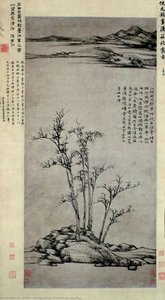
Zhao Mengfu (1254–1322) stands as a monumental figure in Yuan Dynasty art and arguably the progenitor of modern Chinese landscape painting.
Famous painters by country
The masters our own painters keep coming back to. Chinese painting kept a continuous tradition for more than a thousand years: ink and colour on silk and paper, landscapes of mountains and water, birds and flowers, calligraphy beside the image. Here are 24 of them, each with three works that still teach painters today and the museum where they can be seen.
Zhao Mengfu (1254–1322), Dong Qichang (1555–1636) and Wen Zhengming (1470–1559) head the 24 great Chinese masters who inspire our artists, all born in China, each with three key works.
The list
1of 24
Born in Huzhou Literati Painting; Landscape Painting
Zhao Mengfu (1254–1322) stands as a monumental figure in Yuan Dynasty art and arguably the progenitor of modern Chinese landscape painting.
2of 24
Born in Songjiang Literati painting

He deliberately avoided slickness or sentimentality, opting instead for landscapes characterized by intentionally distorted spatial features and a focus on expressive brushwork. Mature works like “ Autumn Mountains ” showcase his masterful ink wash technique, creating serene landscapes that invite contemplation. The early Qing dynasty witnessed the rise of several prominent artists – including the “Four Monks” and the “Four Wangs” – who were directly influenced by Dong’s work.
3of 24
Born in Suzhou Wu School, Literati art

Wu School Affiliation: Wen Zhengming became a leading figure within the Wu School, rejecting professional, academy-influenced styles in favor of amateur artistry rooted in scholarship. Numerous album leaves depicting scenes from the Humble Administrator's Garden, painted over several decades (1535 and 1551). Preservation of Tradition: Wen Zhengming played a crucial role in preserving and transmitting the traditions of Song and Yuan dynasty painting within the Ming period.
4of 24
Born in Suzhou Wu School

He also became renowned for his distinctive “boneless” flower paintings – delicate renderings of blossoms and foliage achieved without strong outlines, echoing the ethereal quality found in the works of Yuan masters. Beyond technical skill, Shen Zhou’s work is characterized by a harmonious integration of painting, poetry, and calligraphy. He is rightfully regarded as one of the “Four Masters of Ming,” alongside Wen Zhengming, Tang Yin, and Qiu Ying – a testament to his enduring influence and exceptional talent.
5of 24
Born in Beijing ['1920s Art Deco', 'Expressionism', 'Abstract art']

While precise details regarding this artist's early life are limited, it’s reasonable to assume that the tumultuous years following World War I profoundly shaped their artistic trajectory. The influence of earlier movements such as Impressionism and Post-Impressionism is also likely present, providing a foundation upon which to build more radical departures. Furthermore, the burgeoning interest in psychology, spearheaded by figures like Sigmund Freud, fueled explorations into the hidden depths of the human psyche—a theme that would become increasingly prominent in their work.
Signature works · The 100 signature works
6of 24
Born in Hangzhou Ma-Xia school, Southern Song dynasty

In works like Scholar Viewing a Waterfall, the ink wash is layered with precision, using subtle tonal gradations to build depth and atmosphere without relying on heavy outlines. Ma Yuan was born into a family where painting was a professional necessity.
7of 24
Born in Beijing Imperial Painting

Calligraphy’s Significance: Calligraphy held immense cultural importance in Qing China, symbolizing moral virtue and imperial authority. The Plum Blossom Motif: Her paintings frequently featured plum blossoms—a symbol of resilience and perseverance amidst adversity—reflecting her unwavering determination in safeguarding China's interests during times of crisis.
8of 24
Born in Sichuan Chan painting

Natural Simplicity: His legendary Six Persimmons remains perhaps the most iconic example of Chan painting, where the weight, texture, and subtle translucency of the fruit are rendered with an almost miraculous economy of line.
9of 24
Born in Kaifeng Song Dynasty; Slender Gold calligraphy

As noted by contemporary artists like Zeng Fanzhi, the profound beauty found in his compositions—such as the serene stillness of Listening to the Qin —continues to resonate, offering a moment of meditative peace that transcends the turbulent history of his life.
10of 24
Born in Beijing Contemporary Art

Beyond his physical sculptures, Ai Weiwei has mastered the use of photography and digital media to document contemporary struggles.
11of 24
Born in Wen County Northern Song Landscape Painting

Unlike preceding styles which often prioritized stylized representations, Guo Xi championed a revolutionary approach—the “angle of totality,” or “floating perspective”—that sought to capture the illusion of depth and atmosphere with unprecedented realism. This technique involved layering ink washes to create subtle gradations of tone and texture, mimicking the way light interacts with mountainous terrain. His treatise, “The Lofty Message of Forest and Streams”(林泉高致), solidified his position as a leading voice on artistic philosophy.
Signature works · The 100 signature works
12of 24
Born in Yongji Landscape Painting

Recognizing his potential, Wang’s father ensured he received a comprehensive education, preparing him for the grueling civil service examinations – a path pursued by nearly all aspiring officials during the Tang Dynasty. His brother Wang Jin, recognizing Wang Wei’s brilliance, actively championed his ambitions, securing him a place at court where he quickly gained renown for his musical prowess. In his final years, Wang Wei embraced Chan Buddhism wholeheartedly, dedicating himself to monastic life and pursuing enlightenment.
14of 24
Born in Nanjing

One of his most celebrated masterpieces, The Xiao and Xiang Rivers, serves as a testament to his compositional brilliance.
15of 24
Born in Wuxi Eastern Jin artist

Born in Wuxi around 344 CE, he initially honed his artistic skills in Nanjing before ascending to prominence within the imperial court. A particularly memorable anecdote recounts how Emperor Huan Xuan, eager to possess K’ai-chih’s paintings, secretly broke open the artist's sealed chest containing his most prized works, intending to steal them. Gu K’ai-chih's impact on Chinese art extends far beyond his own lifetime.
16of 24
Born in Taicang Gongbi, Wu School
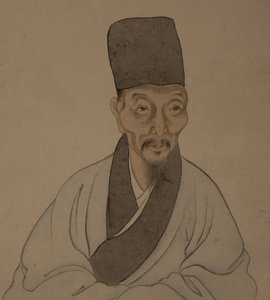
Qiu Ying’s genius lay not in adhering rigidly to one school or style, but in his extraordinary versatility. He skillfully blended these techniques, often incorporating elements of the green-and-blue style – known for its rich coloration and intricate detail – into his compositions. Qiu Ying’s talent and versatility earned him a place among the “Four Masters” of the Ming Dynasty—a testament to his profound impact on Chinese painting.
18of 24
Born in Xinjian District Ming Dynasty Art

He mastered the art of leaving space empty, using the white of the paper not merely as a background, but as an active participant in the composition—representing mist, water, or the infinite silence of the mind. His brushwork was both decisive and deceptively simple, capable of conveying intense emotion through a single, sweeping stroke. Born around 1626 during the twilight of the Ming Dynasty, his life was inextricably woven into the violent tapestry of dynastic transition.
19of 24
Born in Huzhou Yuan Dynasty Landscape Painting

His brushstrokes—often described as “ropy” or “layered”—were meticulously applied in thick, overlapping patterns, creating a palpable sense of texture and movement. Wang Meng’s compositions are often densely populated with elements—trees, rocks, mountains, streams—creating an immersive experience for the viewer. Notably, "Ge Zhichuan Relocating" sold for an astonishing $62.1 million at auction in 2011, a testament to its artistic merit and historical significance.
20of 24
Born in Changshu Shan shui (Landscape Painting)

His brushwork is remarkably varied—from bold, expressive strokes defining rocky cliffs to delicate washes creating mist-shrouded valleys. Critics noted a “nostalgic attachment to classical Chinese aesthetics” in his work—a quality that stemmed from his deep immersion in historical styles. Wang Hui, born in 1632 in Changshu, China, emerged during a period of immense transition—the waning years of the Ming dynasty and the rise of the Qing.
21of 24
Born in Quanzhou County Ink wash painting, Qing dynasty landscape

The significance of Shitao’s work extends far beyond the borders of the Qing Dynasty.
23of 24
Born in Tongcheng Song Dynasty painting

Li Gonglin’s painting style is often described as a deliberate revival of earlier traditions, particularly those of the Five Dynasties period (907-960). He consciously rejected the prevailing trends of his time – the opulent and decorative styles favored by many court painters. Li Gonglin, formally known as Longmian Jushi (meaning “Old Man with the Dragon Face”), and bearing the style name Boshi, stands as a towering figure in the landscape of Chinese painting during the Northern Song dynasty.
24of 24
Born in Baoding 'Boneless' painting technique

ma lin, a prominent chinese court painter, flourished during the early to mid 13th century (c. 1180 - 1256). as the son of the renowned artist ma yuan, ma lin was immersed in the art world from a young age, learning the intricacies of painting from his illustrious father.
Figures
| Beijing | 3 |
|---|---|
| Huzhou | 2 |
| Suzhou | 2 |
| Wuxi | 2 |
| Songjiang | 1 |
| Hangzhou | 1 |
| Sichuan | 1 |
| Kaifeng | 1 |
| 4th century | 1 |
|---|---|
| 7th century | 1 |
| 10th century | 1 |
| 11th century | 4 |
| 12th century | 2 |
| 13th century | 2 |
| 14th century | 2 |
| 15th century | 3 |
| 16th century | 2 |
| 17th century | 3 |
| 19th century | 1 |
| 20th century | 2 |
Questions and answers
In our ranking, Zhao Mengfu (1254–1322), then Dong Qichang and Wen Zhengming.
832 artists born in China, with 4,232 works; this page shows the 24 most famous painters.
Shen Zhou, with 57 works.
In Beijing: 3 of the 24, Zao Wou-Ki, Empress Dowager Cixi and Ai Weiwei.
Most in the 11th century (4 of 24); births range from 345 to 1957.
How this list is ranked Our ranking draws on Wikipedia, the manual rank our editors give each artist and artwork, and the visits each page receives every month.