**early life and training**
eugène anatole carrière, a renowned french symbolist artist, was born on january 16, 1849, in gournay-sur-marne, seine-saint-denis. he studied at the école des beaux-arts in paris and later under cabanel, laying the foundation for his future artistic endeavors.**artistic style and influences**
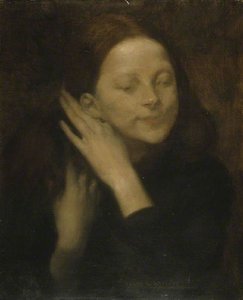
carrière's paintings are best known for their distinctive brown monochrome palette, which has been a subject of fascination for many art enthusiasts. his work was influenced by the art of peter paul rubens, which he was exposed to during his time as a prisoner in dresden. this influence is evident in the glowing colors of his early paintings. **the young mother (1879)**, one of carrière's earliest notable works, is now housed at the musée des beaux-arts de rouen. this piece marked the beginning of his domestic life themes, which would become a hallmark of his artistic style.**notable works and exhibitions**
* **the sick child (montargis)** * **the first communion (toulon)** * **portrait of louis-henri devillez (1887)**, a highly praised work showcasing carrière's skill in capturing the essence of his subjects. these works, among others, have been exhibited at the société nationale des beaux-arts, which carrière helped establish. his contributions to the art world extend beyond his paintings, as he also played an influential role as an art teacher at académie de la palette.**legacy and influence on modern art**
carrière's monochrome style has been seen in the works of pablo picasso, particularly during his blue period. this influence is a testament to carrière's lasting impact on modern art.- view more of carrière's works at OriginalUniqueArt.com/eugène anatole carrière
- explore the musée des beaux-arts de rouen, which houses some of carrière's early pieces, at discovering the musée des beaux-arts de carcassonne (france)
- learn more about symbolism and its influence on art at the symbolism art movement
Questions & Answers
Can I study Eugène Anatole Carrière's use of color across all works?
The Palette Genome of Eugène Anatole Carrière is a page that presents the color profile of the artist's body of work.
Can I explore Eugène Anatole Carrière's works by keyword?
The By Keywords page of Eugène Anatole Carrière groups the artist's artworks by their keywords.
How can I see every artwork made by Eugène Anatole Carrière?
Every work by Eugène Anatole Carrière on this website can be browsed from the artist's All Artworks page.