Edward Villiers Rippingille: A Bristol School Pioneer
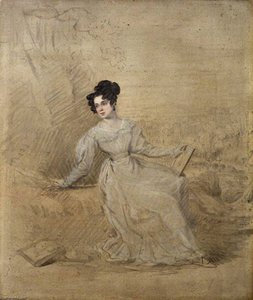
Edward Villiers Rippingille (c.1790–1859) stands as a pivotal figure within the Bristol School of painting, an informal collective that profoundly shaped British art during the Romantic era. Born in King’s Lynn, Norfolk, his precise birthdate remains debated—scholarly consensus now favors approximately 1790 rather than the previously cited 1798—reflecting the challenges inherent in reconstructing biographical details from the period. His early life was marked by a rural upbringing as the son of a farmer, fostering an appreciation for the natural world that would permeate his artistic endeavors. Notably, he honed his skills through portrait commissions and teaching drawing in Wisbech, where his paintings garnered considerable acclaim from celebrated poet John Clare, cementing his reputation as a talented artist early on.
- Early Artistic Training & Norwich Society Debut
- Royal Academy Membership & Collaboration with Edward Bird
- The Bristol School Influence: Landscape and Genre Painting
- Notable Paintings: The Stage Coach Breakfast & Literary Portraits
- Legacy & Historical Significance
Rippingille’s artistic journey commenced in earnest with his exhibition at the Norwich Society of Artists in 1813, marking a significant step toward establishing himself as an artist. Shortly thereafter, he enlisted at the Royal Academy, securing membership and immersing himself within London's vibrant art scene. Crucially, he found kindred spirits in fellow Bristol School artists Edward Bird and Francis Danby, forging enduring collaborations that profoundly impacted his stylistic development. Bird’s genre painting—characterized by its naturalistic depiction of everyday life and fresh color palettes—served as a cornerstone for Rippingille’s artistic vision.
The Bristol School itself was defined by its dedication to plein air sketching expeditions into Leigh Woods, capturing the beauty of the Somerset countryside with meticulous detail. Rippingille's sketches from this period exemplify the school’s commitment to observation and direct engagement with nature—a stylistic approach that distinguishes him from many of his contemporaries. His partnership with Bird resulted in a remarkable artistic synergy, particularly evident in their shared depiction of “The Cheat Detected,” an ambitious project undertaken simultaneously at the Royal Academy in 1814. This collaborative effort underscored the importance of collective artistic exploration and intellectual discourse within the Bristol School’s milieu.
Rippingille's style evolved under Danby’s influence, mirroring his penchant for dramatic landscapes infused with Romantic fervor. Together, Bird and Danby championed a distinctive aesthetic—one that prioritized emotional intensity alongside technical virtuosity—establishing a precedent for subsequent generations of British painters. Rippingille achieved considerable success at the Royal Academy in 1819 with “The Post Office,” demonstrating his ability to capture complex narratives within visually arresting compositions. Subsequent works, including "The Recruiting Sergeant" (1822) and “Funeral Procession of William Canynge” (1824), further solidified his reputation as a master of genre and historical painting respectively.
- Bristol Institution & Early Exhibitions
- The Stage Coach Breakfast: A Celebration of Literary Figures
Rippingille’s contribution to the burgeoning Bristol artistic community extended beyond his own paintings; he actively participated in organizing the inaugural exhibition at the New Bristol Institution in 1823 and served as a key figure in fostering local talent. His painting “The Stage Coach Breakfast” (1824), exhibited at the Royal Academy, stands as arguably his most iconic achievement—a captivating tableau populated by celebrated literary luminaries: Samuel Taylor Coleridge, William Wordsworth, and Robert Southey. This artwork not only showcases Rippingille’s artistic prowess but also reflects the intellectual currents of Bristol during the Romantic period, cementing his place within British art history.
Ultimately, Edward Villiers Rippingille's legacy resides in his unwavering dedication to capturing the spirit of his time—a spirit characterized by both profound observation and impassioned expression. His influence on subsequent artists within the Bristol School is undeniable, shaping a distinctive artistic tradition that continues to inspire admiration and scholarly inquiry today. He remains a testament to the transformative power of collaborative creativity and the enduring beauty of naturalistic painting.