Portrait of Benjamin Williams Leader

Benjamin Williams Leader Paintings: The 100 Most Famous, Through a Gallery's Eye

Updated November 2026 · ranked by our popularity score (searches, visits and orders for each work) · 132 works by Benjamin Williams Leader in our catalogue

In short

To the gallery's eye, Benjamin Williams Leader's most famous painting is FEBRUARY FILL DYKE, whose original hangs in the Birmingham Museum and Art Gallery, Birmingham. PARTING DAY and Clive Lock on the Thames (1873) complete the trio every eye recognises. Of the 132 works by Benjamin Williams Leader in our catalog, the gallery presents the 100 most famous below, each original with its year, its museum and what makes it unique.

1831 – 1923, Worcester Pre-raphaelite Most works: National Library of Wales

The gallery's top 10 Benjamin Williams Leader paintings

1
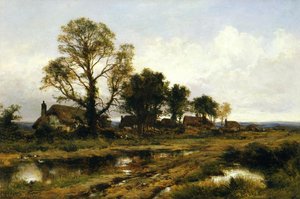
FEBRUARY FILL DYKE by Benjamin Williams Leader

FEBRUARY FILL DYKE

Oil On Canvas · Birmingham Museum and Art Gallery, Birmingham

Artist Information R.A Benjamin Williams Leader, also known as Benjamin Williams Leader, was an English landscape painter born in Worcester on March 12, 1831. He was the son of Edward Leader Williams, a notable civil engineer, and Sarah Whiting. Leader's artistic career began when he started working at his uncle's engraving business in London (Learn more about R.A Benjamin Williams Leader). Painting Information February Fill Dyke is an oil painting…

2
PARTING DAY by Benjamin Williams Leader

PARTING DAY

Oil

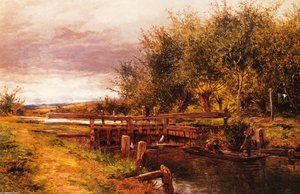
PARTING DAY is a landscape painting by the British artist Benjamin Williams Leader. The work depicts a rural scene centered on a river valley, where a cluster of buildings sits alongside a waterway. The composition includes foreground elements such as reeds and boats, while the midground contains various trees and structures. In the background, the scene extends toward hills and clouds.

3
Clive Lock on the Thames (1873) by Benjamin Williams Leader

Clive Lock on the Thames

1873

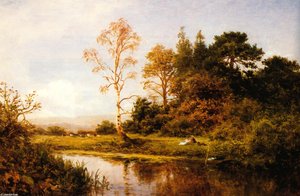
Step into a serene moment captured in time with "Clive Lock on the Thames," a captivating landscape painting by renowned English artist, Benjamin Williams Leader. This work, dating back to 1873, offers a glimpse of rural England, evoking feelings of peace and nostalgia through its masterful depiction of nature's beauty.

4
SOLITUDE by Benjamin Williams Leader

SOLITUDE

Photogravure

In SOLITUDE, Benjamin Williams Leader invites the viewer into a quiet, secluded realm where the rush of the modern world fades into a whisper. The scene unfolds within a stand of tall pine trees, their dark forms rising steadily against a muted sky. This woodland setting, perhaps bordering a coast, feels tucked away from the passage of time. There is a profound sense of peace here, a stillness that settles…

7
A Welsh Churchyard (1863) by Benjamin Williams Leader

A Welsh Churchyard

1863 · Oil

In this 1863 work, we find ourselves within the peaceful confines of a Welsh churchyard, a space where the boundary between the living and the departed feels remarkably thin. The scene is populated by several figures, some walking through the grass and others gathered near the trees in the foreground. There is a sense of communal ease here; benches and dining tables are scattered across the lawn, suggesting that this…

8
Outskirts of a Farm (1860) by Benjamin Williams Leader

Outskirts of a Farm

1860

In this 1860 work, we find ourselves standing at the edge of a pastoral scene, observing a moment of profound stillness. The composition is anchored by a group of sheep grazing peacefully in the foreground, their forms scattered across a lush expanse of grass. There is a certain rhythm to their placement, some close enough to feel the texture of their wool, while others recede into the distance, guiding the…

Benjamin Williams Leader paintings, ranked 11 to 100

11Old Mill, Bettws-y-coed (1875) by Benjamin Williams LeaderOld Mill, Bettws-y-coed1875 12Old Streatley Mill (1873) by Benjamin Williams LeaderOld Streatley Mill1873 13On the Borders of Dartmoor (1881) by Benjamin Williams LeaderOn the Borders of Dartmoor1881 14Making a Hay Rick, Whittington (1879) by Benjamin Williams LeaderMaking a Hay Rick, Whittington1879 15Mawddach Estuary, Barmouth (1888) by Benjamin Williams LeaderMawddach Estuary, Barmouth1888 · National Library of Wales 16miller's home, Pont Aberglaslyn (1890) by Benjamin Williams Leadermiller's home, Pont Aberglaslyn1890 · National Library of Wales 17Large Sketch of the Excavation of the Manchester Ship Canal: Eastham Cutting with Mount Manisty in the distance (1891) by Benjamin Williams LeaderLarge Sketch of the Excavation of the Manchester Ship Canal: Eastham Cutting with Mount Manisty in the distance1891 18The Excavation of the Manchester Ship Canal: Eastham Cutting with Mount Manisty in the distance (1891) by Benjamin Williams LeaderThe Excavation of the Manchester Ship Canal: Eastham Cutting with Mount Manisty in the distance1891 19Sketch for The Excavation of the Manchester Ship Canal: Eastham Cutting with Mount Manisty in the distance (1891) by Benjamin Williams LeaderSketch for The Excavation of the Manchester Ship Canal: Eastham Cutting with Mount Manisty in the distance1891 20Shere Church (1892) by Benjamin Williams LeaderShere Church1892 21The Sands of Aberdovey (1888) by Benjamin Williams LeaderThe Sands of Aberdovey1888 22The Lane at Whittington, Worcestershire (1890) by Benjamin Williams LeaderThe Lane at Whittington, Worcestershire1890 23The Silent Evening Hour (1890) by Benjamin Williams LeaderThe Silent Evening Hour1890 24Worcester Cathedral (1894) by Benjamin Williams LeaderWorcester Cathedral1894 · Chazen Museum of Art 25Skirt of a Pine Wood (1896) by Benjamin Williams LeaderSkirt of a Pine Wood1896 26A gleam before the storm (1901) by Benjamin Williams LeaderA gleam before the storm1901 27A Worcestershire Village (1900) by Benjamin Williams LeaderA Worcestershire Village1900 28In a Welsh Valley (1909) by Benjamin Williams LeaderIn a Welsh Valley1909 29EVENING AT NORTON, WORCESTER by Benjamin Williams LeaderEVENING AT NORTON, WORCESTER 30SHERE CHURCH, SURREY by Benjamin Williams LeaderSHERE CHURCH, SURREY 31EVENING IN A SURREY PINE WOOD by Benjamin Williams LeaderEVENING IN A SURREY PINE WOOD 32AUTUMN IN A SURREY WOOD by Benjamin Williams LeaderAUTUMN IN A SURREY WOODMuseum of Fine Arts 33LOCK SCENE by Benjamin Williams LeaderLOCK SCENE 34THE WAY TO THE VILLAGE CHURCH by Benjamin Williams LeaderTHE WAY TO THE VILLAGE CHURCH 35A DAY ON THE RIVER LLUGWY by Benjamin Williams LeaderA DAY ON THE RIVER LLUGWY 36HAYMAKING by Benjamin Williams LeaderHAYMAKING 37ON THE RIVER CONWAY NEAR BETTWS-Y-COED by Benjamin Williams LeaderON THE RIVER CONWAY NEAR BETTWS-Y-COED 38A FINE SUMMERS DAY IN A WELSH VALLEY by Benjamin Williams LeaderA FINE SUMMERS DAY IN A WELSH VALLEY 39Low Tide on the South Coast by Benjamin Williams LeaderLow Tide on the South Coast 40GLYDER FAWR, SNOWDON RANGE by Benjamin Williams LeaderGLYDER FAWR, SNOWDON RANGE 41BETTWS-Y-COED by Benjamin Williams LeaderBETTWS-Y-COED 42THE STREAM THROUGH THE BIRCH WOODS by Benjamin Williams LeaderTHE STREAM THROUGH THE BIRCH WOODS 43LITTLEHAMPTON FAIRGROUND by Benjamin Williams LeaderLITTLEHAMPTON FAIRGROUND 44WILD WALES by Benjamin Williams LeaderWILD WALES 45FEBRUARY FILL DYKE 1 by Benjamin Williams LeaderFEBRUARY FILL DYKE 1 46Returning home by Benjamin Williams LeaderReturning home 47A DEVONSHIRE VILLAGE by Benjamin Williams LeaderA DEVONSHIRE VILLAGE 48THE OLD BLACKSMITH'S SHOP, GREAT MALVERN by Benjamin Williams LeaderTHE OLD BLACKSMITH'S SHOP, GREAT MALVERN 49THE SANDPIT, BURROW'S CROSS by Benjamin Williams LeaderTHE SANDPIT, BURROW'S CROSS 50EVENING TIME by Benjamin Williams LeaderEVENING TIME 51AN ENGLISH HAYFIELD by Benjamin Williams LeaderAN ENGLISH HAYFIELDBirmingham Museum and Art Gallery 52THE CHURCHYARD, BETWS-Y-COED by Benjamin Williams LeaderTHE CHURCHYARD, BETWS-Y-COED 53Surrey Cornfields by Benjamin Williams LeaderSurrey Cornfields 54IN THE FIELDS by Benjamin Williams LeaderIN THE FIELDS 55BIGODS HALL, DUNMOW, ESSEX by Benjamin Williams LeaderBIGODS HALL, DUNMOW, ESSEX 56An English River in Autumn by Benjamin Williams LeaderAn English River in Autumn 57A Fine Morning on the Sussex Coast (1911) by Benjamin Williams LeaderA Fine Morning on the Sussex Coast1911 58THE BUILDING OF THE MANCHESTER SHIP CANAL by Benjamin Williams LeaderTHE BUILDING OF THE MANCHESTER SHIP CANAL 59A Quiet Pool in Glenfalloch by Benjamin Williams LeaderA Quiet Pool in Glenfalloch 60WORCESTERSHIRE RIVERSIDE COTTAGES by Benjamin Williams LeaderWORCESTERSHIRE RIVERSIDE COTTAGES 61A Fine Autumn Morning (1914) by Benjamin Williams LeaderA Fine Autumn Morning1914 62NEAR CAPEL CURIG, NORTH WALES by Benjamin Williams LeaderNEAR CAPEL CURIG, NORTH WALES 63A WELSH LANDSCAPE by Benjamin Williams LeaderA WELSH LANDSCAPE 64FAST FALLS THE EVENTIDE by Benjamin Williams LeaderFAST FALLS THE EVENTIDE 65A FINE MORNING, NORTH WALES by Benjamin Williams LeaderA FINE MORNING, NORTH WALES 66EARLY MORNING, GORING-ON-THAMES by Benjamin Williams LeaderEARLY MORNING, GORING-ON-THAMES 67EVENING by Benjamin Williams LeaderEVENING 68SUNSET ON THE SEVERN by Benjamin Williams LeaderSUNSET ON THE SEVERN 69GREEN PASTURES AND STILL WATERS by Benjamin Williams LeaderGREEN PASTURES AND STILL WATERS 70MANCHESTER SHIP CANAL. THE MAKING OF EASTHAM DOCK by Benjamin Williams LeaderMANCHESTER SHIP CANAL. THE MAKING OF EASTHAM DOCKGallery Oldham 71A Fine Day on the Thames by Benjamin Williams LeaderA Fine Day on the Thames 72EVENING'S LAST GLEAM by Benjamin Williams LeaderEVENING'S LAST GLEAM 73GLEAM BEFORE THE STORM by Benjamin Williams LeaderGLEAM BEFORE THE STORM 74SURREY PINES by Benjamin Williams LeaderSURREY PINES 75HARLECH BEACH by Benjamin Williams LeaderHARLECH BEACH 76AFTERNOON ON THE THAMES by Benjamin Williams LeaderAFTERNOON ON THE THAMES 77A SUMMER'S DAY, WORCESTERSHIRE by Benjamin Williams LeaderA SUMMER'S DAY, WORCESTERSHIRE 78Tintern abbey by Benjamin Williams LeaderTintern abbey 79AT EVENING TIME IT SHALL BE LIGHT by Benjamin Williams LeaderAT EVENING TIME IT SHALL BE LIGHT 80THE CONWAY AT BETTWS-Y-COED by Benjamin Williams LeaderTHE CONWAY AT BETTWS-Y-COED 81A SUNNY MORNING ON THE LLUGWY, NORTH WALES by Benjamin Williams LeaderA SUNNY MORNING ON THE LLUGWY, NORTH WALES 82ROCKY LANDSCAPE WITH A TORRENT AND WATER WHEEL by Benjamin Williams LeaderROCKY LANDSCAPE WITH A TORRENT AND WATER WHEEL 83AN AUTUMN EVENING ON THE LLEDR, NORTH WALES by Benjamin Williams LeaderAN AUTUMN EVENING ON THE LLEDR, NORTH WALES 84The incoming tide, porth newquay by Benjamin Williams LeaderThe incoming tide, porth newquay 85A Summer's Day by Benjamin Williams LeaderA Summer's Day 86THE STREAM IN SUMMERTIME by Benjamin Williams LeaderTHE STREAM IN SUMMERTIME 87Morning On The Sussex Coast by Benjamin Williams LeaderMorning On The Sussex Coast 88Summertime: Through the Hayfield, Worcestershire by Benjamin Williams LeaderSummertime: Through the Hayfield, Worcestershire 89Streatley on Thames by Benjamin Williams LeaderStreatley on Thames 90The Sandpit Burrows Cross by Benjamin Williams LeaderThe Sandpit Burrows Cross 91Severn Side Sabrina-s Stream at Kempsey on the River Severn by Benjamin Williams LeaderSevern Side Sabrina-s Stream at Kempsey on the River Severn 92THE SANDY MARGIN OF THE BEACH by Benjamin Williams LeaderTHE SANDY MARGIN OF THE BEACH 93EVENING ON THE SURREY WOLDS by Benjamin Williams LeaderEVENING ON THE SURREY WOLDS 94AT EVENTIDE by Benjamin Williams LeaderAT EVENTIDE 95A WET ROADSIDE by Benjamin Williams LeaderA WET ROADSIDE 96Across the heath by Benjamin Williams LeaderAcross the heath 97BEN VORLIC by Benjamin Williams LeaderBEN VORLIC 98LITTLEHAMPTON SANDS by Benjamin Williams LeaderLITTLEHAMPTON SANDS 99A FINE DAY IN AUTUMN, NORTH WALES by Benjamin Williams LeaderA FINE DAY IN AUTUMN, NORTH WALES 100THE VALLEY OF THE LLUGWY by Benjamin Williams LeaderTHE VALLEY OF THE LLUGWY

Benjamin Williams Leader's famous paintings, period by period

Early Period

1860 – 1863 · 3 works in this list

The subjects that held Benjamin Williams Leader's eye

The four subjects that come back most often in these originals, each with its finest example.

The museums that keep Benjamin Williams Leader's originals

The 5 museums that hold the most of the paintings on this page.

Museum City Works by Benjamin Williams Leader Paintings from this list
National Library of Wales, AberystwythNational Library of Wales Aberystwyth 3 Bettws y Coed Church, Mawddach Estuary, Barmouth, miller's home, Pont Aberglaslyn
Birmingham Museum and Art Gallery, BirminghamBirmingham Museum and Art Gallery Birmingham 2 FEBRUARY FILL DYKE, AN ENGLISH HAYFIELD
Chazen Museum of Art, MadisonChazen Museum of Art Madison 1 Worcester Cathedral
Museum of Fine Arts, BostonMuseum of Fine Arts Boston 1 AUTUMN IN A SURREY WOOD
Gallery Oldham, OldhamGallery Oldham Oldham 1 MANCHESTER SHIP CANAL. THE MAKING OF EASTHAM DOCK

Benjamin Williams Leader, one signature painting per decade

Works per decade

Pick a decade to see the original that defines it.

Benjamin Williams Leader's paintings: the gallery answers

Which Benjamin Williams Leader painting is the most famous of all?Reveal the answer

FEBRUARY FILL DYKE, Birmingham Museum and Art Gallery, Birmingham. PARTING DAY and Clive Lock on the Thames (1873) come next.

Which are Benjamin Williams Leader's top 10 paintings?Reveal the answer

FEBRUARY FILL DYKE, PARTING DAY, Clive Lock on the Thames, SOLITUDE, Bettws y Coed Church, A Small Boy standing at the Gate of a Ruined Cottage, A Welsh Churchyard, Outskirts of a Farm, Derwentwater from Ladore and A Moated Grange. The ranking above gives each one's year and museum.

How many works did Benjamin Williams Leader create?Reveal the answer

Our catalog holds 132 works by Benjamin Williams Leader, dated from 1858 to 1914.

Where do Benjamin Williams Leader's most famous originals hang?Reveal the answer

Mostly in National Library of Wales (Aberystwyth), Birmingham Museum and Art Gallery (Birmingham) and Chazen Museum of Art (Madison). The museum table above lists them all.

When did Benjamin Williams Leader create the most famous paintings?Reveal the answer

In 1890s: 9 of the 100 works on this page were made then, miller's home, Pont Aberglaslyn among them.

Which are Benjamin Williams Leader's earliest and latest famous works?Reveal the answer

On this page, the earliest is A Small Boy standing at the Gate of a Ruined Cottage (1858) and the latest A Fine Autumn Morning (1914).

Which subjects did Benjamin Williams Leader return to most?Reveal the answer

Landscape (37), Scenes (9) and Sunset (8), across the 100 works on this page.

Which medium did Benjamin Williams Leader work in most?Reveal the answer

Oil, for 2 of the 100 works on this page.

Which movement is Benjamin Williams Leader associated with?Reveal the answer

Pre-raphaelite, judging by the originals on this page.

Which Benjamin Williams Leader originals does the National Library of Wales hold?Reveal the answer

Bettws y Coed Church, Mawddach Estuary, Barmouth and miller's home, Pont Aberglaslyn: the National Library of Wales, Aberystwyth holds 3 of the works on this page.

Benjamin Williams Leader: the artist

A Legacy of Light: The Life and Art of Benjamin Williams Leader

In the golden age of Victorian landscape painting, few artists captured the quiet majesty of the English countryside with as much tenderness and technical mastery as Benjamin Williams Leader. Born in Worcester in 1831, Leader was a child of the Severn Valley, an environment that would forever inform his artistic soul. His upbringing was steeped in a tradition of careful observation; as the son of Edward Leader Williams, a civil engineer with deep ties to the legendary John Constable, Benjamin was raised amidst the intersection of structural precision and natural beauty. This unique heritage allowed him to approach the canvas with both a scientific eye for detail and a romantic heart, seeking to translate the fleeting atmospheric shifts of the British landscape into enduring works of art.

Leader’s journey through the prestigious Royal Academy Schools, which began in 1854, marked the ascent of a true master. His early career was defined by a remarkable precocity; his debut exhibition piece, Cottage Children Blowing Bubbles, did not merely introduce him to the public but achieved immediate commercial acclaim. This early success set the stage for a prolific career spanning over six decades, during which he became a cornerstone of the Royal Academy. His evolution as an artist mirrors the broader shifts in nineteenth-century aesthetics, moving gracefully from the meticulous, luminous precision of the Pre-Raphaelite movement toward a more fluid, Impressionistic sensibility. While his early works focused on the sharp clarity of every leaf and ripple, his later masterpieces prioritized the emotional resonance of light, capturing the way mist clings to a valley or how sunlight dissolves the edges of a distant forest.

The Soul of the Landscape: Themes and Techniques

To gaze upon a painting by Leader is to step into a world of profound tranquility. His subject matter was deeply rooted in the geography of his youth, particularly the lush, rolling hills of Wales and the serene stretches of the Severn Valley. He possessed an uncanny ability to elevate ordinary rural scenes into something transcendent. Whether depicting the rhythmic flow of the River Thames in works such as Streatley on Thames or the quiet melancholy of a departing traveler in Parting Day, Leader sought to capture the "spirit of place." His technique was characterized by a sophisticated use of color and light, often employing a plein air approach that allowed him to record the authentic textures of the natural world.

The technical brilliance of his work lies in its duality:

  • Atmospheric Depth: He mastered the art of aerial perspective, using soft tones and hazy horizons to create an immense sense of scale and distance.
  • Luminous Detail: Even as his style became more impressionistic, he retained a fundamental respect for the intricate textures of nature, from the glint of water to the softness of summer foliage.
  • Emotional Resonance: Beyond mere topography, his landscapes serve as emotional vessels, evoking feelings of nostalgia, peace, and the sublime power of the natural environment.
Through these methods, Leader did more than document the landscape; he interpreted it, creating a visual language that spoke to the Victorian fascination with the idyllic and the pastoral.

Historical Significance and Enduring Impression

The historical importance of Benjamin Williams Leader extends far beyond his individual achievements. He stands as a vital link in the lineage of English landscape painting, bridging the gap between the rigorous naturalism of Constable and the light-drenched experiments of the later Impressionists. His ability to maintain commercial success while pushing the boundaries of atmospheric painting ensured that his influence remained relevant throughout a period of rapid industrial and social change. In an era where the world was becoming increasingly mechanized, Leader’s canvases offered a sanctuary of timelessness.

Today, his works remain highly cherished by collectors and historians alike, serving as windows into a vanished era of pastoral innocence. His legacy is not found merely in museums, but in the way he taught us to look at the world—to find the extraordinary within the ordinary, and to recognize that even the simplest bend in a river or a patch of sunlight through the trees holds a profound, poetic truth. Through his dedication to the beauty of the Severn Valley and the Welsh wilds, Benjamin Williams Leader ensured that the fleeting moments of the nineteenth century would remain eternally captured in the amber of fine art.