1


Updated November 2026 · ranked by our popularity score (searches, visits and orders for each work) · 28 works by Aurél Bernáth in our catalogue
In short
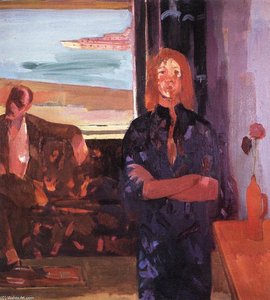
Of all the originals Aurél Bernáth left, the most famous is The Port Of Genoa. Close behind it come Peasant Family and Counts And Castles. Our catalog holds 28 works by Aurél Bernáth; the gallery has kept the 22 the world admires most, each shown with its date, its museum and its story.


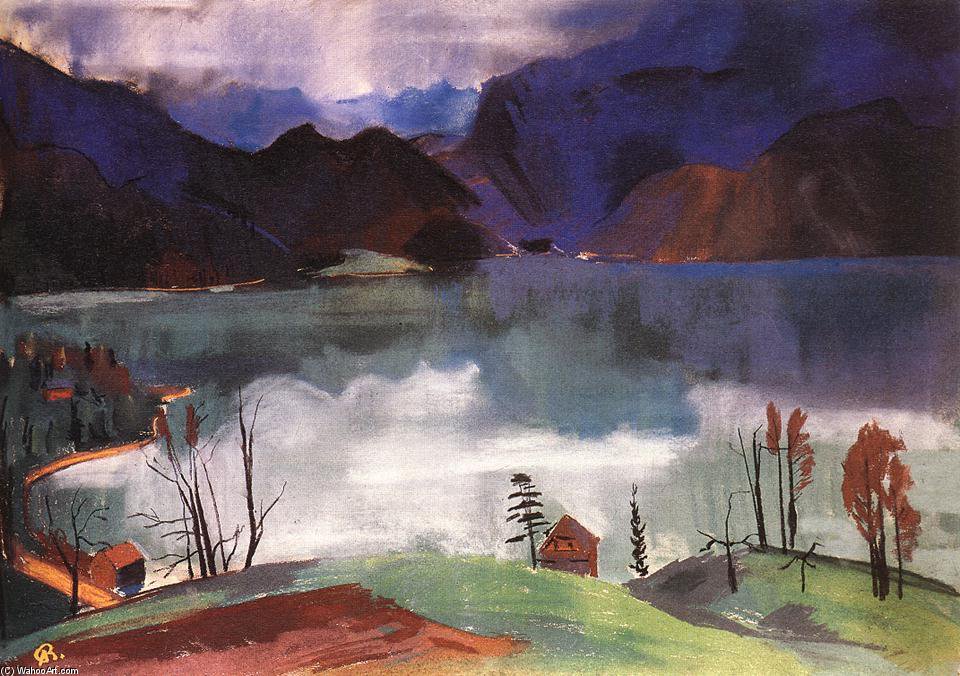

The four subjects that come back most often in these originals, each with its finest example.
The Port Of Genoa. Peasant Family and Counts And Castles come next.
The Port Of Genoa, Peasant Family, Counts And Castles, Villages, Venus, Falling And Crying, Cathedrals And Houses, Self-portrait, Walchensee and Pike On A Tray. The ranking above gives each one's year and museum.
Our catalog holds 28 works by Aurél Bernáth.
Buildings (4), Portraits (3) and “atmospheric mood” (2), across the 22 works on this page.
Expressionism, judging by the originals on this page.
Aurél Bernáth (born Makó, Hungary in 1895 – died 1982) was a prominent Hungarian painter and art theorist. He received his foundational artistic training at Nagybánya, studying under the guidance of István Réti and János Thorma. This early exposure to the Nagybánya school of plein-air painting would significantly shape his approach to landscape and color.
Bernáth’s life was marked by the upheaval of the First World War, in which he served as a soldier. Following the war, in 1921, he relocated to Vienna, Austria. It was during this period that his artistic style began to be heavily influenced by the burgeoning German Expressionist movement.
A pivotal moment in Bernáth’s career came with an invitation from Herwarth Walden to exhibit his work at the renowned Sturm Gallery in Berlin between 1922 and 1924. This exposure placed him amongst some of the most avant-garde artists of the time, solidifying his commitment to Expressionist principles.
In 1926, Bernáth returned to Hungary and became a leading figure in the Képzőművészek új társasága (New Society of Artists), commonly known as KUT. He was particularly associated with the Gresham Circle during the 1930s, a group of artists who challenged traditional artistic norms and explored new forms of expression.
Bernáth dedicated much of his life to education, teaching at the Hungarian Academy of Fine Arts from 1945 to 1974. He also contributed significantly to art discourse as an editor for the journal Hungarian Art from 1948 to 1949. After 1947, his writings on art theory gained considerable popularity and influence within Hungarian artistic circles.
Aurél Bernáth’s work represents a crucial link between Hungarian art and the broader European Expressionist movement. His contributions as both an artist and a theorist helped to shape the development of modern art in Hungary. He is referenced in several key art encyclopedias, including the Benezit Dictionary of Artists and the Vollmer Encyclopedia.