
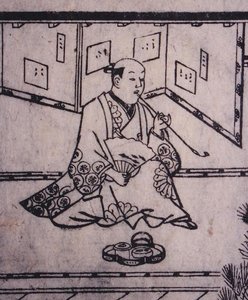
hishikawa moronobu
The Dawn of Ukiyo-e: Hishikawa Moronobu and the Floating World Hishikawa Moronobu, born in Edo (modern Tokyo) in 1618, stands as a pivotal figure in the history of Japanese art. He wasn’t merely an artist; he was a cultural architect, instrumental in shaping the ukiyo-e movement – “pictures of the floating world” – that would come to define much of Japan's artistic legacy. Before Moronobu, painting and printmaking were largely confined to established themes: landscapes inspired by Chinese masters, portraits of the elite, and religious subjects. He dared to turn his brush towards the everyday…
The Subject Atlas
A chart of hishikawa moronobu's corpus mapped not by date but by subject. Spokes are what they painted; rings are when; and the threads between stars reveal the patrons and places that secretly connect them.
Spokes — Subject
Each arm of the atlas gathers works by what they depict: portraits, sacred scenes, mythologies, and the scientific studies. Click a spoke to swing that cluster to the top.
Rings — Career Period
Distance from the center marks time. The innermost ring is the earliest period; the outermost, the final years. Style matures as you move outward.
Threads — Shared Context
Coloured lines link works bound by the same patron, commission, or theme. Trace a context to watch related clusters light up across subjects.