A Life Interwoven: Alfonso Carlos Romo Garza and the Echoes of Spanish History
Alfonso Carlos Romo Garza, a figure as multifaceted as his native Mexico, defies easy categorization. Born in Mexico City in 1950, his journey has been one of remarkable diversification – from agricultural engineering to agro-industry, political activism, Olympic equestrianism, and ultimately, a dedicated pursuit of artistic expression. While perhaps best known within Mexican business circles for founding Pulsar International and establishing VECTOR Casa de Bolsa, Romo’s artistic endeavors reveal a deeply contemplative soul drawn to the enduring beauty and poignant history embedded within the Spanish landscape. His paintings aren't merely depictions of places; they are evocative meditations on time, resilience, and the interplay between human endeavor and the natural world.
From Engineering Fields to Artistic Visions
Romo’s early life was shaped by a rigorous education, beginning at the Instituto Patria, a Jesuit school that instilled in him a foundation of discipline and intellectual curiosity. He continued his academic pursuits at the Institute Tecnológico y de Estudios Superiores de Monterrey, earning a degree in Agricultural Engineering – a path seemingly distant from the canvases he would later embrace. However, this grounding in the natural world arguably informs his artistic sensibility, lending a keen observational eye to his depictions of light, texture, and atmosphere. The entrepreneurial spirit that drove his success in business—founding Pulsar International in 1981 and navigating its expansion into diverse sectors like biotechnology and seed production—demonstrates a visionary approach also evident in his artistic choices. Even his foray into politics with the founding of Opción Ciudadana speaks to a desire to shape the world around him, a drive that extends beyond commerce and into the realm of cultural preservation through art. His participation as an equestrian at both the 1996 Atlanta and 2000 Sydney Olympics further illustrates this dedication to discipline and mastery across diverse fields.
The Spanish Landscape as Muse
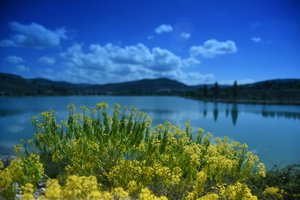
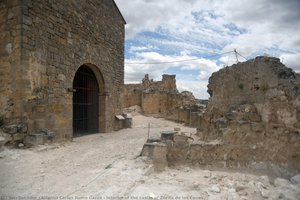
Romo’s artistic focus centers on landscape paintings, but these are not idyllic vistas designed for simple aesthetic pleasure. Instead, he gravitates towards historical sites within Spain – crumbling castles, ancient churches, and remnants of past civilizations. Works like Remains of the Old Citadel of Zorita de los Canes, Remains of the Church of Recópolis, and Azud in Pareja are not celebrations of grandeur but rather poignant explorations of decay, memory, and the passage of time. He doesn’t shy away from depicting ruins; he embraces them as powerful symbols of endurance and the cyclical nature of history. His paintings often feature architectural elements seamlessly integrated into their natural surroundings, emphasizing a harmonious yet melancholic relationship between human creation and the forces of nature. Gardens of the Royal Textile Factory, for example, captures not just botanical beauty but also the quiet dignity of a space steeped in historical significance. Local Cuisine offers a glimpse into Spanish cultural life through its culinary traditions, showcasing Romo’s interest in capturing everyday moments that reveal deeper societal narratives.
A Style Rooted in Observation and Atmosphere
While specific artistic influences remain largely undocumented, Romo's work suggests an appreciation for classical composition and a meticulous attention to detail. His technique prioritizes the rendering of light and shadow, creating a dramatic interplay that enhances the emotional impact of his scenes. There’s a palpable sense of atmosphere in his paintings – a feeling of stillness and contemplation that invites viewers to immerse themselves in the depicted environment. He doesn't merely record what he sees; he interprets it through a lens of personal reflection, imbuing each canvas with a subtle yet powerful emotional resonance. The textured surfaces and nuanced color palettes contribute to this effect, creating works that are both visually striking and intellectually stimulating.
A Unique Legacy: Bridging Worlds
Alfonso Romo Garza occupies a unique position in the cultural landscape. He is not a traditionally trained artist who dedicated his life solely to painting; rather, he is a successful businessman, politician, equestrian, and ultimately, an artist whose work offers a compelling perspective on Spanish history and architecture. His artistic contributions are best understood as an extension of his multifaceted career – a testament to his commitment to cultural preservation, aesthetic expression, and the enduring power of memory. He represents a fascinating blend of pragmatism and idealism, demonstrating that success in one field does not preclude a passionate pursuit of creative endeavors. His legacy lies not only in his business achievements or athletic accomplishments but also in the evocative landscapes he has created—silent witnesses to the passage of time and the enduring spirit of human civilization.