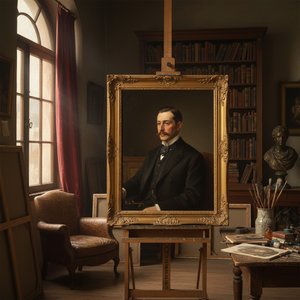
Gerard David: A Master of Early Netherlandish Portraiture
Gerard David, born around 1460 in Oudewater, Netherlands, and tragically dying in Bruges circa 1523, stands as a pivotal figure in the burgeoning world of early Netherlandish painting. While often overshadowed by his more flamboyant contemporaries like Jan van Eyck and Rogier van der Weyden, David’s meticulous technique, profound understanding of human psychology, and innovative approach to portraiture cemented his place as one of the most significant artists of his era. His career unfolded primarily in Bruges, a vibrant commercial center and artistic hub that attracted talent from across Europe, shaping David's style and exposing him to diverse influences. He wasn’t merely a painter; he was a respected guild master, a skilled illuminator, and a key player in the city’s thriving art market – a testament to his considerable reputation and influence.
Early Life and Influences: A Foundation of Skill
Information regarding David's formative years remains somewhat sparse, shrouded in the typical gaps of historical records for artists of that period. However, it is believed he spent his early artistic training under Cristoforo Solari, a prominent Milanese painter who instilled in him a strong foundation in technique and perspective. This initial exposure to Italian Renaissance principles – particularly the meticulous detail and realistic representation championed by Leonardo da Vinci – undoubtedly shaped David’s approach. Crucially, David later encountered and was profoundly influenced by Antonello da Messina, whose innovative use of color, light, and atmospheric perspective revolutionized painting in Venice. David absorbed these lessons, adapting them to his own distinctive style while retaining a distinctly Northern European sensibility. The influence of Hugo van der Goes, known for his dramatic compositions and emotional intensity, is also evident in David’s later works, particularly those depicting religious narratives.
A Portraitist of Distinction: Defining His Artistic Style
David's artistic style is characterized by a remarkable balance between realism and elegance. Unlike the often overtly theatrical compositions favored by some of his contemporaries, David’s portraits possess a quiet dignity and understated sophistication. He meticulously rendered every detail – from the texture of fabrics to the subtle nuances of facial expression – with an almost obsessive precision. His use of color was restrained yet masterful, creating a harmonious and balanced visual experience. A key element of his style is his ability to convey psychological depth within his portraits; he didn’t simply depict likenesses but sought to capture the inner lives and personalities of his subjects. This is particularly evident in his numerous depictions of civic dignitaries and wealthy patrons, where he skillfully reveals their status, character, and aspirations. His work stands apart through a remarkable sense of spatial recession and atmospheric perspective, creating a believable illusion of depth within the confines of the canvas.
Notable Works: Religious Scenes and Portraiture
David’s oeuvre encompasses a diverse range of subjects, but he is perhaps best known for his religious paintings, particularly those depicting the Virgin Mary and scenes from the life of Christ. The *Polyptych of the Misericordia*, completed between 1460 and 1469, showcases his early mastery of technique and his ability to create complex, layered compositions. The *Judgment of Cambyses*, a pair of unsettling paintings depicting the brutal execution of Sisamnes, exemplifies David’s willingness to tackle challenging themes with unflinching realism. These works demonstrate his command of dramatic lighting and his capacity to evoke powerful emotions in the viewer. Beyond religious scenes, David produced numerous portraits – including those of Dukes of Urbino and members of the Florentine nobility – that are considered masterpieces of their genre. The *Portrait of a Young Man*, often referred to as the “Young Man,” is particularly celebrated for its psychological insight and exquisite detail.
Legacy and Historical Significance
Despite his considerable talent and influence, David’s legacy was somewhat obscured for centuries after his death. His works were frequently copied, sometimes without attribution, leading to a blurring of the lines between his original creations and imitations. However, in the 19th century, scholars began to reassess David's importance, recognizing him as one of the foremost artists of the Early Netherlandish school. Today, his paintings are treasured for their technical brilliance, psychological depth, and enduring beauty. Gerard David’s meticulous approach to portraiture, combined with his innovative use of perspective and color, profoundly influenced generations of subsequent painters, solidifying his place as a pivotal figure in the development of Western art. His work continues to captivate viewers with its quiet dignity, subtle nuances, and profound understanding of the human condition.