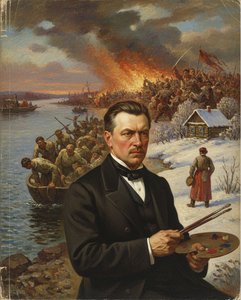
Ukrainian Baroque (Ukrainian: українське бароко), also known as Cossack Baroque (Ukrainian: козацьке бароко) or Mazepa Baroque, is an artistic style that was widespread in Ukraine in the 17th and 18th centuries. It was the result of a combination of ...
To understand the cultural heartbeat of Ukraine, one must first surrender to the theatrical grandeur of the Baroque era. Emerging in the late 16th century and reaching its zenith during the age of the Cossack Hetmanate, this movement was far more than a mere stylistic choice; it was a profound expression of spiritual fervor and political identity. Unlike the restrained elegance found in other parts of Europe, the Ukrainian Baroque—often referred to as Mazepa Baroque—offered a unique synthesis of Western European architectural forms and deeply rooted local traditions. It was an era where art became a sensory experience, designed to stir the soul through movement, intense emotion, and a sense of infinite scale.
The influence of this period is perhaps most visible in the sacred architecture that continues to define the skyline of Kyiv. The works of masters such as Ivan Zarudny and Stepan Kovnir breathed life into structures like the Kyiv Pechersk Lavra, where the fusion of religious devotion and artistic skill reached its zenith. This was a time when the boundaries between the earthly and the divine were blurred by the use of chiaroscuro—that breathtaking interplay of deep shadow and piercing light. In these spaces, art was not merely seen but felt, as if the very walls were pulsating with the history of a people striving for autonomy and spiritual clarity amidst the shifting tides of empires.
Cossack Defiance in Realism: The Monumental Legacy of Ilya Repin
The Defiant Spirit of Ukrainian Cossacks The Reply of the Zaporozhian Cossacks to Sultan Mahmoud IV by Ilya Yefimovich Repin is a monumental masterpiece that captures the defiance and spirit of the Ukrainian Cossacks. This iconic painting, created in...
As the centuries progressed, the artistic language shifted from the ornate flourishes of the Baroque to the raw, unvarnary truth of Realism. No artist captured the pulse of Ukrainian resilience quite like Ilya Yefimovich Repin. His monumental works serve as a visceral testament to the defiant spirit of the Zaporozhian Cossacks, men who stood as bulwarks against imperial encroachment. In masterpieces such as The Reply of the Zaporozhian Cossacks to Sultan Mahmoud IV, we witness a moment frozen in time—a chaotic, intense gathering where the air is thick with the tension of decision-making and the grit of rural reality.
Repin’s technique eschewed idealized, romanticized depictions in favor of an unparalleled authenticity. Through a masterful use of a muted, earthy palette dominated by browns, ochres, and deep reds, he mirrored the very landscape of the Zaporozhian Sich. Every brushstroke conveys a spectrum of human emotion: the determination in a soldier's gaze, the sorrow of loss, and the unwavering loyalty to tradition. In his work, the historical event transcends mere record; it becomes an exploration of human psychology and the enduring strength of a culture that refuses to be subdued.
Folk Traditions Reimagined: The Vibrant Symbolism of Maria Primachenko
A Vision of Ukrainian Heritage In the enchanting realm of Maria Primachenko’s artistry, the boundaries between reality and folklore dissolve into a vibrant tapestry of color and cultural memory. Her masterpiece, Flax Blooms and a Cossack Goes to a Gi...
While Realism captured the weight of history, other artists sought to preserve the ethereal beauty of Ukrainian folklore. In the enchanting realm of Maria Primachenko’s artistry, the boundaries between reality and myth dissolve into a vibrant tapestry of color and cultural memory. Her work, such as Flax Blooms and a Cossack Goes to a Girl, serves as a breathtaking window into the soul of Ukraine, utilizing the aesthetic language of Naïve Art to celebrate the joyous spirit of traditional life.
Primachenko’s style is deeply rooted in the rhythmic patterns of vyshyvanka embroidery and the intricate symbolism of pysanky—the traditional Ukrainian Easter eggs. By eschewing three-dimensional perspective in favor of a captivating two-dimensionality, she creates a sense of graphic solidity that feels both modern and ancient. Her use of bold, clearly defined outlines and flat blocks of brilliant color allows light to seem as though it emanates from within the pigments themselves. In her compositions, every petal and every flax bloom is a vessel for meaning, representing fertility, abundance, and the enduring strength of the peasantry's hardworking spirit.
Architectural Narratives: Preserving National Identity through Kyiv’s Artistic Landmarks
A Bastion of Ukrainian Identity: The Soul of Kyiv In the heart of Kyiv, where the echoes of ancient Kievan Rus' meet the resilient spirit of a modern nation, stands the National Art Museum of Ukraine . More than a mere repository for relics, this ins...
The history of Ukraine is etched into the very stone and mortar of its capital. Kyiv, a city that straddles the banks of the Dnieper, acts as a living chronicle of endurance. To walk through its streets is to encounter a temporal journey where the echoes of Kievan Rus' meet the neoclassical elegance of later centuries. Institutions like the National Art Museum of Ukraine serve as bastions of this identity, guarding treasures that range from 12th-century Saint George reliefs to the sweeping narratives of the Baroque.
The architecture itself is a study in cultural guardianship. The museum’s facade, featuring a reconstructed Doric porch and silent sentinels like sculpted gryphons, reflects an unwavering resolve against the tides of time. These landmarks are not merely aesthetic achievements; they are structural manifestations of a national narrative. From the spiritual heights of the Kyiv Pechersk Lavra to the academic foundations laid by figures like Theodor Ernst, the built environment of Kyiv remains a profound testament to the importance of safeguarding one's artistic and historical legacy against political upheaval.
Modernity Meets Heritage: The Visionary Synthesis of the Krychevsky Brothers
Vasyl Krychevsky: A Ukrainian Visionary Bridging Tradition and Modernity Born in Lebedyn, Ukraine, in 1873, Vasyl Hryhorovych Krychevsky was more than simply a painter; he was a polymath – an architect, art scholar, graphic designer, pedagogue, and a...
The transition into the 20th century brought a new wave of innovators who sought to bridge the gap between ancient tradition and modern expression. The Krychevsky brothers, particularly Vasyl Hryhorovych Krychevsky, stand as pivotal figures in this movement. A polymath of immense talent, Vasyl was an architect, scholar, and graphic designer who synthesized the influences of French Impressionism with the profound traditions of Ukrainian folk art. His work, including his designs for the 1918 Ukrainian coat of arms and even national banknotes, helped shape the visual identity of a nascent nation.
His architectural triumphs, such as the Poltava Zemstvo Building, demonstrated a masterful ability to blend traditional ornamentation with modern sensibilities. Similarly, his brother Fedir Krychevsky explored themes that ranged from grand historical narratives to intimate portraits, absorbing the decorative patterns of Secessionist aesthetics like those of Gustav Klimt. Together, their legacies represent a fascinating confluence of influences—a movement that honored the past while fearlessly embracing the complexities of a changing, modern world.
The Eternal Guardian: Protecting Ukraine's Artistic Legacy in a Changing World
A Life Dedicated to Ukrainian Heritage: Theodor Ernst (Fedir Ernst) Theodor Richard Eduard Ernst, known as Fedir Ernst after embracing his Ukrainian identity, was a figure whose life embodied the turbulent fate of cultural preservation in the 20th ce...
Throughout the turbulent history of the 20th century, the preservation of Ukrainian art has often been an act of profound defiance. Figures like Theodor Richard Eduard Ernst embodied this commitment, dedicating their lives to protecting monuments and collections from destruction during periods of immense political instability. The work of establishing museums and expanding collections was not merely academic; it was a vital effort to ensure that the cultural memory of the Ukrainian people would survive the shifting landscapes of empire and revolution.
Today, as we reflect on these iconic works—from the dramatic shadows of the Baroque to the vibrant folk motifs of Primachenquo—we recognize that art is the ultimate vessel of resilience. It provides a way for a culture to reclaim its narrative and assert its existence. At OriginalUniqueArt.com, we honor this enduring legacy by offering exquisite, hand-painted reproductions and museum-quality prints that allow the beauty and strength of these masterpieces to find a place in contemporary homes and collections worldwide, ensuring that the flame of heritage continues to burn brightly for generations to come.
Explore the life & legacy of Ilya Repin, Russia's leading realist painter. Discover his iconic works like 'Barge Haulers on the Volga,' social commentary, and profound portraits. A comprehensive guide for art enthusiasts.
Explore the captivating world of Victor Vasnetsov, a co-founder of Russian folklorist painting. Discover his iconic works, influence on national identity, and lasting legacy in this expert guide.
Explore the profound depth of Russian Realism through our museum-quality, hand-painted oil reproductions. From Ilya Repin to breathtaking landscapes, we bring timeless cultural grandeur to elite collections and luxury interiors with unparalleled craftsmanship.
Embark on a spiritual journey through the top 25 masterpieces of Nicholas Roerich. Explore iconic Russian Symbolism landscapes and mystical designs. Find museum-quality art reproductions and curated decor inspiration at OriginalUniqueArt.com. Discover all masterpieces online.
Explore the captivating transition from Mannerist distortion to Baroque drama. Discover how masters moved from Renaissance harmony to emotional intensity through chiaroscuro and grandeur. A sophisticated guide for art enthusiasts and collectors of classical excellence.

 Ukrainian Baroque
 The Reply of the Zaporozhian Cossacks to Sultan Mahmoud IV.
 Flax Blooms and a Cossack Goes to a Girl
 National Art Museum of Ukraine
 Vasyl Hryhorovych Krychevsky
 Theodor Richard Eduard Ernst