--- title: Surrealist Landscapes | MoMA author: Anne Umland url: https://www.moma.org/collection/terms/surrealism/surrealist-landscapes hostname: moma.org description: Landscapes remained a popular subject at the height of the Surrealist movement in ...
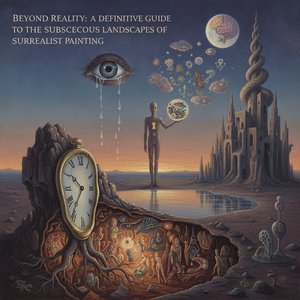
The transition from traditional landscape painting to the Surrealist movement was not a mere change in subject matter, but a fundamental rupture with the visible world. Before the 1920s, even the most experimental landscapes remained tethered to the physical environment, utilizing non-naturalistic colors or fragmented forms to interpret the earth beneath our feet. The Surrealists, however, sought a different source of imagery: the uncurated depths of the subconscious mind. They abandoned the pursuit of topographical accuracy to explore the uncanny, using the landscape as a vessel for dreams, myths, and the irrationality of human desire.
This shift required a new visual vocabulary. Instead of capturing light hitting a mountain or the texture of a forest, artists began to manipulate spatial relationships to induce disorientation. The goal was to resolve the contradiction between dream and reality into a super-reality. By utilizing unexpected juxtapositions and non sequitur elements, these painters proposed that the interior psyche is as vast and complex as any physical territory. This era marked the moment when the landscape ceased to be a window onto nature and became a mirror for the soul.
Entering the Piazza: De Chirico’s Metaphysical Architecture
Introduction To step into the world of Giorgio de Chirico is to wander through a landscape where the familiar becomes profoundly strange. Imagine walking through a sun-drenched Italian piazza, only to find that the shadows stretch too long, the archi...
To walk through the works of Giorgio de Chirico is to enter a world where the sun hangs perpetually low, casting long, melancholic shadows across deserted Italian piazzas. Born in Volos to Italian parents, de Chirico developed a style he termed Pittura Metafisica, or Metaphysical Painting. His landscapes are not illustrations of dreams but attempts to reveal the unsettling poetry lurking within familiar, everyday spaces. He utilized empty arcades, classical statues, and illogical perspectives to evoke a profound sense of nostalgia and existential isolation.
In his compositions, the architecture itself seems to hold its breath. The stillness is heavy, almost palpable, as if time has been suspended mid-motion. Through the influence of philosophers like Nietzsche and Schopenhauer, de Chirical landscapes became stages for an impossible reality—a place where a lonely statue or a faceless mannequin can trigger a deep sense of ennui. His ability to manipulate shadow and space creates a sanctuary of contemplation, reminding us that beneath the structured surfaces of our cities lies a realm of profound mystery.
Exploring Surrealism: A Masterpiece by Salvador Dalí "Autumn Cannibalism," created in 1936 by the renowned surrealist artist Salvador Dalí, is a captivating exploration of the subconscious mind. This intricate artwork invites viewers into a dreamlike...
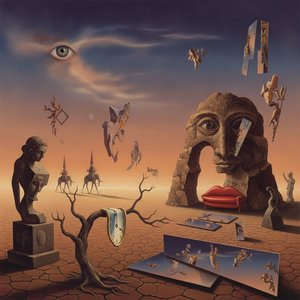
If de Chirico provided the architectural framework for the subconscious, Salvador Dalí populated it with a feverish, hyper-realistic delirium. Using his paranoiac-critical method, Dalí achieved a technical precision that allowed him to paint the impossible with the clarity of a photograph. His landscapes are characterized by a deliberate fragmentation of reality, where recognizable objects undergo unsettling distortions. In works like Autumn Cannibalism, a large, distorted face dominates the foreground, surrounded by organic shapes that challenge our very perception of form and structure.
Dalí’s visual language is built upon a private vocabulary of symbols: ants representing decay, eggs signifying new life, and the fluidity of time itself. In his more mature works, such as The Hallucinogenic Toreador, the bullfighter dissolves into a coastal scene, embodying the instability of perception. His technique—meticully rendered forms paired with warped perspectives—creates an atmosphere where the boundaries between the organic and inorganic blur. This meticulous attention to detail makes the most irrational visions feel tangibly, almost disturbingly, real.
Navigating the Paradox: Max Ernst’s Alchemical Landscapes
A Dreamscape of Paradox: The Vision of Max Ernst In the realm of 1942, Max Ernst gifted the art world with “Surrealism and Painting,” a work that serves as a profound meditation on the collision between the subconscious mind and recognizable reality....
The landscapes of Max Ernst offer a different kind of disorientation, one rooted in the collision between recognizable reality and an unsettling, alchemical logic. In works such as Surrealism and Painting, Ernst presents a scene that feels simultaneously familiar and alien. He utilizes meticulous craftsmanship to depict elements that defy naturalistic behavior, such as birds rendered with the fragile, luminous quality of glass or ceramic. These creatures do not merely exist within the landscape; they perform a stylized, ritualistic dance that suggests a choreographed performance of the psyche.
Ernst’s approach often involves a sense of paradox and transformation. His landscapes are less about a specific place and more about the tension between permanence and fragility. By blending detailed observation with dreamlike fantasy, he creates an atmosphere that is both unsettling and sublime. The presence of unassuming objects, like a simple cup placed within a fantastical setting, serves to ground his more erratic imagery, forcing the viewer to question where the physical world ends and the imagination begins.
A Bulgarian Surrealist Pioneer: Georges Papazoff’s Journey Through Dreamlike Landscapes Georges Papazoff (Papasoff, Georges) (Bulgarian: Георги Папазов) (February 2nd, 1894 – April 23rd, 1972) emerged from the fertile artistic soil of Bulgaria to bec...
For Georges Papazoff, the Surrealist landscape served as a portal into inner visions, often characterized by an ethereal, almost haunting beauty. His work, shaped by his time in Paris and his immersion in the principles of automatism, utilized muted tones—blues, greens, and ochres—to create atmospheres of melancholy. Unlike the more aggressive distortions found in Dalí, Papazoff’s landscapes often feature desolate terrains populated by shadowy forms, as seen in Figures et Ombres.
His technique involved layering thin washes of pigment to build textures that conveyed both solidity and fluidity. This allowed him to capture the elusive, shifting qualities of a dream state with remarkable precision. In his hands, the landscape becomes a medium for exploring psychological themes, where the light is often otherworldly and the boundaries between the self and the environment are intentionally obscured. It is a vision of the subconscious that relies on subtlety rather than shock to achieve its impact.
The Final Appraisal: Provenance and the Surrealist Market
For the serious collector, the acquisition of Surrealist landscapes requires an eye for both historical significance and technical mastery. The market for these works is driven by their ability to bridge the gap between classical tradition and modern psychological exploration. Collectors look for pieces that demonstrate a clear connection to the movement's core tenets—unexpected juxtapositions, symbolic depth, and the rejection of rational order. Provenance and the rarity of specific motifs, such as Dalí’s recurring use of the starfish or de Chirico’s signature empty piazzas, remain critical factors in valuation.
As we navigate the complexities of the art market, understanding the technical execution is paramount. The difference between a high-quality oil reproduction and a mere print lies in the tactile depth of the brushwork and the tonal range of the pigments. At OriginalUniqueArt.com, we honor this legacy of craftsmanship by offering hand-painted reproductions on 100% cotton canvas, ensuring that the physical presence of the paint reflects the profound emotional weight of the original movement. Whether through custom commissions or curated collections, we provide the means to bring these profound dreamscapes into the modern architectural space.
Explore the profound depths of Surrealism with our expert guide. Discover the history, symbolism, and psychological mastery behind iconic works by Dalí and others. Perfect for art historians and collectors seeking a deep understanding of the dreamlike subconscious in fine art.
Step into the dreamscape of Salvador Dalí. Explore 25 iconic surrealist masterpieces, from melting clocks to bizarre visions. Discover the stories behind these timeless works and find museum-quality art reproductions for your decor. Explore the full collection online at OriginalUniqueArt.com.
Step into the haunting dreamscapes of Giorgio de Chirico. Explore 25 iconic Metaphysical paintings, from eerie shadows to surrealist enigmas. Find museum-quality art reproductions and timeless decor inspiration. Discover all masterpieces on OriginalUniqueArt.com.

 25 Masterpieces of Giorgio de Chirico: Exploring Metaphysical Art
 Autumn Cannibalism
 Surrealism and Painting
 Georges Papazoff