Mastering Meaning: A Professional Guide to Spiritual Symbolism and Iconography in Fine Art
Explore the profound depths of spiritual symbolism in fine art. Our expert guide decodes sacred iconography, from Byzantine icons to Renaissance masterpieces, offering professionals and enthusiasts a deeper understanding of the divine narratives within classical art history.
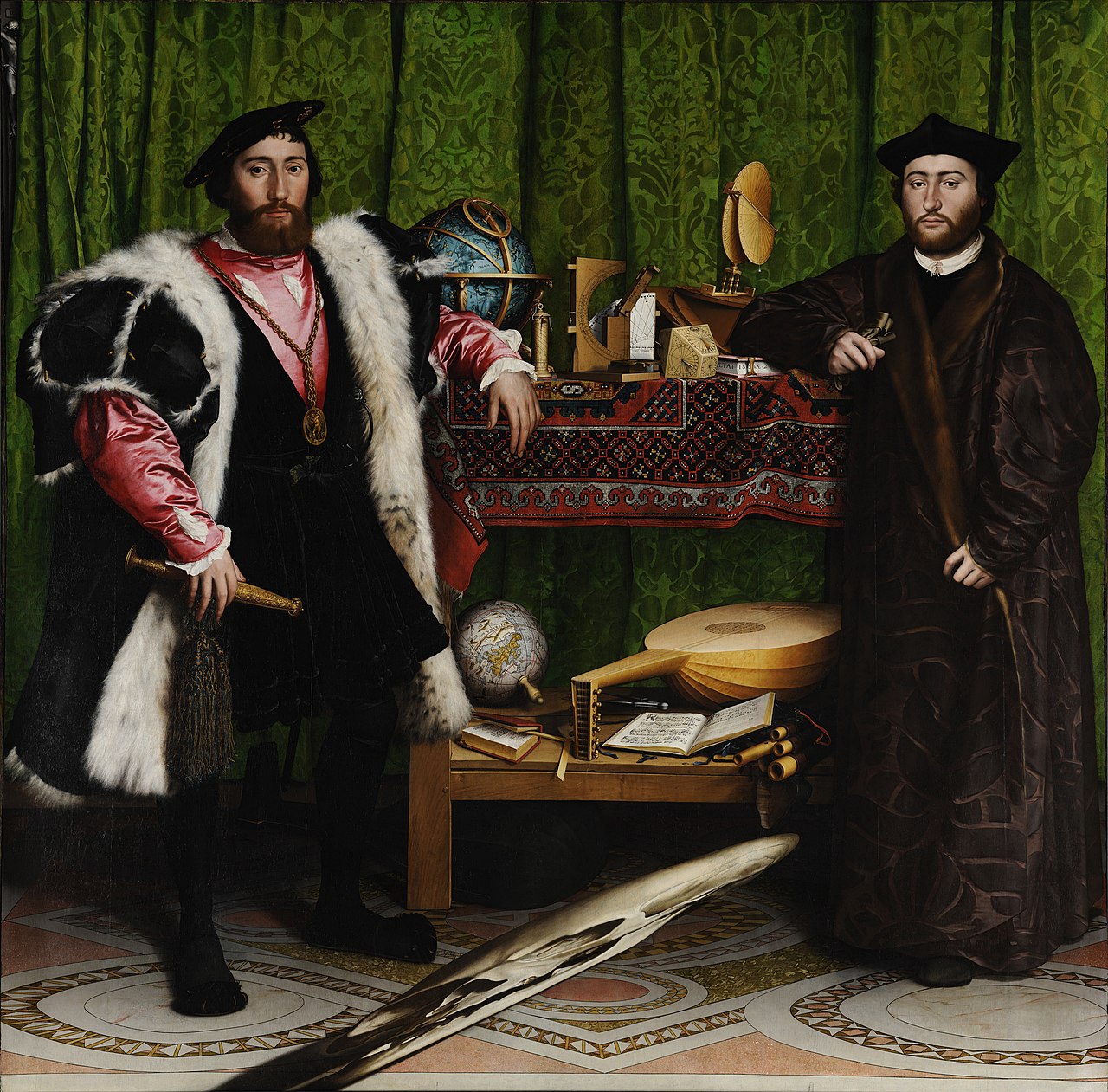
Iconography, as a branch of art history, studies the identification, description and interpretation of the content of images: the subjects depicted, the particular compositions and details used to do so, and other elements that are distinct from arti...
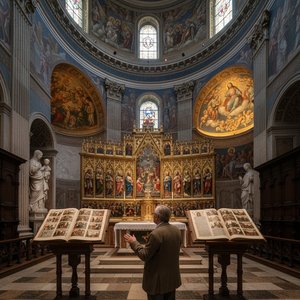
To step into the presence of religious art is to enter a dialogue with the infinite, where the boundaries between the earthly and the divine begin to blur. For centuries, the canvas and the stone have served as the primary vessels for humanity's most profound questions, capturing the whispers of the divine and the weight of mortal devotion. Iconography, derived from the Greekeikon (image) and graphein (to write), is far more than a mere study of subjects; it is the academic discipline of interpreting the content, composition, and specific details that allow an image to communicate complex theological truths. Long before written languages codified belief systems, images served as potent vehicles for communicating with the unseen world, acting as a visual catechism for populations across all levels of literacy.
In the grand tradition of sacred art, every element is intentionally placed to serve a higher narrative. Whether through the dramatic interplay of light and shadow in a Baroque masterpiece or the serene, symbolic stillness of an ancient icon, these works seek to give form to the formless. This visual language transcends linguistic barriers, allowing a viewer in a modern gallery to connect with the same sense of awe felt by a medieval pilgrim. When we study iconography, we are not merely looking at decorations; we are decoding a universal language of faith that has shaped the very soul of civilization.
Decoding the Elements: Light, Haloes, and Symbolic Flora in Religious Art
A halo (from Ancient Greek ἅλως, hálōs, 'threshing floor, disk'), also called a nimbus, aureole, glory or gloriole (Latin: gloriola, lit. 'little glory'), is a crown of light rays, circle or disk of light that surrounds a person in works of art. The ...
The mastery of spiritual meaning often resides in the smallest details—the subtle glow around a saint's head or the specific species of flower tucked into a corner. One of the most recognizable symbols is the halo, also known as a nimbus or aureole. This crown of light rays or a circular disk serves to indicate holy or sacred figures across various religions, from Christianity and Buddhism to Hinduism. In works such as Victor Vasnetsov’s Savior in the Crown of Thorns, the detailed rendering of the halo combined with the jagged lines of the thorns creates an intense emotional contrast, emphasizing both divine holiness and human suffering.
Beyond light, the natural world is frequently pressed into the service of spiritual allegory. Plants and flora are rarely chosen for mere aesthetic beauty; they carry deep-seated symbolic meanings that resonate through history. While many of these connections have faded in our modern, urbanized era, the presence of specific botanical elements in classical paintings continues to offer clues to the subject's sanctity or martyrdom. Similarly, the use of light—specifically the technique of chiaroscuro—allows artists to direct the viewer’s eye toward moments of divine revelation, using shadow to represent the earthly struggle and brilliant illumination to signify the presence of the eternal.
From Byzantium to the Renaissance: The Evolution of Spiritual Narratives
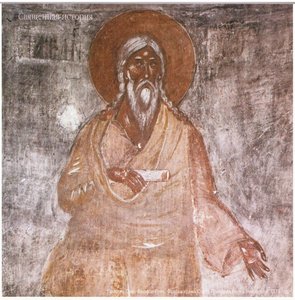
A Luminary of Byzantium: The Life and Legacy of Theophanes the Greek The name Theophanes the Greek evokes a world steeped in incense, shimmering gold leaf, and profound spiritual contemplation. Born in Constantinople around 1340, though often associa...
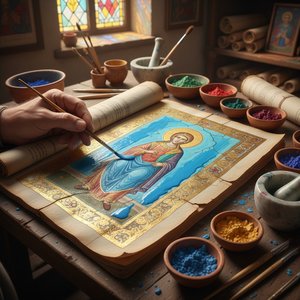
The history of spiritual art is a journey of profound transformation, moving from the rigid, symbolic stillness of the East to the humanistic depth of the West. Figures like Theophanes the Greek represent a pivotal era, bridging the final flourishing of Byzantine art with the burgeoning traditions of Russia. His work, characterized by shimmering gold leaf and profound spiritual contemplation, carried the essence of Constantinople northward, influencing legendary iconographers such as Andrei Rublev. In this tradition, the artist acted as a spiritual architect, crafting images intended to serve as portals to the divine rather than mere objects of beauty.
As we transition into the Renaissance, the focus began to shift toward a more naturalistic representation of sacred stories. While the Byzantine style emphasized a flattened perspective and hierarchical arrangement to focus on spiritual significance, the Renaissance introduced a new level of psychological depth and physical realism. This evolution did not abandon symbolism but rather integrated it into a more humanized context. We see this in the works of masters like Fra Angelico, whose Virgin Mary Annunciate captures divine grace through luminous detail and a tender, human expression, inviting a sense of quiet devotion that feels both ancient and intimately present.
The Power of Gesture: Interpreting Moral Responsibility and Devotion in Masterpieces
Captivating Sacred Scene with Rich Symbolism This exquisite artwork depicts a pivotal moment from Christian tradition, capturing Pontius Pilate washing his hands—a powerful symbol of moral responsibility and divine judgment. Rendered with meticulous ...
In the realm of sacred narratives, a single gesture can carry the weight of an entire theological concept. Consider the profound symbolism found in Duccio di Buoninsegna’s depiction of Pontius Pilate Washing his Hands. This pivotal moment is not merely a historical recount but a powerful symbol of moral responsibility and divine judgment. The act of washing hands serves as a visual metaphor for the rejection of moral accountability, a theme that continues to resonate with viewers contemplating themes of justice and conscience.
This use of gesture extends to the portrayal of martyrdom and resilience. In El Greco’s St. Sebastian, the saint is depicted at the moment of his ordeal, pierced by arrows yet radiating an extraordinary serenity. The artist uses the physical state of the body to communicate an inner strength and divine grace that transcends physical pain. Such works demonstrate how artists use the human form—its posture, its tension, and its stillness—to embody the struggle between the earthly and the eternal, making the spiritual experience visceral and undeniably real for the observer.
Integrating History into Modern Spaces: Curating Symbolic Art for Professional Interiors
Introduction To step into the presence of religious art is to enter a dialogue with the infinite. For centuries, the canvas and the stone have served as the primary vessels for humanity's most profound questions, capturing the whispers of the divine ...
For the modern professional—be it a hotelier, a decorator, or a corporate curator—the integration of classical religious art into contemporary spaces offers an unparalleled opportunity to evoke depth and prestige. Selecting works that feature profound symbolism allows for the creation of environments that encourage reflection and provide a sense of timelessness. Large-scale pieces, such as multi-panel compositions or even architectural frescoes, can transform a wide wall or a grand staircase into a curated journey through art history.
When sourcing reproductions for high-end interiors, it is essential to prioritize quality that honors the original's intent. A true hand-painted oil reproduction on cotton canvas, with visible brushstrokes and a deep tonal range, provides a tactile richness that digital prints simply cannot replicate. By selecting pieces that utilize historical techniques—such as the use of gold leaf or the subtle textures of impasto—designers can introduce elements of "sacred splendor" into modern architecture. Whether through a single, impactful centerpiece or a coordinated set of panels, the thoughtful application of symbolic art serves to bridge the gap between our fast-paced modern world and the enduring mysteries of the human soul.
All works discussed in this exploration are part of the extensive catalog available at OriginalUniqueArt.com, where we specialize in high-quality, hand-painted reproductions for professional and private collections worldwide.
Explore the rich history & techniques of tempera painting! Discover Renaissance masters like Botticelli & Fra Angelico, conservation insights, and the enduring legacy of this captivating art form.
Unlock the secrets of the masters. Explore our expert guide to decoding symbolism and iconography in famous paintings, from sacred religious imagery to the emotional depth of the Symbolist movement. Discover the hidden language behind history's most profound masterpieces.
Journey through the divine elegance of Duccio di Buoninsegna. Explore 25 iconic masterpieces of the Sienese School, from gold-leafed icons to humanized sacred narratives. Find museum-quality art reproductions and decor inspiration. Discover all masterpieces on OriginalUniqueArt.com.
Explore the profound beauty of iconic religious artworks. From Renaissance masterpieces to sacred iconography, our expert guide delves into the spiritual power, symbolism, and enduring legacy of history's most divine paintings for the true art enthusiast.
Unlock the profound secrets of classical masterpieces. Our expert guide explores the intricate language of symbolism, from floral allegories to Symbolist dreamscapes, empowering art enthusiasts to decode the hidden meanings within history's most captivating works.

 Iconography
 Halo (religious iconography)
 theophanes the greek
 MaestÓ (back, central panel), Pontius Pilate Washing his Hands
 Divine Visions: Top 10 Masterpieces of Religious Art Through the Ages