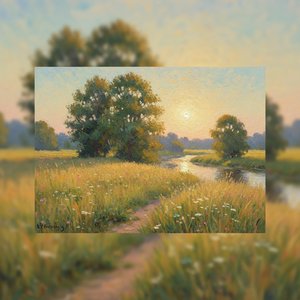
Manet bridged Realism and Impressionism with Olympia. Discover the revolutionary works of this Parisian master.
There is a certain clarity that comes with age, a realization that the colors we remember from our youth are often more intense than the reality we lived through. For the Impressionists, this intensity was not merely a matter of memory, but a tangible shift in the very materials available to them. The nineteenth century brought with it a quiet revolution in chemistry, providing artists with synthetic pigments that offered shades previously unknown to the palette.
Long before the first brush touched a canvas in a Parisian cafe, painters like Édouard Manet were already working within this changing landscape of color. In his 1874 work, Boating, one can see the presence of cerulean blue and synthetic ultramarine, colors that possessed a clarity far removed from the muted, earth-bound tones of the Academy. These pigments allowed for a brightness that felt modern to eyes accustomed to the sober, heavy layers of traditional oil painting.
This shift in material changed the way light was perceived on the canvas. When we look at these works today, we are seeing more than just paint; we are seeing the dawn of a new visual language made possible by science. The arrival of these blues, greens, and yellows allowed the artists to move away from the heavy, darkened tones of the past and toward a world that felt as bright and immediate as a summer morning.
Broken Strokes: The Art of Capturing Vibrating Light
--- title: Impressionism | National Gallery of Art url: https://www.nga.gov/artworks/impressionism hostname: nga.gov description: Impressionism is a style of painting that helped redirect art toward personal expression and artistic process. The movem...
To look closely at an Impressionist canvas is to witness a delicate dance of fragments. Up close, the forms may seem indistinct, a collection of short, broken brushstrokes that appear almost unfinished. Yet, as you step back, these separate marks begin to merge, creating a sensation of movement and light that a smooth, blended surface could never achieve.
This technique finds its roots in the earlier explorations of artists like John Constable, who practiced applying unmixed color directly onto the canvas. While his subjects were often more grounded in the traditions of landscape, his willingness to let the paint remain raw and tactile paved the way for the Impressionist obsession with color vibration. By placing pure, unblended colors side by side, the artists created an optical flicker, a way for the eye itself to mix the light.
This method was never about haste, despite what critics of the time might have suggested. It was a deliberate attempt to recreate the sensation of sight—the way our eyes perceive a shimmering lake or a sun-drenched field not as a collection of hard lines, but as a series of luminous pulses. In these broken strokes, we find a way to hold onto the energy of a moment that is already passing.
Under the Open Sky: En Plein Air and the Transient Moment
--- title: Impressionism - Wikipedia author: Authority control databases url: https://en.wikipedia.org/wiki/Impressionism hostname: wikipedia.org sitename: Wikimedia Foundation, Inc. date: 2001-10-19 --- # Impressionism | Impressionism | | |---|---| ...
There is a profound difference between painting a landscape from memory in a dim studio and standing before it as the sun begins to dip below the horizon. The Impressionists sought the latter, embracing en plein air painting to capture the fleeting, transient effects of sunlight. They moved their easels into the fields and onto the riverbanks, chasing the light as it shifted across the water.
This impulse toward immediacy was not entirely new. Earlier painters like Jean-Baptiste-Camille Corot had already begun to capture the light and color of nature through spontaneous sketches made outdoors. He understood that the essence of a landscape lies in its atmosphere, a quality that can vanish in a heartbeat. The Impressionists simply took this observation and turned it into a full-scale pursuit, making the changing weather and the passing hours the true subjects of their work.
By working in the open air, they were able to record the way light interacts with the environment in real time. Whether it was the morning mist or the harsh glare of midday, the goal was to document the atmosphere as a living, breathing entity. It is this connection to the earth and the sky that gives their work such a palpable sense of presence, inviting us to stand with them in those quiet, sunlit moments.
A Spectrum of Shadows: Moving Beyond Neutral Tones
Experience the profound structural harmony of David Moreau’s Monolithic Grid of Earth and Shadow, a unique one-of-one textured masterpiece of impasto ridges and neutral tones available for your private collection.
For centuries, the shadows in a painting were often relegated to blacks, grays, or deep browns, serving as mere anchors for the light. The Impressionists, however, looked closer at the natural world and realized that shadows are rarely neutral. They are filled with reflected color—purples, blues, and deep greens that mirror the sky and the surrounding foliage.
This realization echoes the earlier work of Jean Antoine Watteau, whose Fêtes Galantes style utilized a subtle play of light and shadow to influence the entire tone of his compositions. While Watteau’s shadows were more controlled and classical, he understood that natural light dictates the mood of the entire scene. The Impressionists expanded this concept, stripping away the heavy blacks and replacing them with a spectrum of colored shadows that breathed life into every corner of the canvas.
By rendering highlights and shadows in color rather than neutral tones, they achieved a luminosity that felt entirely new. This technique prevents the painting from feeling static or weighted down. Instead, the shadows become part of the light, contributing to a sense of airiness and depth that allows the viewer to feel the warmth of the sun even on a cloudy day.
The Lens and the Brush: How Photography Reframed Perception
As the nineteenth century progressed, the emergence of photography changed the way humanity understood reality. The camera, often described as "drawing with light," offered a new way to freeze a moment in time. While some feared this technology would render painting obsolete, the Impressionists found in it a powerful ally that helped redefine their approach to composition and subject matter.
The influence of the lens can be seen in the radical cropping and unusual angles found in many Impressionist works. Much like a photograph captures a candid slice of life, artists like Edgar Degas or Édouard Manet began to use compositions that felt spontaneous and unposed. This sense of immediacy—the feeling that we have stumbled upon a private moment—was a direct response to the new way of seeing that photography had introduced to the world.
Ultimately, the camera did not replace the brush; rather, it pushed the brush toward even more personal and expressive territories. While the photograph could record the literal detail, the Impressionist could record the feeling, the vibration, and the emotional weight of the light. They used the lessons of the lens to deepen their exploration of what it means to truly see.
Discover the ethereal magic of Impressionist nightscapes. Explore how masters like Monet and Whistler captured the alchemy of moonlight, shadows, and twilight through breathtaking oil paintings and nocturnal compositions.
Explore the captivating world of Impressionism! Discover its history, key artists, techniques & enduring legacy. Find museum-quality reproductions and expert art consultation at OriginalUniqueArt.
Embark on a sensory journey through the soul of Impressionism. Discover the luminous mastery of Monet, Renoir, and Cézanne. At OriginalUniqueArt.com, we celebrate this legacy through exquisite, hand-painted oil reproductions that bring museum-quality light into your home.
Explore the captivating world of Impressionism! Discover the techniques, artists (Monet, Renoir, Degas), and enduring legacy of this revolutionary art movement. Expert insights for collectors & enthusiasts.
Explore the profound power dynamics of Impressionist art. From Monet's light to Van Gogh's soul, discover how masters captured emotion through brushwork. At OriginalUniqueArt.com, we celebrate this legacy with exquisite, hand-painted oil reproductions and bespoke commissions.

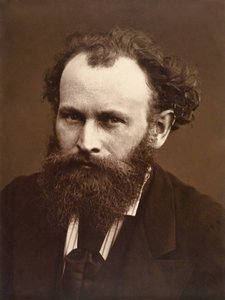 Édouard Manet
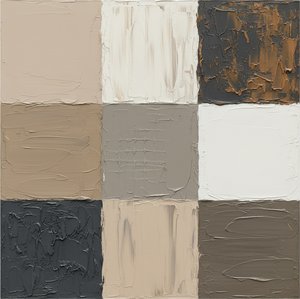 Monolithic Grid of Earth and Shadow: A Tactile Study in Neutral Textures