Printing emerged as early as the 4th millennium BCE in the form of cylinder seals used by the Proto-Elamite and Sumerian civilizations to certify documents written on clay tablets. Other early forms include block seals, hammered coinage, pottery impr...
Before the neon glow of a modern gallery, the very essence of printmaking lived in the shadows of prehistoric caves and the intricate workshops of ancient empires. The story of the screen is not merely one of industrial progress, but a profound human impulse to replicate beauty and spread knowledge. Long before the term "silkscreen" entered our lexicon, hand stencils were being pressed against stone walls in Asia and Europe over 35,000 years ago, leaving behind ghostly traces of early human identity. As civilizations flourished, so did the complexity of their marks. In the Mesopotamian Akkadian Empire, brick stamps were used to immortalize the names of rulers, while the Shang Dynasty in China utilized sophisticated seals to leave an indelible mark on history.
The true lineage of what we now call serigraphy finds its heartbeat in the East. The evolution of block printing in Tang Dynasty China, which gave us the breathtakingly ancient Diamond Sutra in 868, laid the groundwork for a revolution in communication. This tradition flowed into Japan, influencing the delicate Ise katagami and the exquisite woodblock techniques that would later captivate the Western world. We see this mastery reflected in works like the Untitled print sleeve with woodblock print by Chiura Obata, where the meticulous layering of blocks creates a serene, naturalistic window into another world. As these Eastern stenciling traditions met Western trade routes in the late 18th century, they began to transform, eventually leading to the 1907 patent by Samuel Simon in Manchester, which paved the way for the modern era of screen printing.
The Alchemy of Ink: Decoding the Serigraphy Technique
Screen printing (also written as screenprinting and known as silkscreening or serigraphy) is a printing technique where a mesh is used to transfer paint ink (or dye) onto a substrate, except in areas made impermeable to the ink by a blocking stencil....
To understand a silkscreen is to understand a delicate dance between permeability and resistance. At its core, serigraphy—a name derived from the Latin sēricum for silk and the Greek gráphein to draw—is a stencil-based marvel. The process begins with stretching a fine mesh, traditionally silk but now often high-performance polyester or even stainless steel, tightly over a wooden frame. The magic happens in the creation of the stencil: certain areas are made impermeable to ink, while others remain open to receive it. Whether through hand-cut paper, fluid stencils, or the modern precision of ultraviolet photo-sensitive emulsions, the artist dictates exactly where the light and color will fall.
The physical act of printing is a rhythmic, almost meditative motion. A squeegee, held at a precise 75-degree angle, is pulled across the screen in a "flood stroke" to fill the mesh apertures with ink. This is followed by a decisive reverse stroke that forces the pigment through the open spaces and onto the substrate. Each color requires its own unique screen, meaning a complex, multi-layered masterpiece might involve dozens, or even hundreds, of individual passes. We see this technical rigor in the work of contemporary masters like Igor Medvedev, whose process can involve an incredible density of screens to achieve depth. It is a technique that balances the industrial with the artisanal, capable of producing everything from the rugged texture of a street poster to the refined elegance of decorated ceramic tiles.
Pop Art Revolution: How Warhol and Lichtenstein Redefined Modernity
Stand in a museum gift shop today and you'll find Warhol tote bags, Warhol umbrellas, Warhol jigsaw puzzles, Warhol everything. The wall label next door calls him one of the towering figures of twentieth-century art, no hedging, no asterisk. You'd th...
In the mid-20th century, the art world experienced a seismic shift that would forever alter our visual vocabulary. The arrival of Pop Art was not just a change in subject matter; it was a radical reclamation of mass culture. Artists began to look away from the lofty, abstract landscapes of high modernism and toward the vibrant, accessible imagery of the supermarket shelf, the comic strip, and the celebrity headshot. This movement took the "low" culture of advertising and packaging and treated it with the profound reverence once reserved for religious icons.
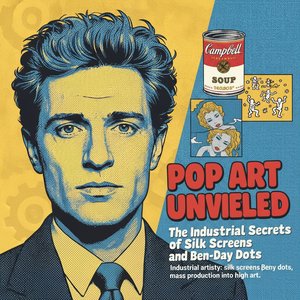
Two distinct philosophies emerged during this era, personified by the giants of the movement. Roy Lichtenstein chose to imitate the machine by hand, painstakingly recreating the Ben-Day dots used in commercial printing with a brushstroke that mocked its own mechanical origin. Conversely, Andy Warhol embraced the machine itself. By utilizing the actual industrial silkscreen process, Warhol achieved a sense of "factory" detachment, allowing for the repetitive, iconic imagery of his Campbell's Soup Cans and the haunting, multi-colored layers of his Marilyn Diptych. Supported by master printers like Michel Caza, Warhol’s work—often exploring the intersection of fame and mortality—turned the celebrity portrait into a modern icon. This era proved that art did not need to be "precious" in the traditional sense to be powerful; it only needed to be resonant.
A Global Aesthetic: The Influence of Japanese Woodblock and Indian Cinema
The Echoes of Print: J.P. Printers and the Soul of Indian Film J.P. Printers, nestled in the heart of New Delhi, isn’t merely a printing company; it's a custodian of cinematic memory. For decades, this unassuming workshop has been responsible for bri...
While the West often claims the spotlight for Pop Art, the soul of printmaking has always been a global dialogue. The aesthetic of bold, flat color and striking outlines finds deep ancestral echoes in the Ukiyo-e movement of Japan. This tradition of "pictures of the floating world" provided a blueprint for the graphic impact we admire today. Similarly, the vibrant energy of Indian visual culture has been shaped by the mastery of master printers. In New Delhi, firms like J.P. Printers became custodians of cinematic memory, creating the explosive, emotionally charged posters for Bollywood’s golden age, such as the legendary 1977 epic Dharam Veer.
This cross-pollination of styles creates a rich tapestry of human expression. We see it in the way the precision of Japanese stenciling informs modern graphic design, and how the bold, saturated palettes of Indian film posters mirror the energy of Western Pop. Even the concept of "Aestheticism"—the 19th-century movement championed by figures like Oscar Wilde that advocated for "art for art's sake"—finds a connection here, as artists across continents sought to elevate the purely visual and sensory experience above didactic or moralizing purposes. This global heritage reminds us that whether it is a woodblock print from the 1930s or a cinematic poster from New Delhi, the impulse to create striking, beautiful imagery is a universal language.
Contemporary Vibrancy: The Enduring Impact of Screen Printing Today
The Architect of Pop Iconography Born in 1973 and currently based in the vibrant cultural hub of Lyon, Jean-Paul Faubert has established himself as a preeminent figure in contemporary digital imagery. His practice is an uncompromising devotion to the...
Today, the legacy of the silkscreen lives on in every corner of our visual landscape, from the high-fashion runways to the underground streets of stencil graffiti. The technique has evolved far beyond its silk origins, now utilizing advanced synthetic meshes and photo-reactive chemicals that allow for breathtaking precision. Contemporary artists like Jean-Paul Faubert continue to push the boundaries, using the Warholian aesthetic to explore modern consumerism through digital and physical layers of high-contrast tones and intentional misregistration.
The versatility of the medium ensures its permanence. It is used to decorate everything from intricate ceramics via Mayco Designer Silkscreens to the massive, large-format murals that transform urban architecture. For the modern collector, this means that the "Pop" aesthetic is more accessible than ever. Whether through a hand-painted oil reproduction that captures the tactile depth of a masterwork or a high-quality giclée print that brings a burst of color to a contemporary home, the spirit of the screen remains vital. At OriginalUniqueArt.com, we celebrate this enduring vibrancy, offering a curated discovery of art that connects the historical weight of the masters with the bold, trend-driven energy of the present day.
Explore the revolutionary impact of Japonisme. Discover how Japanese ukiyo-e woodblock prints redefined Western art through bold composition, vibrant color, and the 'floating world' aesthetic that inspired masters like Monet and Van Gogh.
Explore the industrial artistry of Pop Art. Delve into the sophisticated history of Ben-Day dots and silk screen techniques that transformed mass media into high art, perfect for discerning collectors seeking deep historical insight and aesthetic excellence.
Explore the industrial secrets of 1960s Pop Art. Discover how silk screens and Ben-Day dots revolutionized fine art by embracing mass production, from Roy Lichtenstein to modern commercial aesthetics.

 Screen printing
 The Soup Can Swindle: What Pop Art Actually Is, What It Actually Costs, and Why the Critics Who Hated It Were Wrong Twice
 J.P. Printers, New Delhi
 Jean-Paul Faubert