
The Soul of the Landscape: Beyond Mere Topography
 Landscape Study
An Impressionistic Whisper of the English Countryside In this evocative Landscape Study , Sir Alfred James Munnings invites the viewer into a world where the boundaries between earth and sky dissolve into a poetic haze. The painting captures a moment...
To look upon a landscape of rolling hills is to do much more than observe a collection of earth and grass; it is to witness a silent dialogue between the terrestrial and the divine. For those of us who have spent decades finding solace in the quietude of a canvas, we understand that a true masterpiece does not merely document a location, but captures its very essence. In the hands of the Impressionist masters, the undulating terrain becomes a vessel for emotion, where every crest and valley serves as a rhythmic pulse of the natural world. These works do not seek the rigid, photographic precision of a map, but rather the emotional resonance of a memory—a soft, lingering feeling of peace that remains long after the eyes have left the frame.
When we contemplate these scenes, we are often drawn into a state of profound contemplation. The hills do not stand as static obstacles, but as living, breathing entities that sway under the weight of an expansive sky. There is a certain nostalgia inherent in this perspective, a longing for a simpler, more pastoral existence where the boundaries between human presence and wild nature are beautifully blurred. Whether it is the quietude of a rural farmhouse nestled against a verdant slope or the vast, lonely stretches of a mountain range, these landscapes offer us a psychological escape, inviting us to lose ourselves in the infinite horizon.
En Plein Air: The Revolution of Direct Observation and Light
 Mastering the Open Air: A Definitive Guide to En Plein Air Landscapes and the Evolution of Light in Art History
The Studio vs. The Sky: The Historical Shift from Idealized Landscapes to Direct Observation Capturing Ephemeral Light: A Comprehensive Exploration of Plein Air Painting's History & Enduring Legacy The Dawn of Direct Observation: From Studio Traditio...
For centuries, the art world was confined by the heavy, controlled walls of the studio. Within those sanctuaries, landscapes were often idealized—intellectual constructs born from sketches and memory rather than lived experience. However, a radical shift occurred when artists dared to step into the light. The birth of en plein air painting—the practice of working outdoors—transformed the canvas from a stage for historical drama into a window onto the ephemeral. This movement was not merely a change in location; it was a revolution of perception. By bringing their easels directly into the meadows and valleys, artists could finally witness the true, unmediated dance of light as it shifted across the terrain.
This direct observation allowed for the capture of what we might call the "breath" of the landscape. The ability to paint in situ meant that the subtle changes in weather, the moisture in the air, and the precise moment a cloud casts a shadow could be recorded with unprecedented intimacy. This era marked the end of the static and the beginning of the transient. We no't just see the hills; we feel the humidity of a summer afternoon or the crisp chill of an approaching dusk. It is this commitment to the fleeting, much like a whispered secret caught in the wind, that gives Impressionist landscapes their enduring, lifelike vitality.
A Symphony of Color: From Impressionist Serenity to Fauvist Energy
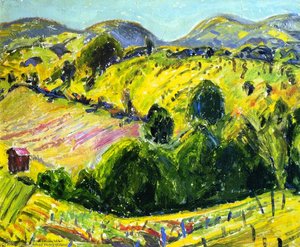 Fauve Landscape with Rolling Hills
A Symphony of Color: The Vibrant World of Alfred Henry Maurer In the annals of American Modernism, few works capture the raw, unbridled energy of the early twentieth century quite like Alfred Henry Maurer’s Fauve Landscape with Rolling Hills . Painte...
As we journey through the evolution of landscape art, we witness a breathtaking expansion of the artist's palette. In the early Impressionist works, color is used to create atmosphere and harmony. We see soft pastels, muted greens, and delicate blues that suggest a world bathed in a gentle, diffused glow. There is a profound sense of balance here, where colors blend subtly to evoke the misty morning or the warm, golden light of a setting sun. It is a period of serenity, where the eye is invited to wander through layers of light and shadow without ever feeling jarred by discord.
Yet, as the twentieth century dawned, this tranquility gave way to a more radical, vibrant energy. The arrival of movements like Fauvism introduced a symphony of unbridled color that shattered traditional representation. Consider the works where the earth itself seems to pulse with life; here, the greens and golds are replaced by bold, rhythmic dances of crimson, orange, and electric blue. In these masterpieces, the landscape is no longer just observed—it is felt with an almost audible intensity. The boundaries of reality are pushed aside to reveal a dreamscape where color serves as the primary language of emotion, turning a simple view of rolling hills into a vivid, kaleidoscopic experience.
The Tactile Canvas: Mastering Texture and the Impasto Technique
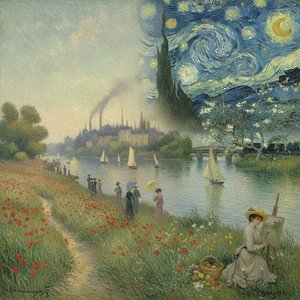 10 Iconic Impressionist Landscapes That Changed Art Forever
Introduction To step into the world of Impressionist landscapes is to abandon the rigid boundaries of reality and embrace the fleeting dance of light and atmosphere. Imagine standing on the banks of the Seine or amidst a sun-drenched meadow in Givern...
Beyond the brilliance of color lies the physical soul of the painting: the texture. To truly appreciate the depth of these works, one must look closely at the impasto technique, where paint is not merely applied but sculpted upon the canvas. In many of the most evocative landscapes, the oil paint possesses a tactile topography that mimics the very earth it depicts. The thick, gestural layers of pigment create a physical weight, allowing the foliage to catch the light and the hills to appear as though they are rising from the surface of the cloth.
This heavy, expressive brushwork adds a dimension of movement that a flat print can never replicate. Every stroke is a testament to the artist's hand, a visible trace of the moment of creation. When we see the rugged texture of a mountain or the thick, swirling clouds of an evening sky, we are connecting with the raw energy of the artist’s process. It is this interplay of light and physical relief that gives the artwork its "pulse," transforming a two-dimensional surface into a living, breathing window through which we can touch the very essence of nature.
Bringing the Vista Home: Curating Timeless Landscapes for Modern Interiors
 Mastering the Outdoors: A Professional Buyer's Guide to Iconic Landscape and En Plein Air Artworks for Hospitality Design
The Architectural Impact of Landscape Art: Enhancing Hospitality Interiors Landscape painting Landscape painting, also known as landscape art, is the depiction in painting of natural scenery such as mountains, valleys, rivers, trees, and forests, esp...
In our modern, often frenetic lives, the presence of landscape art in a home serves as an essential anchor. A well-placed painting of rolling hills does more than decorate a wall; it expands the perceived boundaries of a room, offering a psychological escape from the constraints of urban living. For the discerning collector, selecting such a piece is a strategic decision to infuse a space with serenity and grandeur. Whether integrated into a minimalist contemporary setting or a classic, ornate study, these vistas provide a focal point that directs the soul toward the horizon.
At OriginalUniqueArt.com, we believe that art should be a lasting legacy. We specialize in creating hand-painted oil reproductions that honor the meticulous traditions of the masters. Our artists use 100% cotton canvas and professional-grade oils to ensure that every brushstroke and tonal nuance is preserved with museum-quality precision. We even offer the unique opportunity to "remix" history, allowing you to transform personal memories into the light-drenched style of Monet or the textured impasto of Van Gogh. Whether through a multi-panel configuration for a grand staircase or a bespoke commission from a cherished photograph, we invite you to bring the timeless beauty of the landscape into your own sanctuary.


