Introduction To embark on a journey through the top 25 artworks of John Constable is to step into a world where the very air seems to shimmer with light and the scent of hay. These paintings are not merely depictions of the English countryside; they ...
To stand before a landscape that truly captures stillness is to experience a sudden suspension of time. It is not merely about the absence of noise, but the presence of a specific, heavy quietude—the kind found in the damp air of an English valley or the hazy blue distance of a mountain range. This particular genre of painting does not demand attention through loud colors or frantic movement; instead, it invites a slow, deliberate gaze. The viewer enters a space where the boundary between the observer and the observed begins to dissolve, replaced by a shared sense of breath and light.
The power of these works lies in their ability to act as a sanctuary. In an age defined by constant visual stimulation, a composition that priorit's tonal gradation over sharp detail offers a necessary retreat. Whether it is the subtle shift of shadows across a forest floor or the way a river reflects a twilight sky, the intention remains the same: to document the ephemeral. These are not mere records of topography, but emotional distillations of what it feels like to be present in a moment of profound peace.
Foundations of the World Landscape: The Northern Renaissance Perspective
A Pioneer of the Northern Renaissance Landscape Joachim Patinir, a name often whispered alongside that of Albrecht Altdorfer as a foundational figure in landscape painting, emerged from the artistic milieu of the Low Countries during the early 16th c...
Long before the Impressionists sought to capture light, the pioneers of the Northern Renaissance were inventing new ways to perceive the vastness of the earth. Joachim Patinir, working in the early 16th century, moved beyond using nature as a mere backdrop for religious drama. He helped birth the "world landscape," a style that prioritized expansive, panoramic views. His approach was far from accidental; it was a sophisticated construction of depth and distance, often imbuing the terrain with a sense of mythic scale.
This era introduced a fascination with the way land could hold narrative weight without explicit characters. While Patinir drew inspiration from the imaginative, almost surreal worlds of Hieronymus Bosch, he steered away from pure allegory toward a more structured exploration of space. Similarly, Pieter Bruegel the Elder utilized meticulous detail to ground sacred events within the relatable textures of the natural world. In his depictions of the Sea of Tiberias, the landscape is not just a setting; it is a living participant in the divine revelation, where the soft glow of a sunset sky lends a spiritual weight to the very rocks and foliage.
The Poetics of Light: Corot and the Evolution of the Pastoral
A Life Immersed in Light and Landscape Jean-Baptiste-Camille Corot, a name that resonates with the tranquil beauty of 19th-century French landscape painting, was born into a comfortable Parisian bourgeois family on July 16, 1796. Though initially ste...
As the centuries progressed, the focus shifted from the structural grandeur of the Renaissance toward a more intimate engagement with atmosphere. Jean-Baptiste-Camille Corot became perhaps the most significant bridge in this evolution. His work represents a transition from the rigid discipline of Neoclassicism to the emotive freedom that would later define Impressionism. For Corot, the landscape was a vessel for light. He did not simply paint trees or rivers; he painted the way morning mist clings to them and how silvered leaves react to the sun.
His technique, often practiced en plein air, allowed him to capture the true essence of the French countryside. By moving away from topographical accuracy toward a more poetic representation, Corcor achieved a sense of harmony that felt both real and dreamlike. This pursuit of atmosphere—the way light filters through a canopy or the subtle transition of shadows at dusk—set a precedent for generations of artists. It taught us that the true subject of a landscape is often the air itself, the invisible medium that connects the earth to the sky.
Tonal Vibrations: The Impressionist Pursuit of Fleeting Moments
Tonal Impressionism was an artistic style of "mood" paintings with simplified compositions, done in a limited range of colors, as with Tonalist works, but using the brighter, more chromatic palette of Impressionism. An exhibition titled "Tonal Impres...
The arrival of Impressionism brought a radical shift in how color and light were utilized to convey mood. Rather than relying on smooth, blended transitions, artists began using broken brushstrokes and a more vibrant palette to mimic the vibration of light. This was not an abandonment of reality, but a deeper commitment to it—an attempt to capture the world as it is perceived by the eye in a single, fleeting second.
This movement found a unique expression in Tonal Impressionism, where artists utilized the bright, chromatic palette of the Impressionists but applied it to more subdued, harmonious compositions. By focusing on lower light conditions—such as moonlight or the soft glow of dawn—these painters achieved a sense of "mood" through carefully adjusted values. This technique allowed for a landscape that felt both luminous and tranquil, avoiding the chaos of pure abstraction while embracing the beauty of atmospheric depth. It is in these subtle gradations of blue, gray, and ochre that the true soul of the landscape resides.
The Minimalist Reduction: Finding Form in Sparse Compositions
A Quiet Resonance: The World of Cecilia Vargas Cecilia Vargas emerges as a compelling voice in contemporary landscape painting, an artist whose work isn’t about grand pronouncements but rather the subtle poetry found within nature's quiet moments. Th...
In its most distilled form, the landscape can reach a state of near-total abstraction through the lens of minimalism. This approach strips away the unnecessary, leaving only the essential elements: a single line, a solitary shape, or a vast expanse of negative space. In photography and painting alike, this reduction forces the viewer to confront the weight of composition and the texture of the medium.
When we look at works that emphasize sparseness—such as the delicate pencil sketches of Vincent van Gogh or the contemporary atmospheric studies of Cecilia Vargas—we see a different kind of strength. By utilizing a restrained palette of grays and blues, these artists create a sense of profound solitude. There is no clutter to distract the eye; there is only the rhythmic movement of water or the soft silhouette of a distant hill. This minimalism does not represent a lack of information, but rather a deliberate choice to highlight the quiet power of form and the immense beauty found in simplicity.
Curating Stillness: Bringing Atmospheric Depth to Contemporary Interiors
Integrating these works into a modern living space requires an understanding of how light and scale interact with architecture. A large-scale, multi-panel landscape can transform a wide wall or a staircase, creating a sense of architectural continuity that flows around the edges of the room. Conversely, a smaller, more intimate sketch can serve as a focal point for quiet contemplation in a study or bedroom.
The goal of collecting such pieces is to introduce a layer of emotional resonance into the home. Whether through a hand-painted oil reproduction that captures the thick, tactile impasto of a classic era or a high-quality print that emphasizes clean, modern lines, the intention is to create a sanctuary. By selecting works that prioritize tonal harmony and atmospheric depth, one can curate an environment that remains anchored in peace, regardless of the noise of the outside world. At OriginalUniqueArt.com, we specialize in bringing these moments of stillness into your personal space through bespoke artistry and meticulous craftsmanship.
Immerse yourself in the soul of the English countryside with our curated guide to John Constable's top 25 masterpieces. Explore the emotive landscapes and Romanticism techniques that define his legacy. Find museum-quality art reproductions at OriginalUniqueArt.com. Discover all masterpieces online.
Immerse yourself in the tranquil beauty of Jean-Baptiste-Camille Corot. Explore 25 iconic landscapes that defined the Barbizon school through light and atmosphere. Find inspiration for museum-quality art reproductions and decor. Discover all masterpieces on OriginalUniqueArt.com.

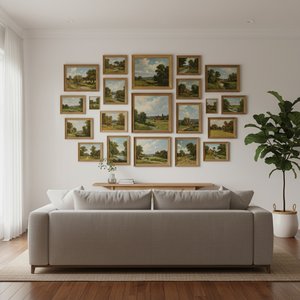 John Constable's Masterpieces: Explore 25 Iconic Landscapes for Your Home
 Joachim Patinir
 Jean-Baptiste-Camille Corot
 Cecilia Vargas


