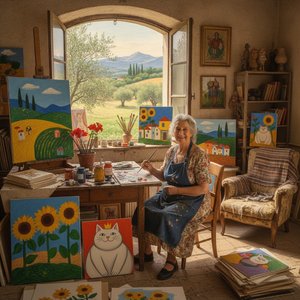
The Unfiltered Pulse: Defining Naïve Art and the Art Brut Aesthetic Naïve art Naïve art is usually defined as visual art that is created by a person who lacks the formal education and training that a professional artist undergoes (in anatomy, art his...
To understand naive art, one must first look at what it chooses to leave behind. In the hallowed halls of traditional academies, students spend years mastering the mathematical precision of vanishing points and the dramatic interplay of light and shadow known as chiaroscuro. They are taught that depth is a matter of careful proportion and that anatomy must follow strict, predictable rules. Naive art, however, operates on a different frequency. It is an aesthetic defined by a lack of formal academic training in perspective or art history, yet this absence is not a failure. Instead, it is a liberation. By setting aside the rigid constraints of anatomical perfection, the naive artist allows the raw, unadultered pulse of human emotion to take center stage.
This departure from tradition finds a historical echo in the works of the 20th-century Modernists. Painters like Henri Rousseau, often referred to as Le Douanier, utilized a style that appeared childlike to many contemporary critics but was actually a deliberate embrace of simplicity. While the academy sought to refine reality into a controlled spectacle, these artists sought a more direct connection to their subjects. Today, we recognize that this lack of formal refinement is precisely what allows for such profound intimacy; every brushstroke feels like a direct transcription of a memory or a dream rather than a calculated academic exercise.
Navigating Boundaries: Distinguishing Folk, Naive, and Outsider Art
Defining the Soul: The Distinction Between Folk Art, Naive Art, and Academic Tradition The Soul of Tradition: Exploring the Vibrant Heritage and Naive Mastery of Global Folk Art The Essence of Naive Art: Finding Beauty in Unfiltered Expression To enc...
The lines between different forms of non-academic art can often seem blurred, but understanding the subtle distinctions is essential for any student of the field. Folk art is fundamentally rooted in the context of a specific community or culture. It is a living archive, often involving objects with practical utility—such as textiles, pottery, or carved tools—that are created within an established cultural framework. Naive art, while sharing a similar sense of honesty, does not necessarily derive from a distinct popular tradition; it is more about the individual's personal style and their uninhibited approach to materials and composition.
We can see a clear parallel in the way these boundaries were explored by the French artist Jean Dubuffet. He coined the term Art Brut, or "raw art," to describe works created entirely outside the boundaries of official culture, often by individuals living in profound isolation or on the fringes of society. While folk art celebrates communal identity and outsider art explores extreme mental states or personal fantasies, naive art sits in a space of beautiful simplicity. It is an art of the heart that refuses to play by the rules of the Old Masters, choosing instead to prioritize the symbolic weight of a single blossom or the soulful gaze of a community member.
The Visual Language of Sincerity: Flattened Perspectives and Bold Colors
The Tablecloth painting by Maria Primachenko is a stunning example of Naive Art/Primitivism, a style characterized by its simplicity, flat rendering, and lack of formal training. Created in 1976, this piece showcases the artist's unique style and per...
The visual impact of naive art comes from its unique relationship with the traditional rules of painting. The Renaissance masters established three primary rules for creating balance: decreasing the size of objects as they recede into the distance, muting colors in the background, and reducing detail in far-off subjects. Naive art frequently ignores these dictates. Instead, we encounter flattened planes where a distant tree might possess the same clarity and intensity as a figure in the foreground. This creates a sense of "geometrically erroneous" space that feels both surreal and deeply sincere.
This technique finds an echo in the works of Maria Primachenko, particularly in her piece Tablecloth. In this work, the use of gouache allows for a strong presence of pattern and unrefined color across all planes of the composition. There is no attempt to fade the background into obscurity; instead, every element is given equal importance. This lack of traditional depth forces the viewer to engage with the surface of the painting itself, finding beauty in the rhythmic repetition of shapes and the bold, unapologetic use of pigment. It is a visual language that favors clarity and impact over the illusion of three-dimensional space.
Cultural Anchors: The Deep Connection to Folk Traditions and Heritage
A Rhythmic Celebration of Heritage In the evocative masterpiece Folk Scene Man with Banjo , created in 1944, the legendary William H. Johnson invites viewers into a soulful, rhythmic world where music and community intertwine. This striking work serv...
While naive art can be an individualistic pursuit, it often draws its strength from the deep well of folk traditions. This is where the distinction between the two becomes most fluid. Many artists use the simplified language of the naive style to document and celebrate the cultural life of their people. These works act as vessels for ancestral identity, capturing the rhythms of rural life, the significance of local customs, and the textures of a shared history.
A profound example of this is found in the work of William H. Johnson. In his 1944 painting, Folk Scene Man with Banjo, Johnson utilizes bold, geometric forms to capture a moment of communal joy within African American life. He does not merely paint a scene; he uses thick, angular lines that mirror the percussive beats of the music itself. His work is deeply connected to the storytelling traditions of the American South and the spiritual rhythms of gospel music. Much like the way the English Folk Dance and Song Society works to preserve the melodies of the past, Johnson’s art ensures that the cultural continuity of his heritage remains visible and vital through a stylized, symbolic landscape.
Icons of the Unfiltered: Examining Key Figures in Naive Mastery
A Life Rooted in Polish Folk Tradition: The Art of Ryszard Biel Ryszard Biel, born on December 6, 1946, in Żywiec, Poland, is an artist whose work embodies a profound connection to the rich cultural heritage of his homeland. His journey as a sculptor...
The history of naive art is populated by individuals who found power in their refusal to conform to metropolitan or court standards. These artists often worked in isolation or within small, localized communities, creating works that were far removed from the polished veneers of the urban art establishment. Theirs was an art of necessity and observation, shaped by the landscapes they inhabited and the traditions they practiced.
We see this spirit of dedication in the life of Ryszard Biel, a Polish artist whose work embodies a profound connection to his homeland. Born in Żywiec, Biel’s creative identity was shaped by the craftsmanship of local woodworking and the construction of traditional instruments. His sculptures and paintings do not seek the approval of the academy; instead, they reflect the vibrant geometric patterns found in Polish folk embroidery. By focusing on the textures of wood and the authenticity of local design, Biel mirrors the way historical figures like Józef Zbozień preserved the unique musical voice of the Podhale region through the creation of the złóbcoki fiddle. Both artists demonstrate how a focus on local tradition can create an art form that is both deeply personal and universally resonant.
The Emotional Pulse: Why Simplicity Resonates with the Human Heart
The Echoes of Everyday Life: Exploring Folk Archive To stand before a depiction like this Folk Archive is to step across an invisible threshold, leaving the hushed reverence of the traditional gallery space behind. This work, bearing the unmistakable...
Ultimately, the enduring appeal of naive and folk art lies in its ability to communicate directly with the viewer's emotions. Because these works are stripped of the intellectual pretension often found in academic art, they offer a visceral connection to the real. There is a certain magnetic power in the uninhibited expression of an artist who is not concerned with the "correct" way to render a shadow or a limb, but rather with the "true" way to convey a feeling of warmth, grief, or celebration.
This resonance can be felt when observing contemporary works like Jeremy Deller’s Folk Archive. This piece acts as an anthropological snapshot, gathering the mundane relics of community life—posters, signs, and everyday objects—and presenting them with artistic flair. It challenges us to find meaning in the spontaneous gestures of daily existence. Just as the Museum of Folk Musical Instruments in Szydłowiec preserves the rhythmic pulse of rural life through sound, these visual works preserve the heartbeat of culture. They remind us that art is not always found in the complex or the difficult, but often in the simplest, most honest reflections of our shared human experience.
Explore the profound impact of Primitivism on Modern Art. Discover how raw expression and non-Western aesthetics redefined beauty, from Gauguin to Picasso, in this deep cultural reflection for true art lovers.
Explore the profound beauty of Naïve Art. Discover its unique characteristics, historical significance, and how this unfiltered, sincere aesthetic can elevate professional interior design through high-quality, hand-painted reproductions.
Explore the profound beauty of Naïve Art and Primitivism. Discover the history of self-taught masters, from Maria Primachenko to Franco Mora, through an expert art-historical lens. Learn how raw, unfiltered expression challenges academic traditions in this definitive guide.
Explore the raw, high-impact power of folk art. Discover how authentic visual storytelling, naive mastery, and global traditions drive modern design trends. Elevate your space with bold, unfiltered aesthetics that transcend the gallery.

 Beyond Perspective: The Raw Emotion and Vibrant Soul of Naive Art & Primitivism
 The Heart of Tradition: A Definitive Guide to the Cultural Legacy and Aesthetic Power of Folk Art
 Tablecloth
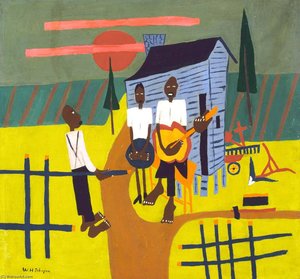 Folk Scene Man with Banjo
 Ryszard Biel
 Folk Archive