The Power of Less: A Definitive Guide to Minimalism and Geometric Abstraction in Modern Art History
Explore the profound history of Minimalism and Geometric Abstraction. Discover how the pursuit of essence transformed modern art through pure form, texture, and reduction. An expert guide for art lovers seeking depth, clarity, and timeless aesthetic inspiration.
The Essence of Reduction: Defining Minimalism and Its Philosophical Roots Minimalism (visual arts) Minimalism describes movements in various forms of art and design, especially visual art and music, where the work is set out to expose the essence, es...
To the untrained eye, a minimalist canvas may appear as a mere absence of detail, a void where one expects to find narrative or ornament. However, for the true student of art history, Minimalism is never an exercise in emptiness; rather, it is a rigorous and disciplined pursuit of essence. It is a movement defined by the deliberate elimination of everything non-essential, stripping away the layers of metaphor, anecdote, and representational illusion to expose the very identity of the subject. This philosophical retreat from the clamor of the visible world allows for a profound encounter with truth, where the work of art no longer seeks to tell a story or imitate another object, but instead exists as its own sovereign reality.
In this state of extreme reduction, the viewer is invited into a meditative space. When an artist removes the distractions of recognizable figures or complex landscapes, they force a confrontation with the fundamental elements of existence: weight, color, and boundary. It is a movement of literalism, where a square is permitted to be simply a square, and a line serves only as a boundary. This clarity of purpose transforms the act of looking from passive observation into an active, sensory experience, demanding that we find meaning not in what is depicted, but in the purity of what remains.
From Chaos to Clarity: The Reaction Against Abstract Expressionism
A Window into Argentine Abstract Expressionism: Exploring MACBA’s Legacy Buenos Aires' Museum of Contemporary Art (MACBA) stands as a testament to Argentina’s artistic evolution, born from the ambitious vision of the Aldo Rubino Foundation and anchor...
The emergence of Minimalism in the post-World War II era, particularly within the vibrant New York art scene of the 1960s and early 70s, was far from a random occurrence; it was a radical departure from the emotional turbulence that preceded it. For decades, Abstract Expressionism had dominated the Western consciousness, characterized by gestural brushwork, chaotic energy, and the projection of the artist's inner psyche onto the canvas. While powerful, this style relied heavily on the "hand" of the creator and the heavy weight of personal symbolism. Minimalism arrived as a necessary counterpoint, acting as a bridge toward post-minimalist practices by seeking to cool the heated emotions of the previous generation.
Where the Abstract Expressionists sought to pour their souls into every drip and smear of paint, the Minimalists sought a different kind of truth—one found in the stillness of the object itself. This shift represented a monumental change in the relationship between the artist, the artwork, and the audience. By moving away from the "autographic" mark—the unique, recognizable stroke of the painter—Minimalism introduced an aesthetic of detachment and objectivity. It was a movement that traded the dramatic for the structural, replacing the storm of human emotion with the serene stability of geometric order.
Geometric Abstraction: The Language of Pure Form and Mathematical Grace
Geometric abstraction is a form of abstract art based on the use of geometric forms sometimes, though not always, placed in non-illusionistic space and combined into non-objective (non-representational) compositions. Although the genre was popularize...
At the heart of this movement lies the sophisticated language of geometric abstraction, a genre that utilizes non-objective compositions to create a sense of infinite balance. While motifs of geometric forms have been utilized since antiquity—from the intricate patterns of Islamic art to early twentieth-century avant-garde movements—Minimalism refined this usage into a precise, almost architectural discipline. This is not merely about shapes; it is about the mathematical grace found in symmetry, rhythm, and proportion.
Through the use of non-hierarchical grids and tessellations, artists were able to create works that felt both monumental and weightless. Consider the way a series of repeating modules can evoke the structural harmony of travertine or the rhythmic pulse of a landscape without ever explicitly depicting one. This reliance on geometric precision allows for a sense of "celestial equilibrium," where colors and shapes interact in a tripartite arrangement or a balanced horizon to create a state of profound stability. In this realm, art becomes a study of rhythm and structure, where even the most simple arrangement of lines can command the entire space it occupies.
Materiality and Presence: The Tactile Reality of the Minimalist Object
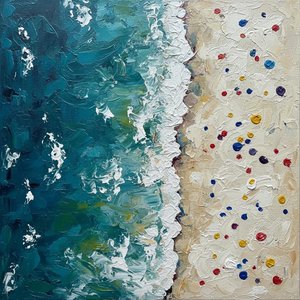
A Vision of Tactile Tranquility Monolithic Serenity: A Meditative Study of Tactile Sand and Geometric Grace is a profound exploration of rhythm, texture, and structural harmony. This piece presents a mesmerizing, non-hierarchical grid of relief-like ...
One of the most captivating aspects of Minimalism is its profound engagement with materiality. Because the artist has stripped away narrative, the physical properties of the medium become the primary protagonists of the work. The texture of the surface, the weight of the material, and the way light interacts with a raised edge are no longer secondary details; they are the very substance of the art. We see this in works that explore the "monolithic serenity" of tactile sand, or the way thin layers of white plaster can be sanded and buffed to reveal the organic grain of the wood beneath.
This focus on materiality invites a tactile intimacy. A viewer might find themselves mesmerized by the subtle micro-shadows cast by a relief-like module or the hypnotic effect of concentric rings in an ochre field. The art becomes a physical presence in the room, interacting with the ambient light and the architectural environment. This is why many collectors find that a high-quality, hand-painted reproduction—with its visible brushstrokes and deep tonal range—captures this essence far more effectively than a flat print. To truly experience Minimalism, one must be able to sense the depth, the impasto, and the physical soul of the medium.
Minimalism in the Modern Interior: Achieving Serenity Through Curated Simplicity
Finding Your Sanctuary: Why Minimalism is the Perfect Start for Your New Chapter The Beauty of Less: A Sophisticated Guide to the Soul of Minimalist Art and Geometric Harmony The Essence of Reduction: Finding Truth in Minimalist Forms The Power of Le...
In our contemporary era of digital overload and sensory chaos, the aesthetic principles of Minimalism offer a much-needed sanctuary. Integrating these works into a modern interior is not about creating an empty space, but about curating a sense of calm through intentionality. A single, high-impact minimalist composition can serve as an anchor for a room, providing a focal point that grounds the surrounding decor with its serene presence. Whether it is a large-scale mural that transforms a ceiling into a fresco of geometric grace or a multi-panel set that flows across a wide wall, the goal is to foster an atmosphere of stability and peace.
For those looking to bring this historical legacy into their own homes, the beauty lies in the "power of less." By selecting works that emphasize texture, monochromatic palettes, and structural harmony, one can transform a living space into a meditative retreat. Whether you are drawn to the soft, warm tones of sand and cream or the deep, rhythmic echoes of forest green, the presence of minimalist art allows for a sophisticated expression of modern taste—a testament to the enduring power of finding truth in the simplest of forms.
At OriginalUniqueArt.com, we celebrate the profound impact of art history by offering museum-quality reproductions that honor these very traditions. Our master artists specialize in hand-painted oil works on 100% cotton canvas, ensuring that the tactile depth and physical soul of every masterpiece—from the geometric precision of the Minimalists to the textured brilliance of the Impressionists—is preserved for your collection.
Discover the exclusive collection of Noiret at WahooArt. Explore premium abstract reproductions featuring modern non-representational art and profound chromatic depth.
Experience the visionary "revisited translations" of Duvallier. Masterfully bridging Old World techniques with modern clarity, his exclusive WahooArt collection offers rare, sophisticated interpretations of legendary masterpieces. Shop premium …
Discover the transformative elegance of minimalist art. Our expert guide explores how curated geometric sculptures, metallic textures, and intentional simplicity elevate modern luxury interiors into serene, sophisticated sanctuaries.
Discover the profound elegance of minimalist art. Explore how geometric abstraction and the beauty of reduction create serene, sophisticated spaces through our expert guide to finding soul and harmony in every line and shape.
Explore the profound evolution of geometry in art, from the Golden Ratio in classical masterpieces to the bold structures of modern abstraction. Discover how mathematical precision and geometric forms define visual harmony through an expert art-historical lens.
Discover the profound elegance of minimalism. Our expert guide explores how stripped-back forms and geometric abstraction create soulful, serene spaces for the discerning art collector seeking timeless beauty and emotional depth.


 The Power of Less: A Definitive Guide to the Minimalism Movement and Geometric Abstraction
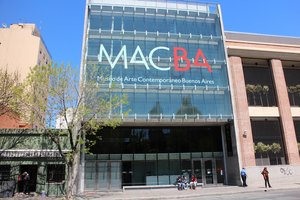 MACBA - Museum of Contemporary Art in Buenos Aires
 Geometric abstraction
 Monolithic Serenity: A Meditative Study of Tactile Sand and Geometric Grace
 The Art of Calm: Transforming Your First Shared Space with the Serenity of Minimalist Art