The Eternal Canvas: How Masterpieces Preserve the Soul of History
 Battle of Gideon Against the Midianites
Dynamic Depiction of a Biblical Triumph Experience the visceral energy of this powerful Baroque masterpiece, which vividly captures the historic and spiritual victory of Gideon over the Midianites. The scene is alive with movement and emotion, immers...
To stand before a true masterpiece is to engage in a silent, profound dialogue with the centuries. Art has never been merely an aesthetic pursuit; it is the most enduring vessel for human memory, a way to freeze the fleeting moments of triumph, tragedy, and transformation that define our collective existence. While written chronicles may offer facts and dates, a painting captures the visceral energy of an era—the very breath of the past. Through the meticulous application of pigment and oil, artists have historically acted as the custodians of time, ensuring that the spiritual victories and the raw struggles of humanity are not lost to the erosion of memory.
Consider the profound weight of a biblical triumph, such as the Battle of Gideon Against the Midianites. In this Baroque masterpiece, we do not simply observe a historical event; we experience the divine intervention and human bravery through a dynamic composition alive with movement. The use of chiaroscuro—the dramatic interplay of light and shadow—draws the viewer into the chaos of battle, where every flicker of gold and deep purple evokes a sense of immediacy. Such works serve as windows into a structured universe, where the textures of oil on canvas allow for a luminous depth that transcends mere representation, inviting us to reflect on themes of faith and the eternal struggle between good and evil.
Architects of Order: The Intellectual Rigor of French Classicism
 Mastering the Classics: The 25 Greatest Paintings by Nicolas Poussin
Introduction To step into the world of Nicolas Poussin is to leave the chaotic whims of emotion behind and enter a realm of profound intellectual clarity. As you wander through this curated selection of his top twenty-five masterpieces, you are not m...
In stark contrast to the turbulent energy of the Baroque lies the profound intellectual clarity found in the works of Nicolas Poussin. To enter the world of Poussin is to leave the chaotic whims of emotion behind and step into a realm governed by the immutable laws of geometry and moral virtue. As the architect of French Classicism, Poussin did not seek to dazzle the eye with superficial drama; instead, he sought to capture the eternal. His canvases are meticulously structured universes where every gesture, shadow, and architectural element is placed with the precision of a master strategist.
His approach represents a disegno—the primacy of line and structure—that serves as a sanctuary of order in an increasingly fragmented world. By drawing inspiration from the sun-drenched ruins of Rome and the archaeological rigor of antiquity, Poussin transformed mythological narratives into stageplays for philosophical contemplation. This commitment to balance and logic provides a sense of permanence that continues to resonate with the modern soul. Even in later eras, artists like Nicolas-Guy Brenet would look back to these classical ideals, rejecting the ornate excesses of the Rococo to embrace a more restrained, intellectually rigorous style rooted in the dignity of historical truth.
The Visceral Epic: Capturing the Chaos and Heroism of Battle
 Godfrey's Soldiers Drive Through The Muslim Army
Dynamic Depiction of a Historic Battle This powerful artwork captures a dramatic moment from a legendary or historical conflict, vividly illustrating the chaos and heroism of war. The scene is densely populated with figures engaged in fierce combat, ...
There is a unique, haunting beauty found in the depiction of conflict—a genre that demands the utmost mastery of movement and emotion. Historical battle scenes, from the legendary clashes of the Crusades to the Napoleonic era, utilize the medium of painting to explore the universal themes of sacrifice, resilience, and human endurance. In works such as Paul Gustave Doré’s depictions of historical conflicts, we see a dense population of figures engaged in fierce combat, their expressive faces conveying the raw spectrum of fear and determination.
The artistry lies in the ability to organize chaos into a cohesive narrative. Through vigorous brushwork and layered perspectives, the artist guides the eye across the battlefield, emphasizing the grit and heroism inherent in struggle. Whether it is the intense, monochromatic energy of a Romantic illustration or the sweeping, realistic panoramas of Louis François Baron Lejeune, these paintings capture the very essence of war. They remind us that even amidst the tumult of destruction, there is a profound, tragic beauty in the strength of the human spirit to endure against overwhelming odds.
Beyond the Frame: The Enduring Legacy of Oil on Panel and Canvas
 10 Iconic Oil on Panel Masterpieces That Redefined Art History
Introduction To step into the presence of a true masterpiece is to engage in a silent, profound dialogue with history. While we often envision the grand, sweeping canvases of the Renaissance or the textured expanses of Impressionism stretched across ...
The medium itself is as vital to history as the subject matter. For centuries, the choice between oil on canvas and the more intimate oil on panel has defined the structural integrity and aesthetic impact of a masterpiece. There is a certain permanence found in the grain of wood; works painted upon prepared panels possess a unique density and a luminous depth that flexible cloth can rarely replicate. This structural intimacy allows for a concentrated form of genius, where the pigment feels anchored to the very foundation of the work.
Conversely, the evolution of oil on canvas has allowed for much larger, more sweeping compositions, enabling artists to create epic landscapes and grand historical panoramas. The versatility of oil—its ability to be layered, its rich tonal range from the deepest shadows to the brightest highlights, and its capacity for impasto textures—ensures that the medium remains the gold standard for fine art. When we look at a hand-painted reproduction today, we seek that same tactile depth: the visible brushstrokes and the rich, vibrant hues that bring the historical narrative to life, far removed from the flat, computer-printed appearance of modern posters.
A Dialogue with Antiquity: Reimagining Historical Narratives for Modern Interiors
 nicolas guy brenet
Nicolas-Guy Brenet: A Pioneer of Troubadour Classicism Born in Paris in 1728, Nicolas-Guy Brenet’s life and artistic journey represent a fascinating confluence of influences – the formal training of François Boucher, a rejection of Rococo excess, and...
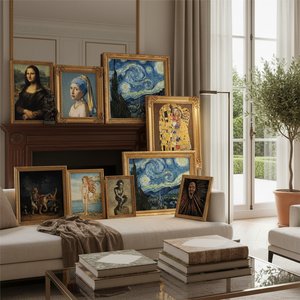
In the contemporary era, the appreciation for classical art has transitioned from the museum gallery into the sophisticated private residence and luxury hospitality space. The modern collector does not merely seek decoration; they seek a dialogue with history. This is achieved through the thoughtful integration of historical styles into modern architectural contexts—using multi-panel layouts to span wide walls or commissioning large-format frescoes that recreate the grandeur of a Renaissance ceiling.
The beauty of fine art today lies in its ability to be "remixed" and personalized without losing its soul. We see a growing trend in custom commissions, where personal milestones are transformed into historical masterpieces—perhaps a wedding portrait rendered in the light-drenched style of Monet, or a family lineage reimagined through the lens of 17th-century portraiture. By bringing these timeless chronicles into our living spaces, we do more than decorate; we surround ourselves with the wisdom, the order, and the enduring heroism of the ages. At OriginalUniqueArt.com, we take immense pride in preserving this legacy, offering meticulously hand-painted reproductions that allow the grandeur of the Old Masters to reside within the modern home.