The Enigmatic Embrace of the Forest To gaze upon this depiction of a forest landscape is to step across a threshold into a realm suspended between waking life and deep contemplation. It is an atmosphere made visible, a place where the towering vertic...
Entering a forest is an act of leaving the known behind. It is a transition into a realm where the sky is often obscured by a canopy of emerald and gold, and where the air feels heavy with the scent of damp earth and ancient growth. For the artists who have dedicated their lives to this subject, the woods are never merely a collection of timber and leaf; they are living protagonists in a quiet drama of texture and atmosphere. Throughout history, our relationship with these shaded spaces has shifted from viewing them as sites of primordial danger to seeing them as sanctuaries for the soul.
When we look closely at works like Jan Bruegly the Elder’s Forest landscape, we see this threshold clearly. The composition often draws the eye inward, using a winding stream or a narrow path to suggest that the true destination is not a place, but the experience of the journey itself. There is a palpable richness in the oil paint here, where thick applications of pigment give the foliage a sculptural quality. These paintings invite us to slow our pace, mirroring the way one must tread carefully through real undergrowth, mindful of every mossy root and fallen branch.
The Silent Frost: Early Traditions of Winter and Snow
The depiction of winter landscapes in Western art begins in the 15th century, as does landscape painting in general. Wintry and snowy landscapes are very rarely seen in earlier European painting since most of the subjects were religious. Gold ground ...
Before the forest was a place of retreat, it was often depicted as a landscape of harsh necessity. In the earlier centuries of European painting, snow was a rare subject, usually appearing only within the structured context of religious narratives or seasonal calendars. We find these early glimpses in the 15th-century illuminated manuscripts, such as the Les Très Riches Heures du duc de Berry, where the winter months are represented with a stylized, frozen stillness.
It was not until the mid-16th century that the snowy landscape emerged as a distinct genre. Pieter Bruegel the Elder transformed our perception of the cold through his observations of the Little Ice Age. His The Hunters in the Snow presents a world where heavy snow blankets the Flemish countryside, capturing the grit and reality of village life during a particularly severe period. These works remind us that the winter woods were once places of survival, where the weight of the frost was felt by every living creature.
Clarity and Calm: The Luminous Horizons of American Landscapes
Luminism is a style of American landscape painting from the 1850s to 1870s, characterized by effects of light in a landscape, through the use of aerial perspective and the concealing of visible brushstrokes. Luminist landscapes emphasize tranquility,...
As we move into the 19th century, a different kind of light began to emerge in the American tradition, known as Luminism. This style, prominent from the 1850s to the 1870s, sought to capture a sense of profound tranquility through the careful control of tone and light. Unlike the more visible brushstrokes of later movements, Luminist artists like Fitz Henry Lane and John F. Kensett worked to conceal their hand, creating smooth, glass-like surfaces that emphasized aerial perspective and a soft, hazy sky.
In these works, the forest often meets calm, reflective water, creating a sense of infinite space. The light is typically cool and non-diffuse, lending a quietist, almost meditative quality to the scene. When observing John Frederick Kensett’s Shrewsbury River, one finds a landscape reduced to its essential elements—light, color, and atmosphere—offering an experience of silence that feels as though time itself has paused. It is a style that celebrates the horizontal plane, inviting a contemplative gaze upon the stillness of the natural world.
Dappled Light: Capturing the Fleeting Pulse of Impressionist Glades
Explore 'Landscape at Fontainebleau Forest' by Abbott Thayer (1876). This Impressionistic landscape showcases light & shadow in a serene forest scene, evoking peace and solitude.
The arrival of Impressionism brought a radical change to how we perceive the forest floor. No longer content with the smooth, hidden surfaces of Luminism, artists like Claude Monet and Alfred Sisley sought to capture the vibration of light as it filtered through moving leaves. They embraced en plein airpainting, working directly outdoors to record the ephemeral moments of a summer afternoon—the way a single sunbeam pierces a thicket or how mist clings to an oak's bark.
This approach is beautifully realized in Abbott Handerson Thayer’s Landscape at Fontainebleau Forest. Here, the interplay of light and shadow creates a sense of peace and solitude, where the boundaries between earth and sky become blurred. Similarly, William Trost Richards’ Woodland Landscape offers a window into a primordial world. His technique, influenced by the Pre-Raphaelites, uses extraordinary precision to render every fern and textured strip of bark. In his work, we feel the dampness of the moss and the delicate translucency of leaves caught in a sunbeam, making the forest feel as though it is breathing alongside us.
Rhythmic Shadows: The Spiritual Energy of the Expressionist Forest
Experience the hypnotic depth of Laurent Moreau's Monolithic Echoes in Emerald, a unique textured masterpiece featuring rhythmic forest shadows and heavy impasto, available exclusively for your private collection.
By the early 20th century, the forest underwent another transformation, moving from the observation of light to the expression of internal emotion. In the hands of German Expressionists, the woods became a site of spiritual intensity. Franz Marc’s Deer in the Forest II is a profound example of this shift. Moving away from naturalistic colors, Marc utilized a palette where blues and greens vibrate with a cosmic energy, representing a rhythmic pulse of life force rather than mere foliage.
In these works, the forest is no muting presence but an energetic one. The thick, expressive brushstrokes create a landscape that feels as though it is in motion, reflecting the turbulent emotions of the human soul. This era of painting reminds us that the woods can serve as a mirror for our most profound, often unseen, spiritual experiences.
Regional Radiance: Atmospheric Studies in Belgian and Spanish Light
The study of light also took on distinct regional characters across Europe. In Belgium, the movement known as Belgian Luminism, led by artists such as Émile Claus, focused on the smooth, realistic control of natural light, particularly during dawn or through light fog. Their compositions remained balanced and still, capturing the quietude of the Flemish countryside.
In contrast, Spanish Luminism, spearheaded by Joaquín Sorolla, embraced a much warmer, more exuberant energy. His work captures the intense Mediterranean sunlight playing upon water and sand, emphasizing movement and the vibrant energy of outdoor existence. Whether through the soft, subdued tones of the North or the brilliant warmth of the South, these artists proved that the forest is a canvas capable of holding any light the sun chooses to cast upon it.
A Lasting Sanctuary: Finding Stillness in the Painted Wild
Introduction To step into a forest is to enter a sanctuary of shifting light and whispered secrets, a realm where the boundary between the earth and the sky becomes beautifully blurred. For centuries, the forest has served as one of the most profound...
As our modern world becomes increasingly digital and urbanized, the painted forest offers a vital psychological retreat. These works provide a window into a stillness that is difficult to find in our daily lives, reminding us of our ancestral connection to the wild. To look upon these canvases is to rediscover the quiet majesty of the natural world—the way a meandering stream suggests the continuity of life, or how a heavy shadow can offer a sense of protection.
Whether we are drawn to the meticulous detail of a naturalist or the energetic strokes of an expressionist, these landscapes remain deeply resonant. They invite us to pause, to breathe, and to find our own moment of sanctuary within the layers of oil and pigment. As you explore these various visions of the woods, may you find a piece of that enduring peace to bring into your own space.
For those looking to bring these tranquil vistas into their homes, OriginalUniqueArt.com offers exquisite hand-painted reproductions and museum-quality prints, each crafted to preserve the soul of the original artwork.
Step into the enchanting world of woodland landscapes. From Impressionist light to moody Romanticism, explore 10 iconic forest paintings and their timeless stories. Find museum-quality art reproductions for your decor. Discover all masterpieces on OriginalUniqueArt.com.
Immerse yourself in the radiant world of Joaquín Sorolla y Bastida. Explore 25 iconic masterpieces of Spanish Impressionism, from sun-drenched seascapes to vibrant portraits. Find museum-quality art reproductions and decor inspiration. Discover all masterpieces on OriginalUniqueArt.com.

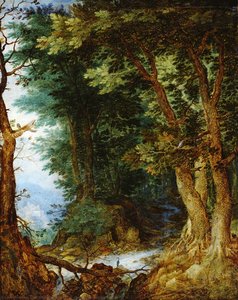 Forest landscape
 Winter landscapes in Western art
 Luminism (American art style)
 Landscape at Fontainebleau Forest
 Monolithic Echoes in Emerald: A Singular Study of Rhythmic Forest Shadows
 Enchanted Woodlands: Top 10 Masterpieces Exploring the Magic of Forests


