
Beyond the Gallery: The Raw Energy of Folk Art vs. Academic Perfection
 Folk Archive
The Echoes of Everyday Life: Exploring Folk Archive To stand before a depiction like this Folk Archive is to step across an invisible threshold, leaving the hushed reverence of the traditional gallery space behind. This work, bearing the unmistakable...
To step into a traditional gallery is often to enter a space of hushed reverence, where the air feels heavy with the weight of established canons and the rigid rules of perspective. We are taught to admire the mastery of chiaroscuro, the mathematical precision of vanishing points, and the anatomical perfection achieved by the Old Masters. Yet, there is a profound, electric tension that arises when we move beyond these polished veneers. This is where folk art enters the conversation, not as a lesser form, but as a disruptive force of pure, unadulterated energy. Unlike the academic tradition, which seeks to refine and polish reality into a controlled spectacle, folk art thrives on the unfiltered pulse of human existence. It does not ask for permission from critics or adhere to the stifling constraints of formal training; instead, it emerges directly from the soil, the hearth, and the shared breath of a community.
When we look at works like Jeremy Deller’s Folk Archive, we see an anthropological snapshot that challenges the very definition of high art. It is a collection of the mundane, the ritualistic, and the everyday—the remnants of festivals, local protests, and communal celebrations. This movement toward the vernacular reminds us that meaning is not confined to museum walls but flourishes in the spontaneous gestures of daily life. While academic art focuses on the intellect and the technical execution of illusion, folk art speaks directly to the heart. It offers a visceral connection to the real, stripping away the layers of pretension to reveal the raw, beating heart of culture that thrums just beneath the surface of our modern, digital lives.
Visual Soul: Decoding the High-Impact Aesthetics of Naive Mastery
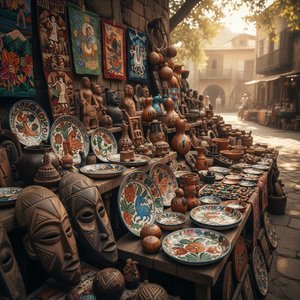 The Soul of Tradition: Exploring the Vibrant Heritage and Naive Mastery of Global Folk Art
The Essence of Naive Art: Finding Beauty in Unfiltered Expression To encounter naive art is to step into a realm where the constraints of academic perspective and anatomical precision dissolve, leaving behind only the raw, unadultered pulse of human ...
There is a unique, magnetic power found in what is often termed naive art—a realm where the constraints of academic perspective simply dissolve. To encounter this style is to witness a deliberate embrace of simplicity. Here, we find flattened planes, bold outlines, and a charming disregard for formal proportions that allows for a much deeper level of intimacy between the artist and the viewer. There is no barrier of technical deception; the artist does not seek to trick the eye with depth but rather to celebrate the symbolic weight of the subject. This lack of traditional refinement is precisely where its strength lies, creating a visual language that feels honest, immediate, and strikingly modern.
Consider the rhythmic, geometric vitality found in the works of William H. Johnson. In his Folk Scene Man with Banjo, we see how simplified shapes and thick, angular lines can orchestrate a visual symphony. The composition does not rely on complex shadows but on a pulse of energy that feels almost audible. This aesthetic—characterized by vibrant, grounded palettes and tactile textures—resonates deeply with the contemporary eye, which is increasingly drawn to high-impact, graphic clarity. It is an art of emotion rather than intellect, where every brushstroke serves as a direct transcription of memory or dream, unburdened by the heavy expectations of the art establishment.
Cultural Remix: How Global Traditions Fuel Modern Street & Pop Aesthetics
 Mexican handcrafts and folk art
Mexican handcrafts and folk art is a complex collection of items made with various materials and intended for utilitarian, decorative or other purposes. Some of the items produced by hand in this country include ceramics, wall hangings, vases, furnit...
In our hyper-connected era, the boundaries between high culture and folk tradition are becoming increasingly porous. We are witnessing a massive cultural remix, where the ancestral patterns of global folk traditions are being recontextualized through the lens of street art, pop culture, and digital design. This is not merely about appropriation; it is about the recognition of a shared visual vocabulary. From the intricate artesanía of Mexico—a beautiful blend of indigenous and European techniques—to the soulful, rhythmic woodcarvings of Polish artists like Ryszard Biel, these traditions provide a rich reservoir of symbolism that fuels contemporary creativity.
This intersection is where the most exciting design happens. The bold, graphic nature of folk motifs mirrors the punchy energy of Warhol or Lichtenstein, making them perfect for the modern urban aesthetic. We see this in the way street artists utilize ancestral iconography to claim space and identity within the concrete jungle. This global tapestry of patterns, textures, and stories allows us to create a new, hybrid visual language—one that honors the past while driving the future of pop aesthetics. It is a celebration of the mestizo spirit, where the old and the new collide to create something entirely fresh and undeniably impactful.
The Texture of Truth: Why Unfiltered Expression Wins in Contemporary Design
Primitive decorating is a style of decorating using primitive folk art style that is characteristic of a historic or early Americana time period, typically using elements with muted colors and a rough and simple look to them. Decorating in the primit...
In an age dominated by the hyper-smooth, pixel-perfect imagery of digital screens, there is a growing hunger for the tactile and the imperfect. We are drawn to the "texture of truth"—the visible brushstroke, the weathered wood, the slight irregularity of a hand-carved figure. This is why the aesthetic of folk art and primitive decorating remains so potent in contemporary design. The use of muted colors, rough textures, and an aged look—often achieved through techniques like tea staining or intentional crackle finishes—provides a sense of permanence and soul that mass-produced items simply cannot replicate.
This movement toward the authentic is a reaction against the ephemeral nature of modern life. When we choose pieces that embody the spirit of the handmade, we are investing in narratives of endurance. Whether it is an evocative wooden sculpture from the Appalachians or a vibrant, stylized painting of Ethiopian heritage, these works carry a weight of history. They offer a sensory experience that engages both sight and touch, reminding us of the human hand behind the art. In design, this translates to a preference for pieces that feel "lived-in" and storied, bringing a sense of groundedness and emotional depth to even the most avant-garde spaces.
Curating Authenticity: Integrating Bold Folk Narratives into Urban Interiors
 The Soul of Tradition: Transforming Modern Interiors with the Timeless Charm of Folk Art
The Heart of the Home: Defining the Soulful Essence of Folk Art Echoes of Tradition: Exploring the Enduring Legacy of Folk Art Movements Defining Folk Art: Beyond Practicality and into Cultural Expression The term “folk art” often conjures images of ...
Integrating these high-impact folk narratives into a modern, urban interior requires a curator’s eye for balance. The goal is not to create a museum of the past, but to use the bold energy of folk art to anchor and elevate contemporary spaces. For the design-conscious professional, this means using large-scale, multi-panel works or striking, colorful reproductions to create focal points that command attention. A single, vibrant piece of folk-inspired art can act as a visual anchor in a minimalist room, providing a much-needed burst of character and cultural depth.
The key lies in the "remix." Just as we might pair a vintage streetwear piece with high-end tailoring, we can pair the raw, geometric forms of folk art with sleek, modern furniture. We see this trend flourishing in the use of group set paintings that split a single image across multiple panels, creating a cinematic, architectural effect on wide walls or staircases. By treating folk art as a dynamic element of contemporary design rather than a static relic, we can transform our homes into curated landscapes of storytelling—spaces that are not only visually stunning but also deeply connected to the enduring pulse of human creativity.


