
The Dawn of Glamour: From Pictorialism to the Cinematic Frame
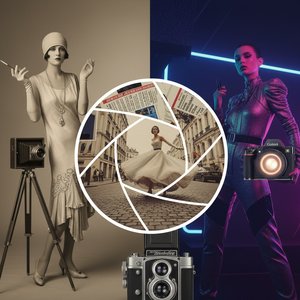 The Lens of Luxury: A Visual Journey Through the Evolution and Artistry of Fashion Photography
The Dawn of Glamour: From Pictorialism to the Cinematic Frame To understand the profound impact of fashion photography on the modern art collector's eye, one must first look back at the era when the camera began to transcend mere documentation. In it...
To truly appreciate the profound impact of fashion photography on the modern art collector's eye, one must first journey back to an era when the camera began to transcend its role as a mere tool for documentation. In its earliest, most delicate infancy, fashion photography was deeply rooted in Pictorialism, a movement that sought to emulate the soft, ethereal qualities of fine art painting. The early masters did not simply capture a garment; they composed a dreamscape, utilizing heavy diffusion and romanticized lighting to evoke an emotional resonance that felt more like a Renaissance portrait than a commercial snapshot. This era was defined by a pursuit of beauty that prioritized atmosphere over clarity, much like the luminous, light-drenched landscapes we adore in the works of Monet or Renoir.
As the decades progressed, this soft-focus romanticism gradually gave way to a more structured, cinematic approach. The lens began to act as a director, orchestrarying light and shadow to create narratives of high drama and aspiration. This transition marked the birth of the fashion editorial as a legitimate form of visual storytelling, where the clothing served as the protagonist within a carefully curated stage. For the discerning collector, this era represents the foundational moment when photography moved from the periphery of art into the heart of cultural prestige, establishing a language of glamour that continues to influence contemporary aesthetics and the way we perceive luxury today.
Architectural Precision: The Intersection of Fashion and Geometric Form
 Gianfranco Ferré, Spring / Summer 1986
Explore Gianfranco Ferré’s iconic 1986 fashion photograph – sleek black & grey tones, geometric lines, & elegant models. A timeless piece of high-fashion photography.
As we moved into the mid-to-late twentieth century, the fluidity of early romanticism was challenged by a new, rigorous discipline: the marriage of fashion and architecture. No figure embodies this intersection more exquisitely than Gianfranco Ferré. His work serves as a masterclass in geometric precision, where the human form is not merely draped in fabric but integrated into a composition of sleek black and grey tones. In these iconic photographs, every line and angle is calculated to evoke a sense of structural permanence, mirroring the strength found in modernist architecture.
This era introduced a fascinating dialogue between the soft textures of couture and the hard edges of design. The photography became an exploration of balance, where the silhouette of a gown could hold as much weight as a marble column. For those who find beauty in the structured elegance of a well-composed space, this period of fashion photography offers a profound connection to the principles of fine art composition, proving that true elegance often lies in the perfect alignment of form and function.
The Soul of the Narrative: Emotion and Identity in Editorial Photography
 gregor hohenberg
Gregor Hohenberg: Bridging History and Emotion Through Photographic Narrative Gregor Hohenberg’s artistic vision transcends mere documentation; it's a deliberate reimagining of German history interwoven with the pulse of contemporary culture. Born in...
Beyond the structural and the aesthetic, the most enduring fashion photography is that which transcends mere imagery to become a visual narrative. The work of photographers such as Gregor Hohenberg demonstrates how an artistic vision can bridge history and emotion through photographic storytelling. His approach is not simply about capturing an image; it is a deliberate reimagining of cultural heritage interwoven with the pulse of contemporary identity. By utilizing dramatic light and shadow, much like the theatricality found in classical performance art, such photographers invite the viewer into a dialogue with the past.
This depth of storytelling allows fashion photography to function as a window into the human condition. It is not just about what we wear, but how we are seen and how we define ourselves within our historical context. When an image can provoke contemplation about how history informs our present identity, it ceases to be a commercial artifact and becomes a piece of fine art worthy of the most dedicated collection. This is where the boundary between the ephemeral nature of fashion and the eternal nature of art dissolves into a singular, powerful narrative.
Monochrome Mastery: Capturing Texture and Stillness Through Light and Shadow
 Fashion editorial with Yves Saint Lauren
A Moment Frozen in Monochrome: The Elegance of Stupakoff In this evocative black and white photograph from 1974, the legendary Otto Stupakoff captures more than just a fashion statement; he captures an era of profound cinematic grace. The image prese...
There is a unique, quiet intensity found in the monochrome mastery of the masters. Consider the evocative work of Otto Stupakerm, particularly his 1974 editorial featuring Yves Saint Laurent. In such photographs, the use of stark black and white contrast strips away the distractions of color, forcing the viewer to confront the raw textures of a luxurious fur collar or the rhythmic spray of a fountain. This technique creates a palpable sense of stillness amidst the movement of urban life, capturing a moment frozen in time.
The manipulation of tonal range allows for an appreciation of weight and atmosphere that color sometimes obscures. The viewer can feel the coolness of a mist or the heavy drape of a winter coat through the mere interplay of light and shadow. This mastery of monochrome reflects a deep-seated appreciation for Surrealism and Expressionism, where the photograph becomes an intimate stage. For the collector, these pieces offer a sophisticated way to introduce historical depth and textural richness into a modern interior, providing a focal point that is both hauntingly beautiful and intellectually stimulating.
A Legacy of Luxury: How Fashion Photography Shapes the Collector's Eye
 SCAD FASH Museum of Fashion + Film
A Convergence of Dreams: The Soul of SCAD FASH In the vibrant heart of Atlanta, where the pulse of modern commerce meets an unyielding creative spirit, stands a sanctuary for the visually mesmerized: the SCAD FASH Museum of Fashion + Film . It is not...
Ultimately, the evolution of fashion photography has fundamentally shaped the way we curate our lives and our collections. From the legendary houses like Fendi, which transformed fur from a mere status symbol into a high-fashion art form, to the cinematic dreamscapes found in museums like SCAD FASH, the influence is undeniable. We see the convergence of dreams where the tactile elegance of couture meets the magic of the silver screen, creating a legacy that celebrates both the object and the image.
For those of us who find solace in the beauty of a well-crafted story, fashion photography offers an endless reservoir of inspiration. It teaches us to look for the narrative in the details, to find the architecture in the softest silk, and to recognize the profound emotion hidden within a single, perfectly captured frame. As we continue to explore these visual journeys, we do not merely observe history; we participate in its ongoing, elegant evolution.
This editorial was curated for OriginalUniqueArt.com.


