The Sublime Horizon: Exploring the Emotional Resonance of Romantic Landscapes
 Romanticism
Romanticism (also known as the Romantic movement or Romantic era) was an artistic and intellectual movement that originated in Europe towards the end of the 18th century. The purpose of the movement was to advocate for the importance of subjectivity,...
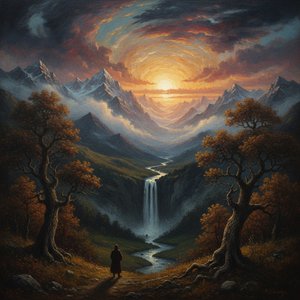
To stand before a landscape painting is to engage in a silent, profound dialogue with the earth itself. It is an invitation to step beyond the threshold of our modern, often frenetic existence and lose oneself in the quiet majesty of a distant horizon or the dramatic tension of a gathering storm. Throughout history, the landscape has served as much more than a mere backdrop for human drama; it has been a mirror reflecting our deepest spiritual aspirations and our evolving relationship with the natural world. In the era of Romanticism, this connection became visceral. The movement, emerging in Europe towards the end of the 18th century, advocated for the importance of subjectivity and imagination as a response to the rigid rationalism of the Enlightenment.
The Romanticist vision was one of the sublime—that overwhelming sense of awe and even terror inspired by the untamable power of nature. This is not merely a depiction of scenery, but an exploration of emotion. When we gaze upon the rugged grandeur of the Scottish Highlands or the mist-shrouded peaks in the works of masters like Samuel Bough, we are not just observing topography; we are experiencing the raw, often melancholic pulse of the wild. These landscapes capture the fleeting effects of light and weather, where a dramatic sunset over a turbulent sea or the golden glow of autumn on a heather-covered hillside evokes a powerful, instinctive response in the viewer's soul.
Architects of the Ethereal: From Northern Renaissance Pioneers to the Masters of Light
 joachim patinir
A Pioneer of the Northern Renaissance Landscape Joachim Patinir, a name often whispered alongside that of Albrecht Altdorfer as a foundational figure in landscape painting, emerged from the artistic milieu of the Low Countries during the early 16th c...
The journey through these ethereal realms begins long before the Romantic era, rooted in the foundational innovations of the Northern Renaissance. Figures such as Joachim Patinir emerged from the Low Countries in the early 16th century, fundamentally altering the course of Western art. Patinir was a pioneer who moved landscape from a mere background detail to an independent entity capable of conveying profound narrative and symbolic depth. Influenced by the imaginative world-building of Hieronymus Bosch, he imbued his vistas with a lyrical fantasy that invited viewers into worlds both naturalistic and dreamlike.
As centuries progressed, the focus shifted from the allegorical to the atmospheric. The English landscape found its soul in the works of John Constable, who rejected the stiff, academic conventions of his time to embrace plein air techniques. By painting directly from nature, Constable captured the very vibration of light across the River Stour, finding the epic within the ordinary—a passing storm cloud or a sun-drenched meadow. This lineage of mastery, stretching from the meticulous detail of the Old Masters to the expressive energy of later movements, creates a continuous tapestry of human perception, where every winding river and mountain peak whispers of the divine and the eternal.
The Texture of Transcendence: Capturing Atmosphere through Impasto and Luminism
 (Landscape of Dead Fallen Tree and Pond), (painting)
Explore Frank Hayward’s ‘Landscape of Dead Fallen Tree.’ A monochromatic oil painting showcasing Romanticism & Luminism with impasto texture. Captivating solitude & atmosphere.
The true magic of a landscape lies not just in its subject, but in the physical mastery of the medium. To truly feel the landscape, one must sense the texture of the earth and the weight of the air. This is achieved through techniques such as impasto, where thick, visible brushstrokes create a three-_dimensional relief on the canvas. In works exploring Luminism or the darker tones of Romanticism, such as Frank Hayward’s monochromatic studies, the impasto texture allows light to catch on the ridges of paint, mimicking the ruggedness of a dead fallen tree or the heavy moisture of a pond.
This tactile depth is essential for conveying atmosphere. The ability to render water—whether it be the shimmering lochs of Scotland or the tranquil streams of Keswick—requires a sensitivity to light and translucency that transcends mere documentation. When an artist masters the interplay of shadow and highlight, they create a sense of luminosity that makes the canvas appear to breathe. This physical presence of paint ensures that the artwork is not merely a window to be looked through, but a living surface that possesses its its own rhythmic pulse, inviting the collector to touch the very essence of the scene with their eyes.
Curating the Dreamscape: Integrating Masterful Landscapes into Luxury Interiors
 Hestercombe House - Gardens
A Symphony of Landscape and Art: The Living Legacy of Hestercombe Nestled within the verdant embrace of the Somerset countryside, Hestercombe House and Gardens stands as a profound testament to the enduring power of artistic collaboration. It is far ...
For the discerning collector, integrating these profound landscapes into a curated environment is an exercise in architectural storytelling. A landscape painting does more than decorate a wall; it expands the boundaries of a room, offering a portal to a distant, serene world. In high-end residential design or luxury hospitality, the placement of such works can transform a space. Imagine a large-format mural or a multi-panel group set spanning a grand staircase, where the colors and brushstrokes flow seamlessly across several canvases to create a cohesive, modern architectural statement.
The integration of art requires a sophisticated understanding of scale and light. Much like the celebrated gardens of Hestercombe House, where architecture and horticulture dissolve into a singular experience, an interior should treat fine art as an inseparable component of its aesthetic vision. Whether it is a solitary, contemplative piece placed in a quiet study or a dramatic, large-scale reproduction that serves as the focal point of a grand salon, the goal is to create a symphony of landscape and space. The presence of a masterfully executed oil painting brings a sense of permanence and historical weight, grounding even the most contemporary of interiors in the enduring beauty of the natural world.
Beyond the Canvas: Reimagining Historical Landscapes for the Modern Collector
 Beyond the Horizon: 10 Masterpieces That Redefine Landscape Art
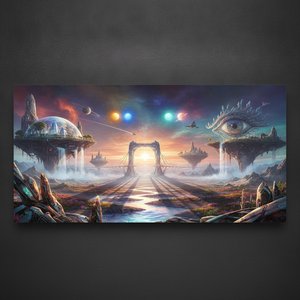
Introduction To stand before a landscape painting is to engage in a silent, profound dialogue with the earth itself. It is an invitation to step beyond the threshold of our modern, often frenetic existence and lose oneself in the quiet majesty of a d...
In our increasingly digital and urbanized age, the desire for the authentic and the permanent has never been more poignant. The modern collector often seeks to "remix" art history, bridging the gap between the classical and the contemporary. This can manifest in breathtakingly personal ways—transforming a cherished family photograph into a masterpiece rendered in the impasto style of Van Gogh, or utilizing "Period Shifts" to reimagine modern milestones through the dramatic chiaroscuro of the 17th century.
This evolution of landscape art allows for a deeply personalized connection to heritage. Through the meticulous craft of hand-painted oil reproductions on 100% cotton canvas, the soul of the Old Masters is made accessible for modern living. These works, characterized by their deep tonal range and authentic brushwork, offer a sanctuary of stability in a world of fleeting moments. As we continue to explore new technologies like AI-assisted design alongside traditional academic excellence, the essence of the landscape remains unchanged: it remains our most profound way of honoring the vast, breathing expanse of our planet and our place within its eternal beauty.
At OriginalUniqueArt.com, we specialize in preserving this legacy through unparalleled craftsmanship. From bespoke commissions that transform personal memories into fine art to museum-quality reproductions of the world's most iconic landscapes, our mission is to bring the grandeur of history into the modern home. Whether you are an interior designer seeking large-scale architectural solutions or a private collector searching for a unique centerpiece, our dedicated Project Coordinators and master artists ensure that every stroke of the brush meets the highest standards of excellence.