The Origins of Etching: From Armor Decoration to Printmaking Before it graced the walls of galleries and captivated art collectors, etching emerged from a decidedly more utilitarian world – that of the armorer’s workshop. During the Middle Ages, skil...
Before it was a medium for delicate landscapes or psychological portraits, etching lived in the heat and grit of the armorer’s workshop. During the Middle Ages, the impulse to decorate metal was driven by a need to transform cold steel into symbols of prestige. Skilled craftsmen used acid-resistant varnishes to etch intricate patterns onto weaponry, ceremonial objects, and shields. This practice was not born from a desire for mass reproduction, but from the necessity of ornamentation.
In 15th-century Germany, this decorative impulse underwent a profound metamorphosis. Pioneers like Daniel Hopfer, a craftsman who had honed his skills on armor, began applying these techniques to create images on paper. By using iron plates and acid to bite designs into the surface, he helped transition a utilitarian skill into an independent art form. This shift allowed imagery to move beyond the confines of individual patronage, enabling the dissemination of religious scenes and heraldic motifs across much wider audiences.
The Fluidity of the Needle: Bridging Drawing and Printmaking
The Master of the Etching Revival Jules-Ferdinand Jacquemart (1837–1880) remains a luminous figure in the annals of nineteenth-century printmaking, a period defined by the vibrant resurgence of the etching needle. Known as a pivotal architect of the ...
The true appeal of etching lies in its inherent connection to the act of drawing. Unlike engraving, which requires the physical strength and immense precision needed to guide a burin through metal, etching offers a more spontaneous grace. An artist can approach a copper or zinc plate with the same ease they would use when working with pen and $\text{and}$ ink. By using an etching needle to scratch through a waxy ground, the printmaker creates lines that feel alive and fluid.
This technical freedom finds a historical echo in the work of the 19th-century Etching Revival. Artists like Jules-Ferdinand Jacquemart sought to bridge the gap between classical reproduction and original expression. His training at the École des Beaux-Arts allowed him to manipulate light and shadow with an accuracy that felt both architectural and organic. This ability to "draw" directly onto the plate meant that etching could capture fleeting moments and emotional nuances that more rigid methods might miss, much like the way a sketch captures the essence of a subject before it is formalized into a painting.
Controlled Corrosion: The Science Behind the Acid Bite
The Genesis of Intaglio: From Armorer's Workshop to Artistic Revolution Etching: A Historical Survey of Technique, Aesthetic Qualities & Enduring Artistic Significance The Origins of Etching: From Armor Decoration to Printmaking Before it graced the ...
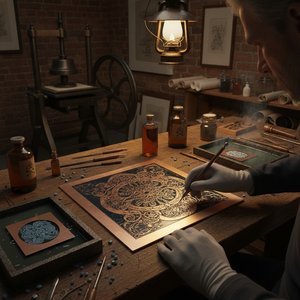
At its heart, the process of etching is an exercise in controlled corrosion. It is a realm where chemistry meets artistry, and the permanence of metal meets the fluidity of thought. The process begins with a polished metal plate—typically copper for its even texture or zinc for its accessibility. This surface is coated with an acid-resistant ground, a thin layer composed of wax, resin, or asphaltum. The artist then uses a needle to expose the bare metal, creating a map of lines that will eventually hold the ink.
The transformation occurs when the plate is immersed in an acid bath, often referred to as the mordant. The acid eats into the unprotected areas, incising the design into the metal. This "biting" process is governed by time and strength; a longer exposure results in deeper, wider recesses that hold more ink, producing darker lines on the paper. This scientific precision mirrors the way an architect understands structural integrity—every second of exposure must be calculated to ensure the final image possesses the intended weight and clarity.
Tonal Architecture: Building Depth through Layered Biting
A Somber Elegance: The Etched Legacy of Hermann Struck In the delicate interplay of light and shadow captured within Tomb of Giovanni Segantini (1858-1899) , we encounter a profound moment of historical reverence. Created in 1907 by the master German...
To achieve a range of tones beyond simple lines, the printmaker must become an architect of shadow. This is achieved through a technique of repeated biting and "stopping out." An artist might first etch light lines, then remove the plate from the acid to cover certain areas with a protective resist. When the plate is returned to the acid, only the newly exposed metal is bitten, creating a hierarchy of depths. This allows for a nuanced tonal palette, ranging from the palest grey to the deepest, velvety black.
This mastery of tonal gradation is evident in the works of artists like Hermann Struck. In his 1907 etching, Tomb of Giovanni Segantini, one can see how the manipulation of line and contrast builds a palpable sense of texture. Every stroke serves a purpose, building layers that allow the viewer to feel the ruggedness of stone walls or the lightness of the sky. By layering these chemical bites, the artist constructs a visual depth that mimics the complexity of the natural world, much like the way light falls across a landscape in a well-planned composition.
A Legacy in Ink: The Enduring Significance of the Intaglio Tradition
The Genesis of Printmaking: From Ancient Origins to Early European Developments Wikipedia: Printmaking Printmaking is the process of creating artworks by printing, normally on paper, but also on fabric, wood, metal, and other surfaces. "Traditional p...
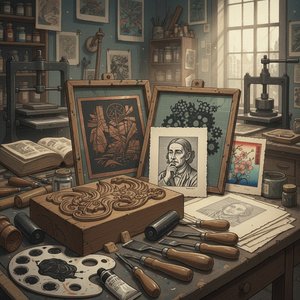
The intaglio tradition remains one of the most significant pillars of printmaking history. While relief printing, such as woodcut, relies on the raised surface of a block, intaglio focuses on the recessed areas where ink is trapped. This method has allowed for an unparalleled level of detail and atmospheric depth, seen in everything from the religious prints of the Renaissance to the modern urban landscapes of Armin Landeck. The ability to capture sharp lines and rich textures ensures that the medium continues to hold its ground against more modern, digital methods of reproduction.
Today, we see this legacy preserved in institutions like the Museum of Prints and Drawings in Berlin or the Rijksprentenkabinet in Amsterdam. These collections serve as sanctuaries for the delicate lines etched into paper, offering a profound encounter with artistic expression distilled to its most essential form. Whether it is the meticulous detail of an old master or a contemporary exploration of light, the tradition of the acid bite continues to offer a window into the artist's mind, proving that the strength of a well-placed line can endure for centuries.
For those looking to bring this historical depth into their own homes, OriginalUniqueArt.com offers a curated selection of high-quality reproductions and custom commissions. Whether you are drawn to the atmospheric landscapes of an etching or wish to transform a personal memory into a hand-painted oil masterpiece, our team is here to guide your discovery.
Explore the rich history of etching, from its origins to modern practice. Discover techniques, key artists like Rembrandt, and insights for collectors. A comprehensive guide by OriginalUniqueArt.
Explore the intricate world of etching and intaglio printmaking. Discover how masters use acid and metal to create profound textures and lines, from Romanticism to modern era, through an expert lens of art history and technical mastery.
Master the high-impact world of etching. Explore the transformative power of line and shadow through the intaglio tradition, from its armor-making origins to modern collecting strategies for the sophisticated art enthusiast.

 Etching: A Historical Survey of Technique, Aesthetic Qualities & Enduring Artistic Significance
 Jules-Ferdinand Jacquemart
 The Art of Etching: A Masterclass in Intaglio Printmaking and the Alchemy of Acid
 Tomb of Giovanni Segantini (1858-1899)
 The Enduring Legacy of Printmaking: Techniques, Themes & Artistic Innovation Across Centuries


