

The Essence of Feminine Poise: Defining Grace Through Art History
 Detail Of One Of The Three Graces, From The Primavera
Botticelli’s ‘Detail Of One Of The Three Graces’ captures the ethereal beauty of the Early Renaissance with its graceful figures and serene composition. Admire this exquisite reproduction and bring a touch of Florentine elegance to your space.
To contemplate the history of art is to embark on a profound dialogue with the concept of grace, a quality that transcends mere physical beauty to touch upon the very soul of human dignity. Throughout the centuries, the depiction of women in fine art has served as a primary vessel for exploring this ethereal attribute. Grace, in its most elevated form, is not found in the loud or the transient, but in the quiet strength of a poised gaze, the deliberate stillness of a hand, and the harmonious balance of a silhouette against a landscape. It is an elusive standard that artists have sought to capture through varying lenses of emotion and intellect, moving from the divine symbolism of the early Renaissance to the psychological complexities of the modern era.
This pursuit of poise requires more than technical proficiency; it demands an understanding of the subtle interplay between light and shadow, where a soft gradation of tone can convey more intimacy than the most vibrant pigment. When we observe the masters, we see that grace is often synonymous with a sense of eternal calm—a refusal to be hurried by the chaotic whims of time. For the discerning collector, these works offer a sanctuary of order and refinement, inviting a contemplative state that celebrates the enduring power of the feminine spirit as an emblem of civilization itself.
Classical Allure: The Neo-Classical Revival and the Idealized Muse
 Mastering the Classics: The 25 Greatest Paintings by Nicolas Poussin
Introduction To step into the world of Nicolas Poussin is to leave the chaotic whims of emotion behind and enter a realm of profound intellectual clarity. As you wander through this curated selection of his top twenty-five masterpieces, you are not m...
As the tides of history shifted toward the Enlightenment, a profound yearning for the grandeur of antiquity emerged, giving rise to the Neo-Classical movement. This era sought to move away from the exuberant excesses of the Rococo, finding inspiration instead in the disciplined beauty of ancient Greece and Rome. In this period, the female subject became the ultimate muse for an art form rooted in reason, geometry, and moral virtue. Artists such as Nicolas Poussin acted as architects of the canvas, utilizing structured compositions to imbue their subjects with a stoic dignity that felt both monumental and timeless.
The allure of this movement lies in its pursuit of the ideal. The figures depicted are often characterized by an impeccable sense of balance, where every fold of drapery and every architectural backdrop serves to reinforce a sense of permanence. This was not merely about aesthetic perfection but about capturing the immutable laws of nature and virtue. Even in the later Victorian Neo-Classical works, such as those by John William Godward, we see this fascination with classical themes reborn through a lens of romanticized leisure. His ability to render the textures of marble, silk, and sun-drenched skin creates a world of tranquil harmony, where the subject exists in a state of perpetual, elegant repose, far removed from the industrial clamor of his contemporary age.
Renaissance Reverie: Symbolism and Sophistication in the Works of Raphael and Botticelli
Detail Of One Of The Three Graces, From The PrimaveraA Moment of Ethereal Grace: Botticelli's *Detail Of One Of The Three Graces* Sandro Botticelli’s “Detail Of One Of The Three Graces, From The Primavera” offers a captivating glimpse into the heart of Renaissance Florence – a world where classical ide...
The Renaissance brought with it a transformative humanism, a period where the divine and the earthly began to intertwine with unprecedented sophistication. In the hands of masters like Sandro Botticelli, the depiction of women became a complex tapestry of mythological allegory and spiritual devotion. His work, particularly the exquisite details found in studies for Primavera, offers a glimpse into a realm where ethereal grace is palpable. Through a masterful handling of line and color, Botticelli creates an atmosphere of weightless beauty, where the figures seem to float within a dreamlike landscape of symbolic richness.
This era of sophistication reached its zenith in the High Renaissance, particularly through the works of Raphael. His Three Graces stands as a definitive ode to beauty and harmonious form. Here, the depiction of Chastity, Beauty, and Voluptas is not merely a mythological exercise but a celebration of divine proportion. The use of pyramidal composition provides a structural stability that elevates the figures to a position of prominence, while the delicate brushstrokes capture the softness of flesh and the fluidity of movement. In these masterpieces, grace is presented as a multifaceted jewel—at once a physical attribute, a moral virtue, and a celestial ideal that continues to resonate with the modern collector's appreciation for classical perfection.
Psychological Depth and Social Prestige: The Portraiture of George Romney
 Mastering Elegance: The Top 25 Iconic Portraits by George Romney
Introduction To step into the world of George Romney is to enter a refined era of British elegance, where every brushstroke whispers of social prestige, quiet intimacy, and the profound psychological depth of the human spirit. As we wander through th...
Moving into the late 18th century, the focus of portraiture underwent a subtle yet profound shift. While the grandeur of the past remained influential, there arose a new interest in the psychological depth of the individual. George Romney emerged as a preeminent chronicler of this era, bringing a sense of British elegance and social prestige to his canvases. His work dared to rival the giants of his age by moving beyond mere likeness to capture the very essence of his sitters—the flicker of intelligence in an eye or the quiet vulnerability of a muse.
Romney’s mastery lies in his ability to balance the outward trappings of aristocratic splendor with an intimate, emotive power. Beneath the layers of fine lace and heavy silk drapery, one finds a profound exploration of character. His technique, characterized by flowing lines and a delicate command of shadow, allows the viewer to feel the warmth of skin and the tactile reality of luxury. For the collector of high-end portraiture, Romney’s work represents a window into a vanished world of refinement, where every brushstroke whispers of social standing and the deep, complex interiority of the human spirit.
The Intimacy of Light: Capturing Serenity in Victorian and Impressionist Studies
 Grace Hudson
A Life Immersed in Light and Culture Grace Carpenter Hudson, born February 21, 1865, in the rustic beauty of Potter Valley, California, was more than just a painter; she was a visual historian, a cultural bridge, and a pioneering woman artist who ded...
As we transition toward the more modern eras, the definition of grace began to embrace the ephemeral. The late 19th century saw artists turning their attention to the beauty found in the everyday, the transient light, and the quiet moments of domesticity. Artists like Grace Hudson pioneered a style that acted as a cultural bridge, capturing the dignity and essence of her subjects with a meticulous, realistic eye. Her work, much like that of Frances Elizabeth Grace, emphasizes a sense of stillness and a profound respect for the textures of life—the soft glow of light on a surface or the intricate detail of a single object.
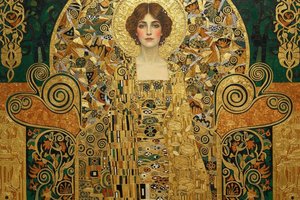
This evolution toward a more intimate observation paved the way for the Impressionist fascination with light and atmosphere. While some movements sought to capture movement and fleeting impressions, the most enduring works remained anchored in a sense of serenity. Whether through the symbolic stylizations seen in the late works of Gustav Klimt or the meticulous realism of the Victorian era, the thread of elegance remains unbroken. The focus shifted from the monumental to the intimate, yet the underlying goal remained the same: to find the extraordinary within the ordinary and to present the feminine form as a vessel for light, color, and enduring peace.
Curating Elegance: Integrating Masterpiece Reproductions into Luxury Interiors
For the sophisticated homeowner or the professional interior designer, the integration of fine art into a living space is an act of curation that defines the very atmosphere of a room. A well-placed reproduction of a classical masterpiece does more than decorate a wall; it establishes a narrative of heritage and taste. The challenge lies in selecting pieces that resonate with the architectural scale and color palette of the environment, ensuring that the artwork serves as a focal point of intellectual and aesthetic engagement.
When commissioning or acquiring hand-painted oil reproductions, one must consider the tactile depth that only true craftsmanship can provide. Unlike mass-produced prints, a bespoke oil painting on cotton canvas offers visible brushstrokes and a rich tonal range that breathes life into a space. For large-scale projects, such as hotel lobbies or grand staircases, the use of multi-panel group sets can create a modern, architectural impact, allowing a single historical scene to expand across a wide expanse. By choosing works that embody timeless grace, one transforms a mere interior into a curated gallery, preserving the legacy of the Old Masters within the contemporary sanctuary of the home.
At OriginalUniqueArt.com, we specialize in bringing this level of historical grandeur to life through our premium, hand-painted oil reproductions. Our artists, trained in the finest academies, work meticulously to ensure every stroke honors the original masterwork. Whether you are seeking a custom portrait from a personal photograph or a large-scale mural to redefine a professional space, our service is dedicated to the highest standards of authenticity and craftsmanship. We invite you to explore our vast catalog and discover how the enduring elegance of art history can become the cornerstone of your personal collection.